
Bag Manufacturing Case Studies
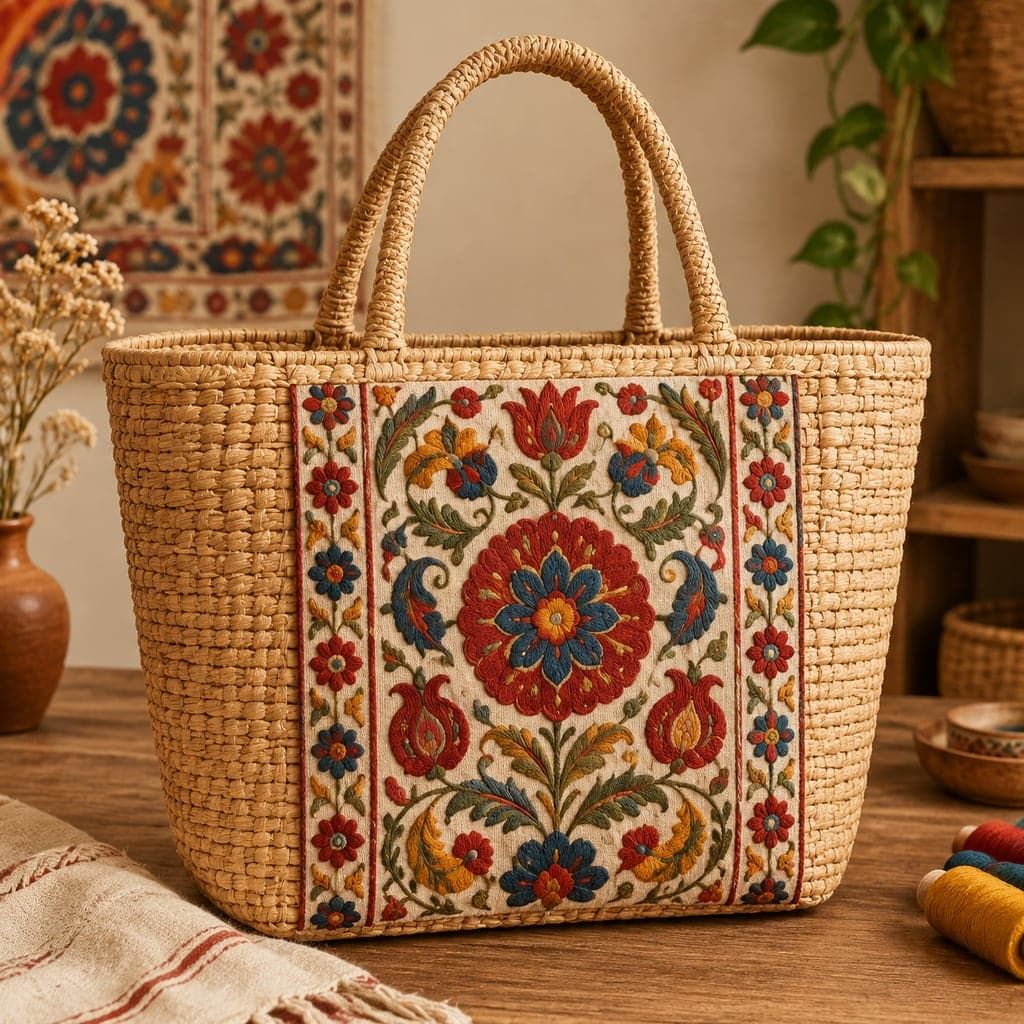
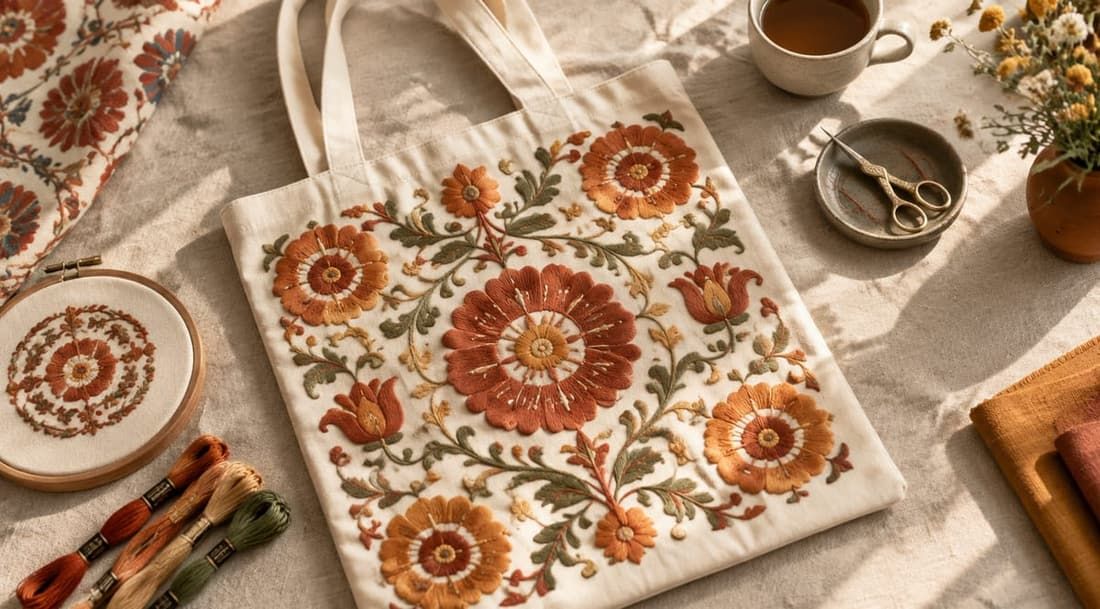
Two client programmes and one engineering study, showing how the 50-piece floor works in practice: a Copenhagen label that tested 80 units and scaled into four seasonal collections, a Parisian resort house that needed 500 hand-embroidered clutches before showroom week, and a seam-engineering study built on a single prototype. Both client programmes started with a sealed sample and a mutual NDA.
What these cases have in common
- Each started from a constraint rather than a specification: one below the MOQ most factories will quote, one at 500 handworked clutches, one at a single prototype. All three scaled on the same pattern rather than re-sampling from scratch.
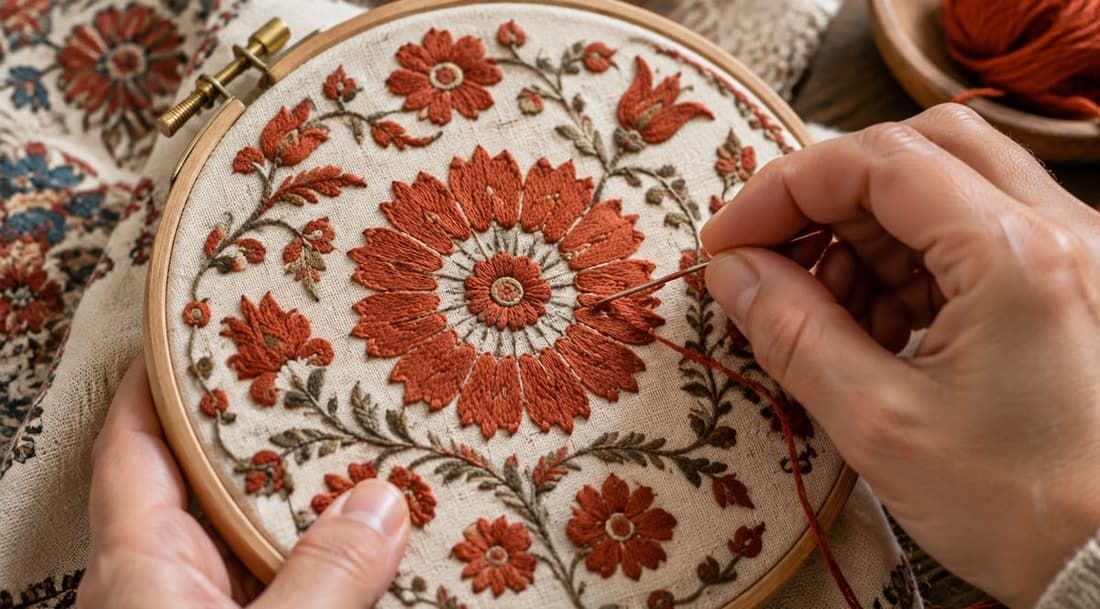
- Each required hand needlework that machine-only factories decline — Suzani and cross-stitch in the Copenhagen case, French knot and satin stitch in the Paris case, and a bound edge with a dual reverse lockstitch joining embroidered panel to woven body in the seam study.
- Each had a hard calendar date set by a retail or showroom event, which is why the sampling gate matters more than the fastest possible start.
Explore the programmes
Open any of the three cases for the brief, the constraints, what we changed in the construction, and how the programme ran through sampling and inspection.
Two client programmes and one engineering study
The second pattern is what the buyer did next. Hjem Studio has returned each season on the same construction, and the Paris label came back with the pattern block, the digitised motif and the label tooling already paid for. That is the commercial argument for a small first run: the fixed development cost is spent once and then compounds, while a brand that redevelops each season pays it again every year.
The second pattern is what the buyer did next. Hjem Studio’s 80-piece pilot has grown into roughly 1,200 pieces per season across four re-orders and an 18-month partnership, and the Paris label came back with the pattern block, the digitised motif and the label tooling already paid for. That is the commercial argument for a small first run: the fixed development cost is spent once and then compounds, while a brand that redevelops each season pays it again every year.
The timings worth borrowing are the ones these programmes actually recorded. Copenhagen reached a sealed sample in 10 business days and finished the pilot run in 32 days. Paris was placed two months ahead of showroom week, with 500 units each carrying roughly eight hours of hand needlework. Both were met, and both were met because the brief arrived complete enough to plan bench capacity from week one.
What none of them had was a complete specification on day one, and that is the point: a first order is a question about feasibility, capacity and price, not a demand for a finished drawing set. Answer those three and the sample schedule writes itself.
Quick Answers: MOQ, Sampling & Lead Times
Short, self-contained answers to the questions buyers ask most about this programme.
- Can we publish the case study?
- Only with written permission from the brand, and usually after the range has shipped and the season has closed. Two of the three studies here are named with consent; the third is described by programme type and scale rather than by client name.
- What size was the first order in each case?
- 80 pieces in Copenhagen, 500 clutches in Paris, and a single prototype for the seam-engineering study. Copenhagen was deliberately small so the label could read real sell-through before committing; Paris was already a full order, and the constraint there was handwork capacity rather than quantity.
- Do you take on programmes this small?
- Yes, from 50 pieces per design, which is the floor for a real production run rather than a sample order. Below that we would rather sell you a sealed sample set and let you test the market before committing to a line.
- Could you run the same programme with our motif?
- Yes, and it is the usual starting point. Send the motif plus the silhouette you are leaning towards; we digitise it, build one prototype and let you test the density before committing to a colourway set. Our standard is a sealed sample in 10 business days, and the same sequence works whichever collection you start from.
Production & Customization FAQ
Are these real client programmes?
Yes — two are client programmes delivered by our Dongguan atelier, and the third is an engineering study we published on seam construction rather than a client order. Client names are used only where the brand has authorised it; commercial figures and sell-through data are kept confidential.
Can I see products made for these brands?
Only where the client has agreed. Confidentiality is the reason brands stay with us, so most commissioned designs are never published — you will see our own atelier silhouettes instead.