
Botanical Dye & Plant-Dyed Thread
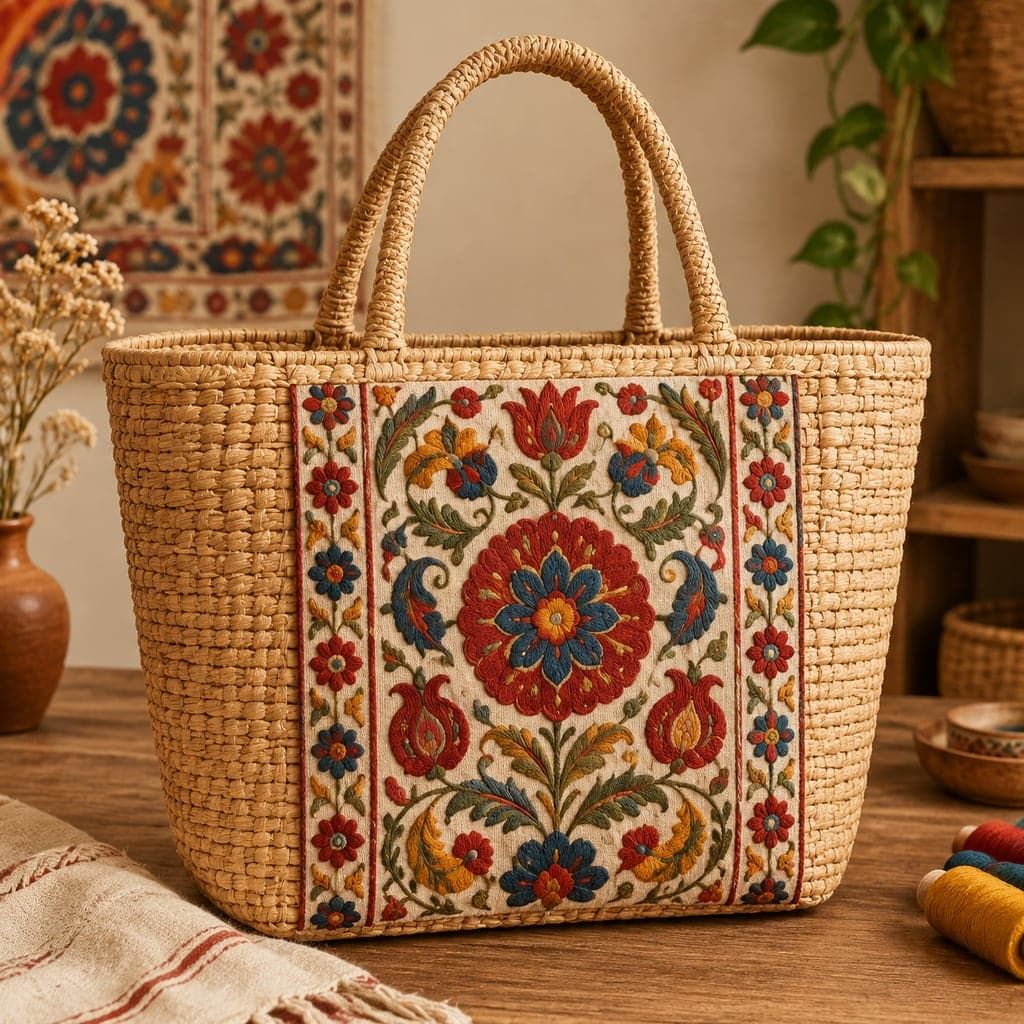
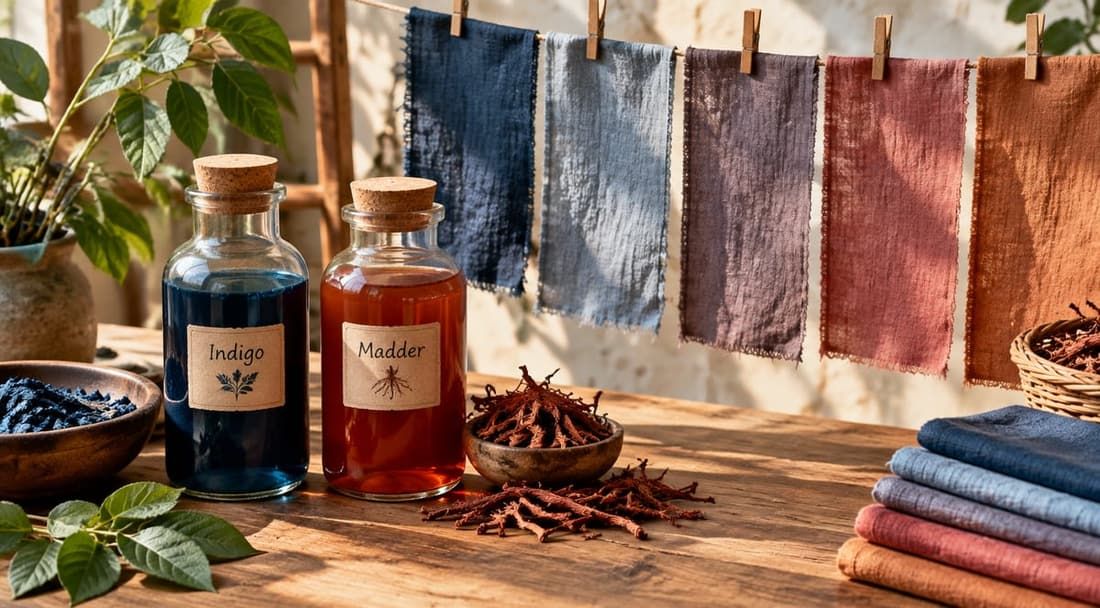
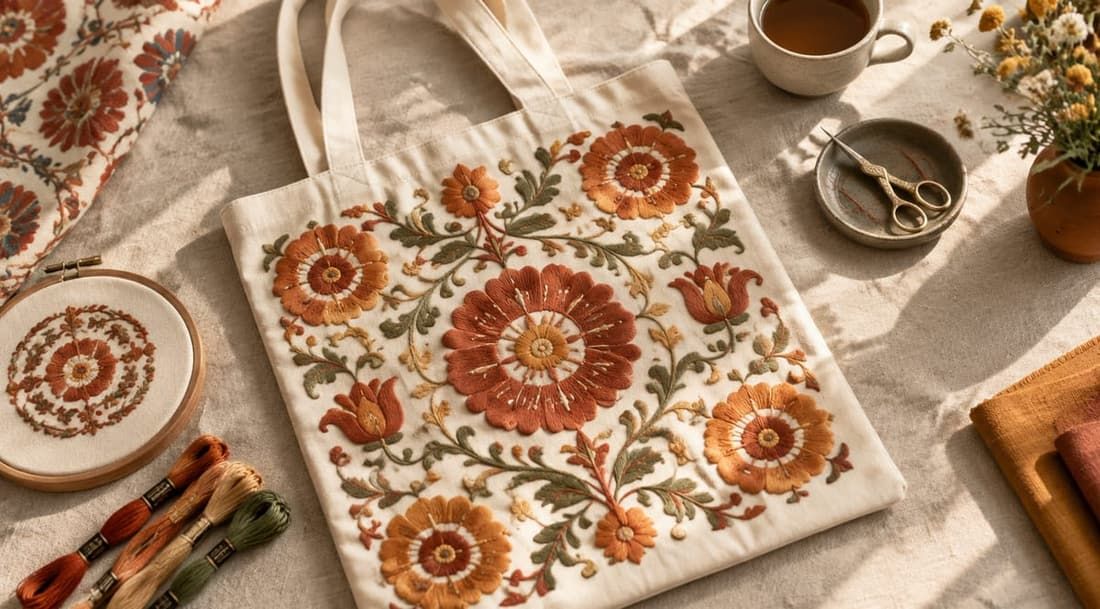
We dye both the ground fabric and the embroidery thread in botanical vats, which is what makes the palette read as one material rather than a print applied to a base. Madder gives the reds, indigo the blues, pomegranate and walnut the browns.
How to Order & Sample
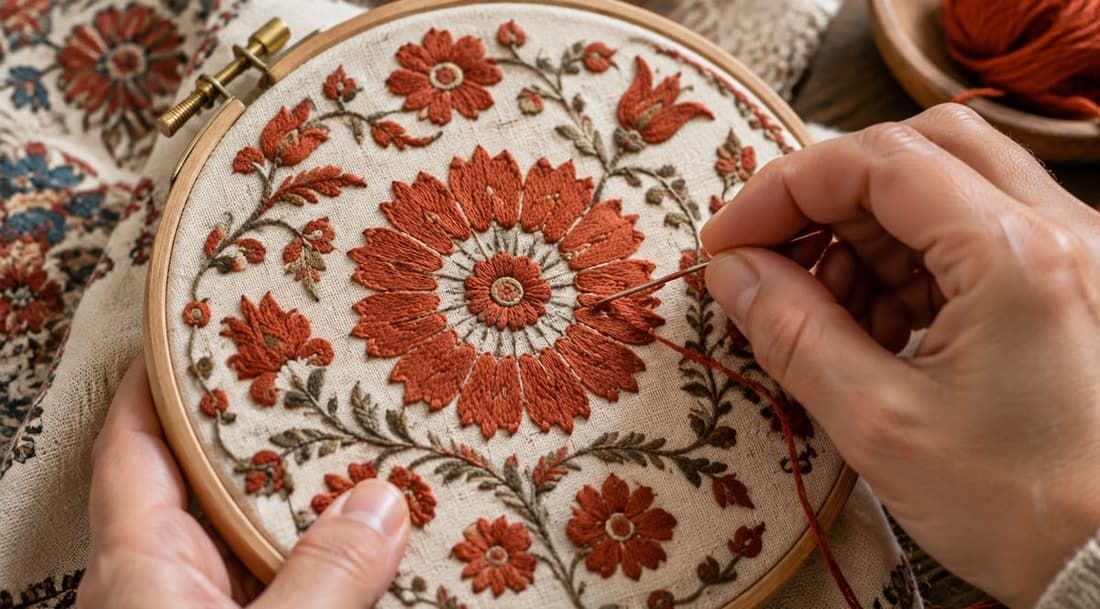
Botanical dye reacts to fibre, water and time rather than behaving like a fixed ink, so the honest way to sell it is by lab dip. Send Pantone references and we produce dyed swatches in both the fabric and the thread so you approve the actual colour, not a screen approximation.
- Artwork in vector form, plus the panel size and its placement on the bag.
- Colour references — Pantone TCX/TPX for thread; botanical shades are agreed by lab dip.
- Coverage and density, since stitch count drives both the look and the unit cost.
Where These Bags Are Used
Quick Answers: MOQ, Sampling & Lead Times
Short, self-contained answers to the questions buyers ask most about this programme.
- What is botanical dyeing?
- Botanical dyeing uses plant matter rather than synthetic pigment: madder root for reds, indigo for blues, pomegranate rind and walnut husk for browns. We dye both the ground fabric and the embroidery thread, so the palette reads as one material rather than a print applied to a base.
- Will botanical dyed bags fade?
- It shifts gently with prolonged light exposure and repeated washing, which many buyers treat as the character of the material rather than a defect. We mordant and rinse properly so the colour does not rub off onto clothing; what you see is slow softening, not failure.
- Can natural dye match an exact Pantone?
- Not exactly, and any supplier claiming otherwise is showing you a swatch dyed to that target rather than a repeatable process. We get close, document the recipe and produce lab dips before bulk so reorders stay within a predictable range.
- Which fibres accept botanical dye best?
- Protein and cellulose fibres behave differently. Cotton and linen need a mordant and give softer, more muted shades; silk and wool bond more readily and take deeper colour. For bags we work mainly in cotton and linen, where the slightly muted result is usually the desired artisanal look.
Production & Customization FAQ
Will botanical dye fade?
It shifts gently with light and washing, which many buyers treat as the point of the material. We mordant and rinse properly so it does not rub off onto clothing; what you see is a slow softening, not a failure.
Can you match an exact Pantone with natural dye?
Not exactly — and any supplier claiming otherwise is showing you a swatch they dyed to that target, not a repeatable process. We get close and document the recipe so reorders stay consistent.