
Hand-Woven Rattan Bags & Cane Bags
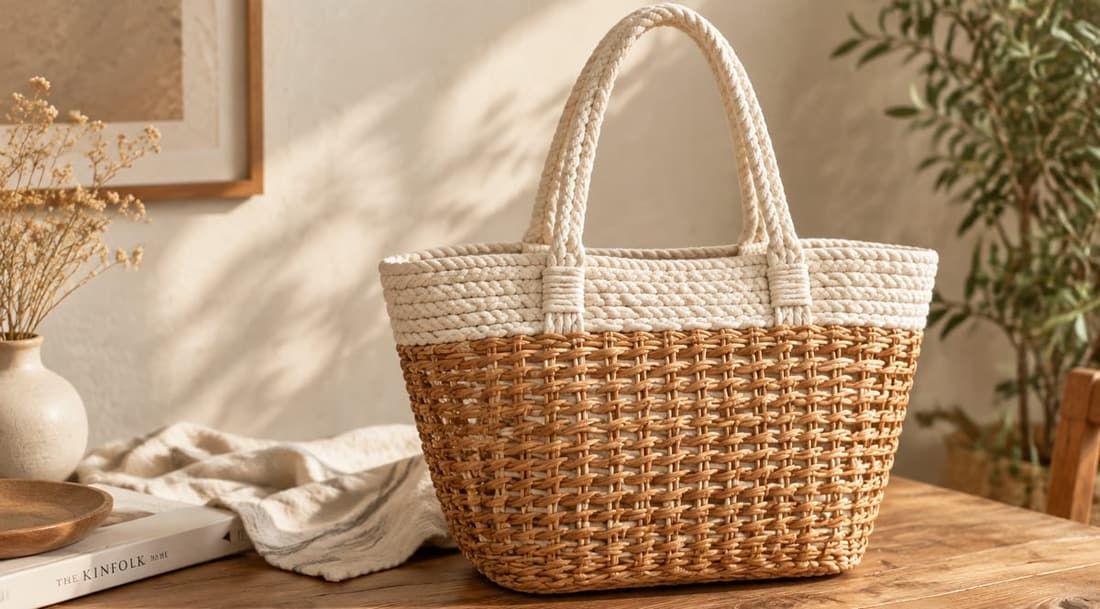
Rattan is a climbing palm that takes a bend without cracking, which is why it holds a structured silhouette where softer fibres sag. We weave in open hexagonal patterns for resort pieces and tight round weave for structured shapes.
How to Order & Sample
Natural rattan moves with humidity: it tightens in dry air and relaxes in damp air. We build in an allowance for that movement, then seal the cut cane ends inside a bound rim so they never work their way out through a lining later.
- Fibre and weave direction — natural finish, smoked, or carbonised, and open or tight weave.
- Frame and handle construction — whether the handle is woven in, stitched leather, or brass hardware.
- Lining and moisture behaviour — natural fibres move with humidity, so we confirm lining and stiffness expectations up front.
Where These Bags Are Used
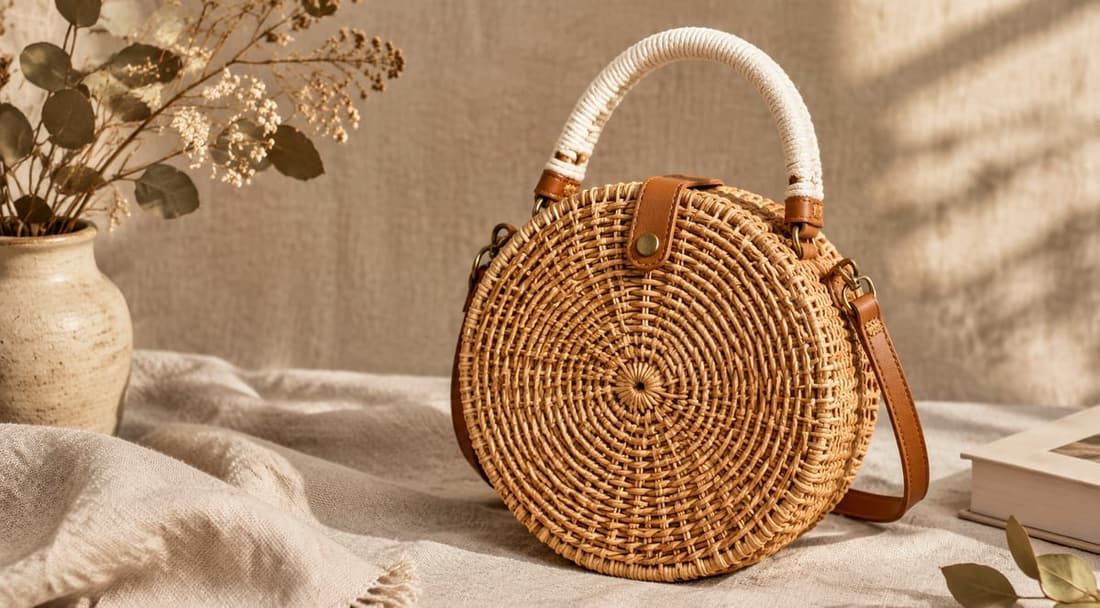
Authentic round rattan circle bag hand-woven from 100% natural Indonesian wild rattan in tight concentric spiral ribs by our 83-ar
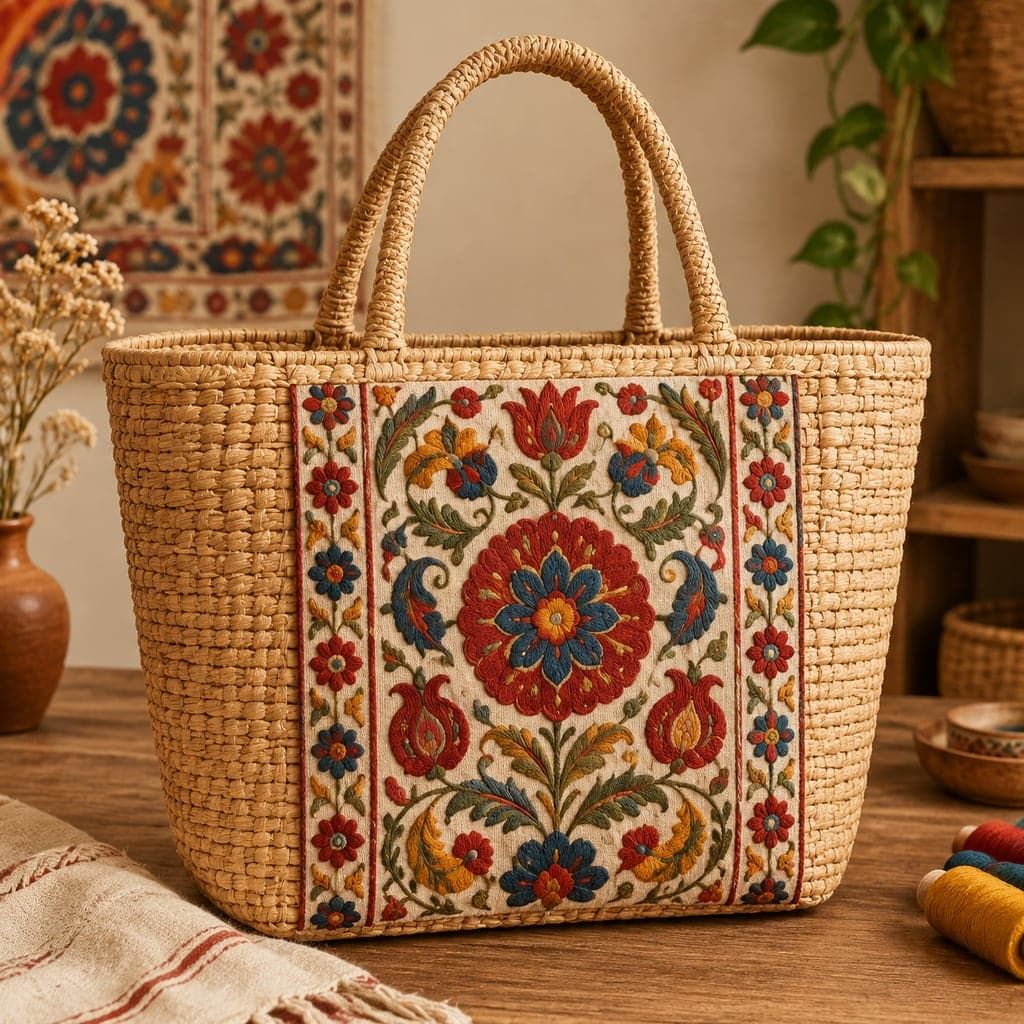
Signature mixed-media basket tote marrying an Indonesian wild rattan hand-woven body with a front inlay panel of handcrafted flora
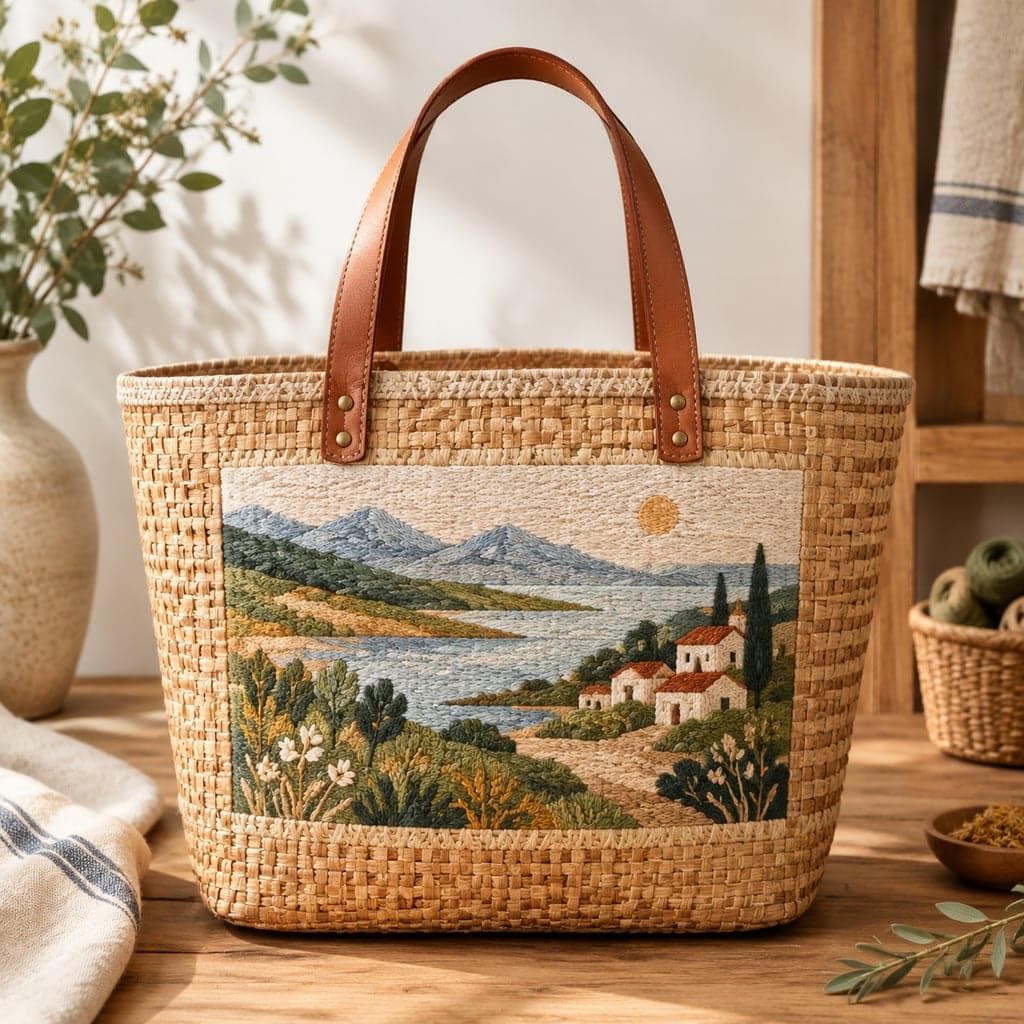
Heavy-duty mixed rattan and bamboo basket tote featuring a frontal recessed flat-embroidered Mediterranean coastal landscape canva
Quick Answers: MOQ, Sampling & Lead Times
Short, self-contained answers to the questions buyers ask most about this programme.
- What is rattan weaving in bag making?
- Rattan weaving is the hand-interlacing of thin rattan cane strips into a self-supporting panel or basket body. Because rattan is a climbing palm that bends without cracking, the finished structure holds a crisp shape rather than sagging, which is why it suits structured totes, buckets and round-handle bags.
- Can rattan bags be produced in bulk?
- Yes, but not on an assembly line. Bulk rattan production is organised as weaving stations: each artisan completes a panel or a body, then the pieces are matched by weave density before assembly. Our atelier runs up to 9,600+ units a month across all crafts, and rattan programmes typically sit in the 500–2,000 piece range.
- What determines the price of a rattan bag?
- Four things: cane grade and diameter, weave openness (an open hexagon uses noticeably less material than a tight round weave), whether the piece is lined, and hardware. A lined, brass-fitted structured bag can cost two to three times an unlined open-weave tote of the same size.
- How do I specify a rattan bag correctly?
- Specify four parameters: fibre finish (natural, smoked or carbonised), weave type and openness, internal construction (lined or open cage, base reinforcement), and handle type (woven-in, stitched leather or metal hardware). Sending a physical reference shortens the process by roughly one sampling round.
Production & Customization FAQ
How do I choose between rattan and sea grass?
Rattan for structure and a longer service life — it holds a crisp shape. Sea grass for a softer, more matte, more casual read at a lower fibre cost. Many ranges use both.
Will rattan crack or splinter in dry climates?
Good rattan is steamed and bent while green, so it dries into the shape rather than fighting it. We also sand and seal cut ends; that is what prevents splintering in low-humidity markets.