In commercial fashion retail, tote bags decorated with automated flat computerized embroidery are ubiquitous. However, high-end lifestyle labels and designer resort brands commanding $150 to $350+ retail price points increasingly specify authentic hand embroidery. Understanding the structural, tactile, and commercial distinctions between manual needlework and industrial computerized stitching is vital for brand positioning.
- Tactile Depth & Relief: Why variable human tension creates dimensional light-refracting textures.
- Thread Integrity & Plant Dyes: The limitation of high-speed machine heads with hand-spun botanical threads.
- Durability in Daily Wear: Lockstitch stability and pocket flex resistance under 15kg load conditions.
- Commercial Margins & Storytelling: Justifying higher retail pricing through documented artisan provenance.
Textural Depth: Uniform Flatness vs. Living Sculptural Relief
Computerized multi-head embroidery operates at 800 to 1,000 stitches per minute, requiring perfectly consistent polyester thread and uniform tension. The resulting surface is mechanically flat and dense, often feeling stiff and rubbery on heavy cotton canvas.
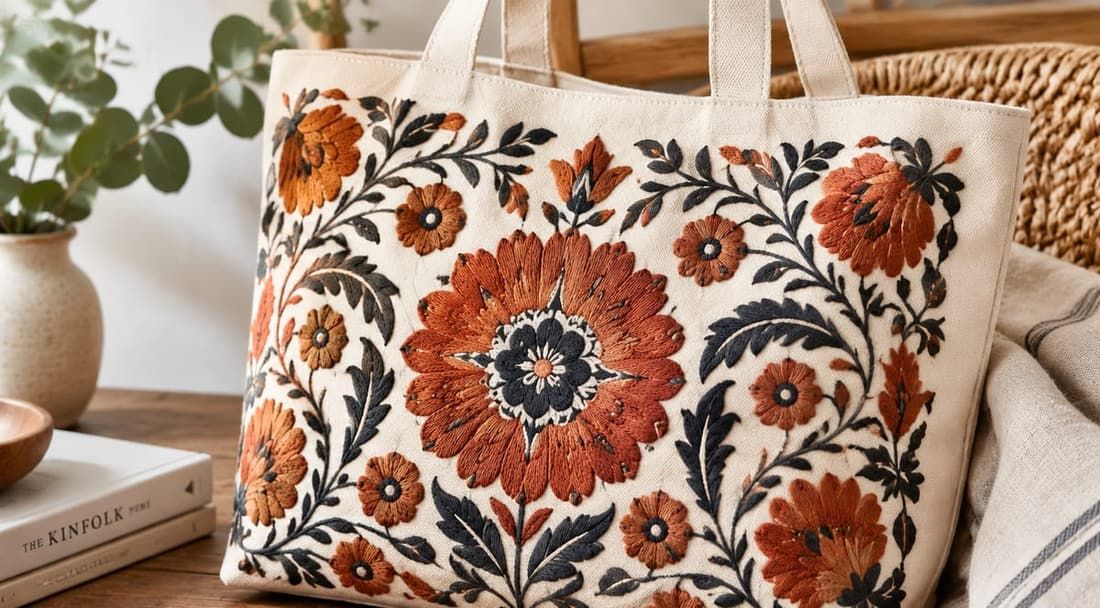
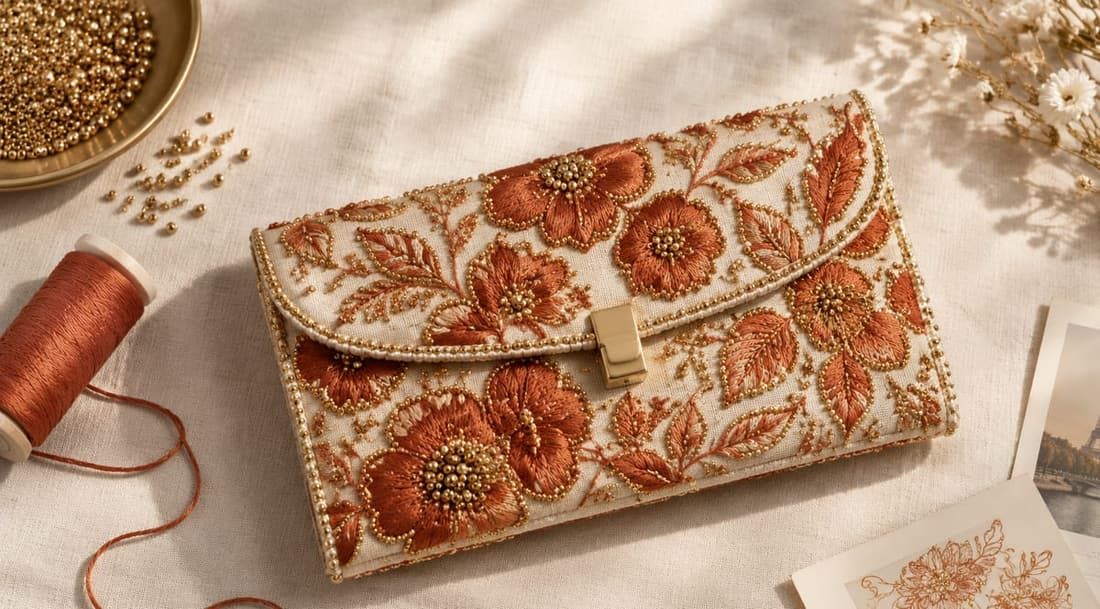
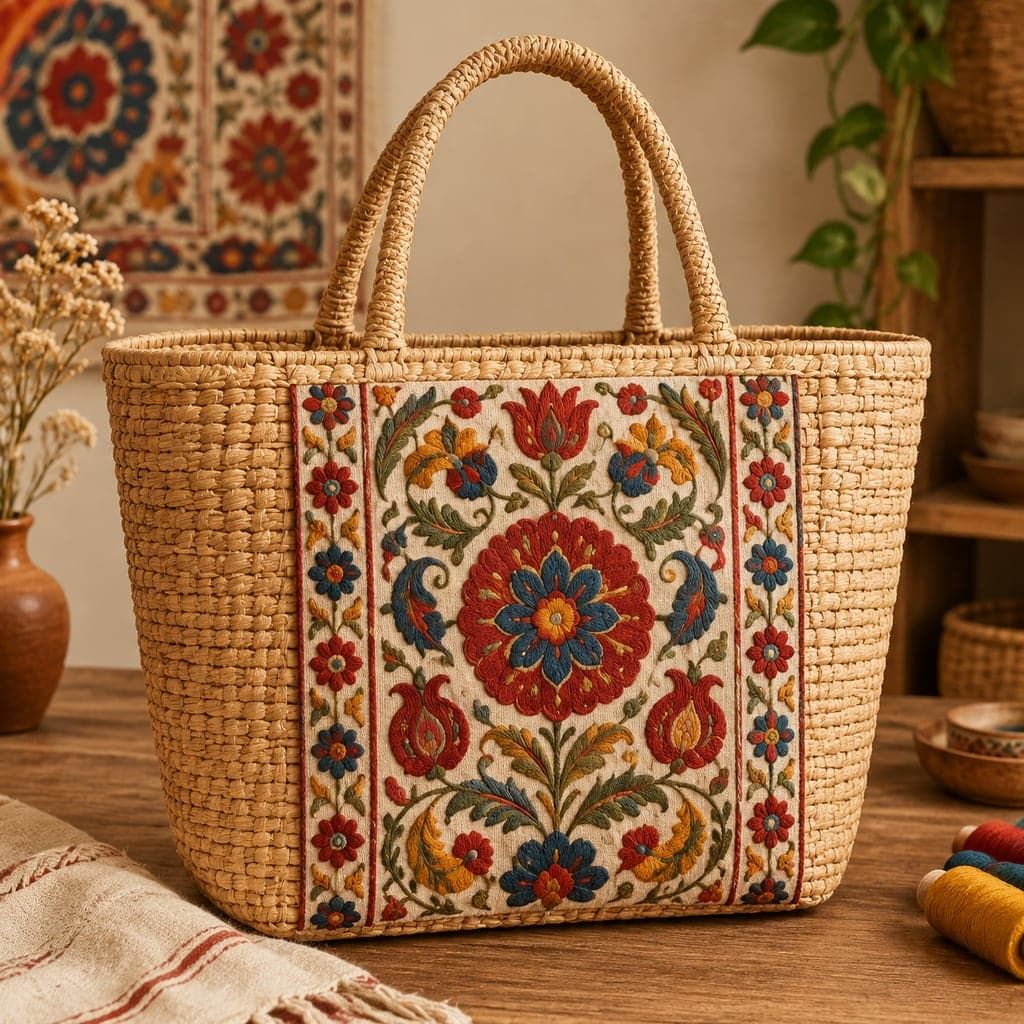
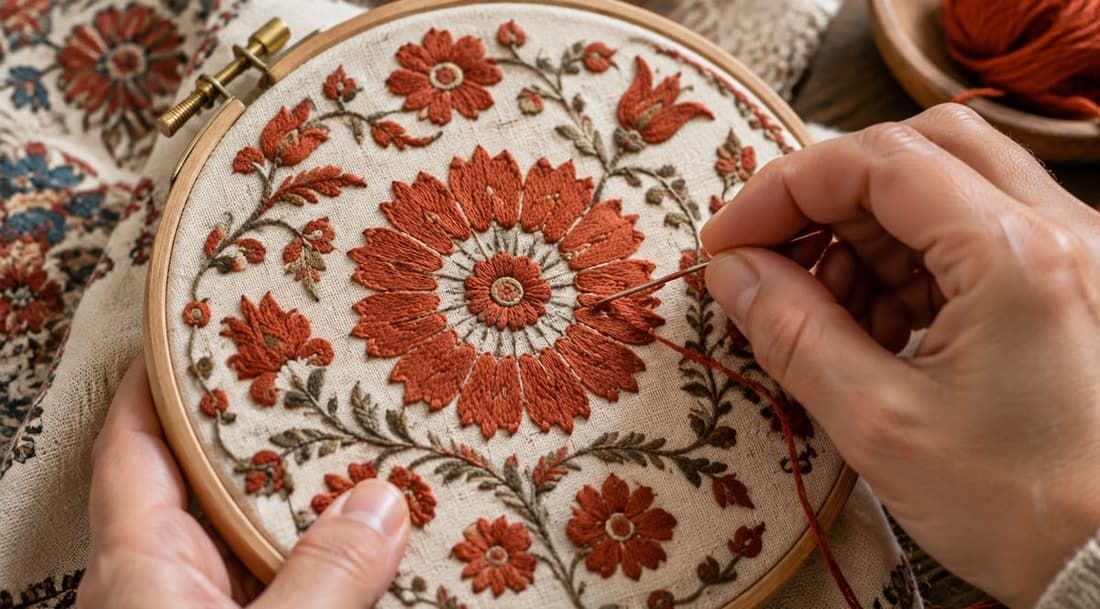
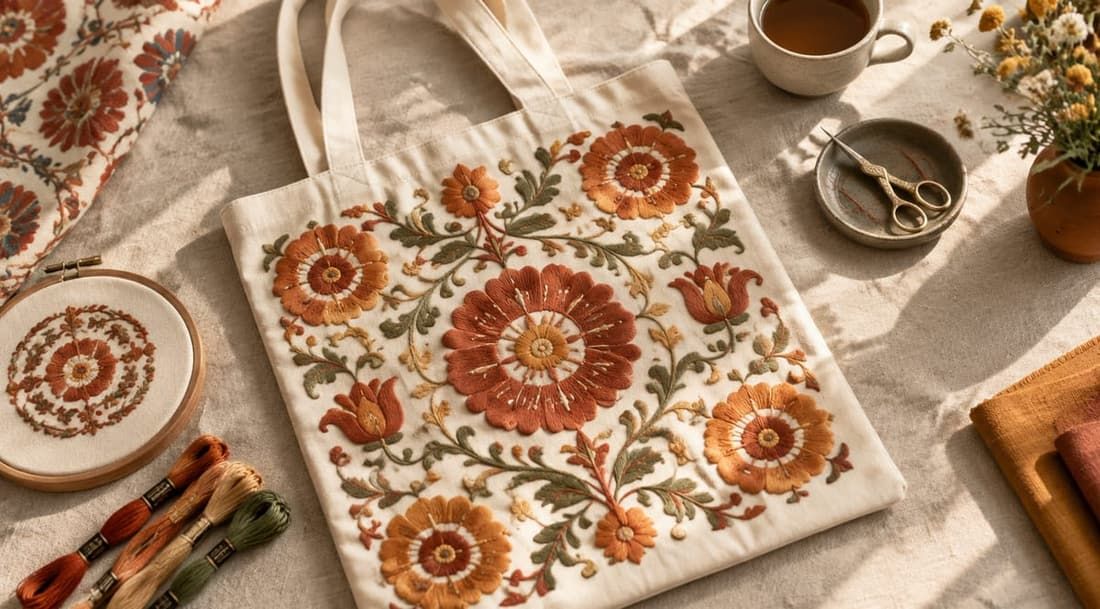
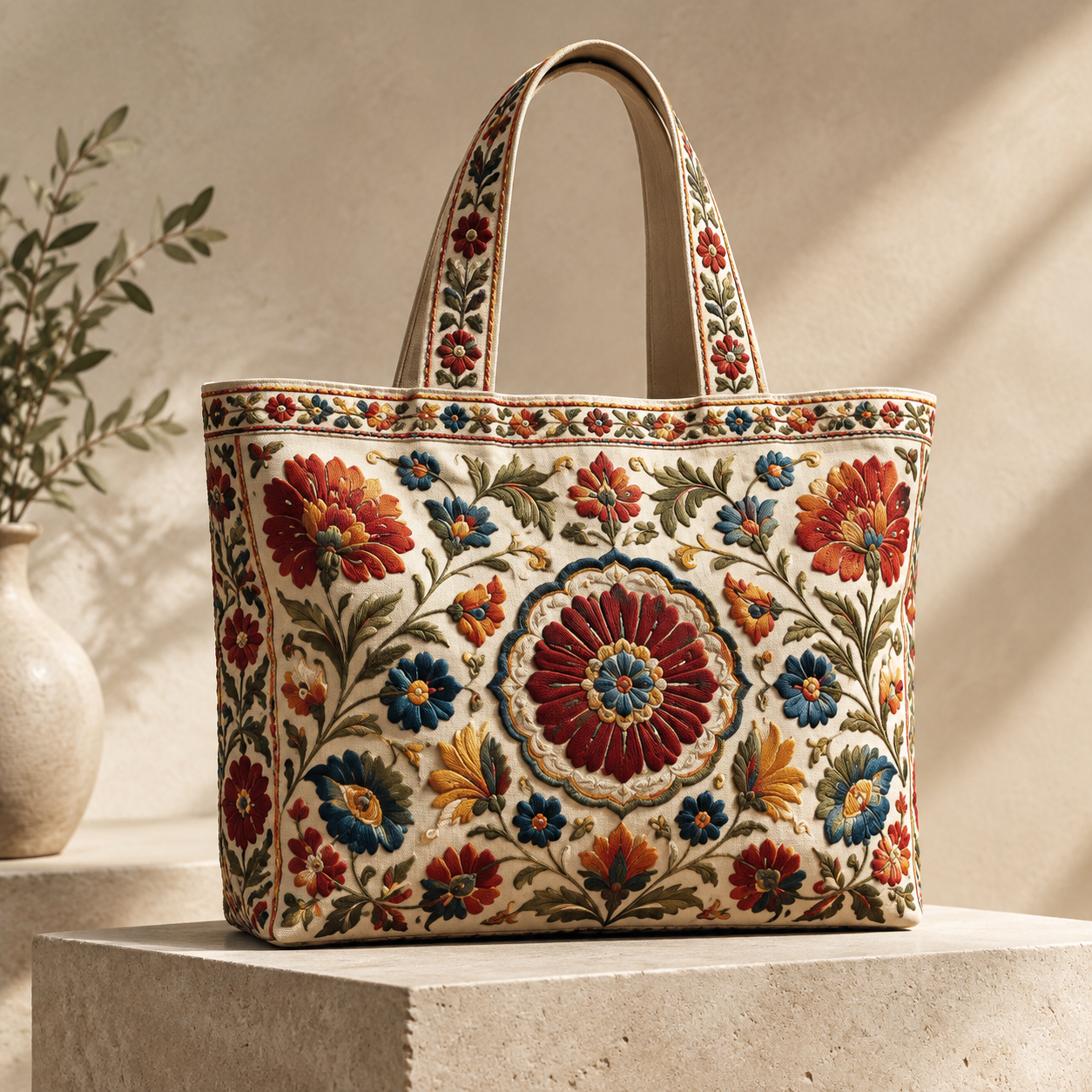
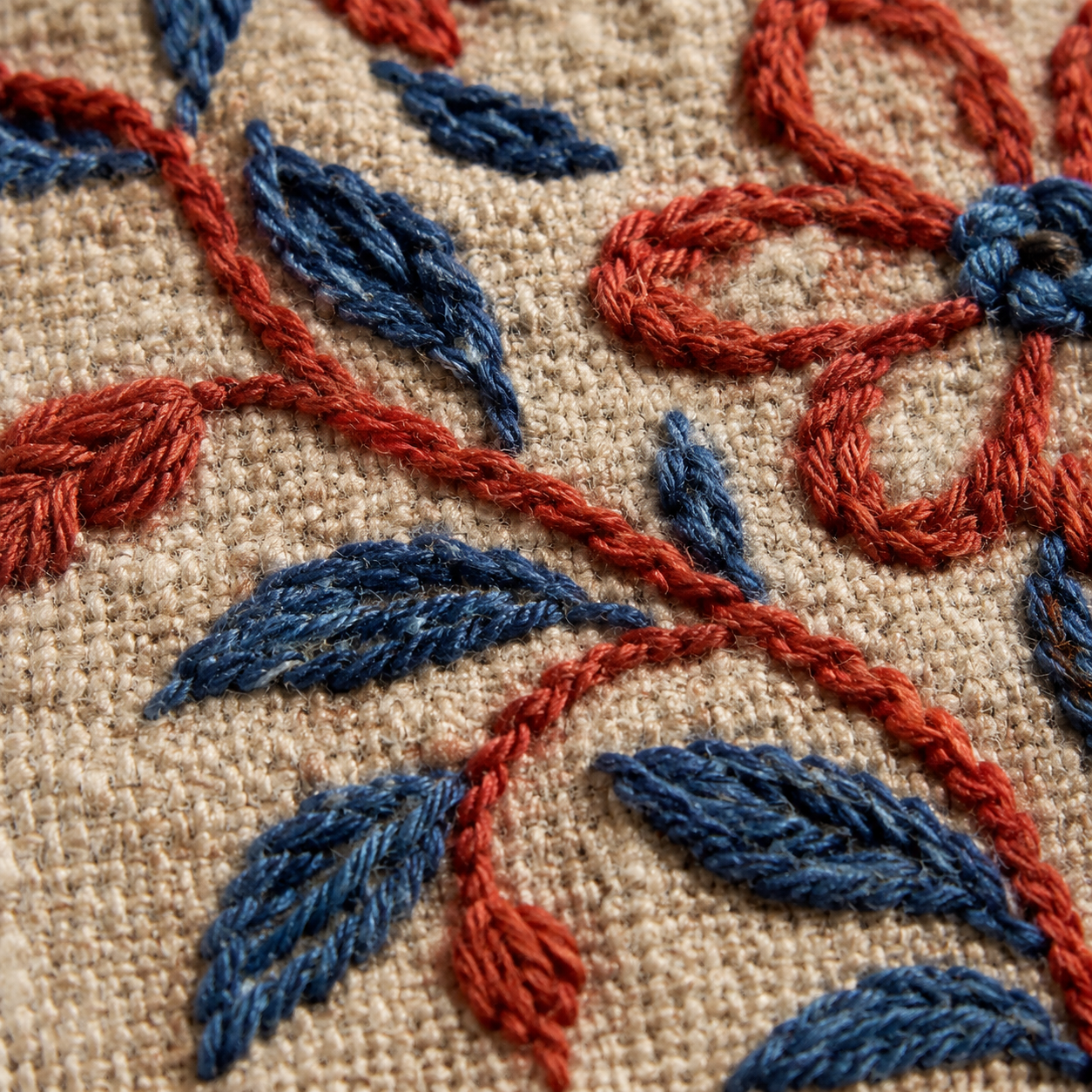
Authentic Suzani hand embroidery, practiced by TelvaBag’s 47 full-time named artisans, applies variable needle angles and organic tension curves. Using traditional chain and split stitches, each petal and medallion rises 1.5mm to 2.5mm above the canvas plane, casting subtle directional micro-shadows that shift with ambient light.
Technical Feature Matrix: Handmade vs. Machine Embroidery
| Craft Dimension | Automated Machine Embroidery | Atelier Hand Needlework (TelvaBag) |
|---|---|---|
| Stitch Structure & Relief | Flat, rigid 2D satin layer | Dimensional 3D sculptural relief (1.5-2.5mm) |
| Yarn Compatibility | Polyester & smooth synthetic filament only | 100% Cotton, silk, & plant-dyed botanical threads |
| Fabric Rigidity Impact | Stiffens canvas panel; prone to puckering | Supple; bends naturally with bag silhouette |
| Average Production Time | 15–25 minutes per piece | 4–8 dedicated artisan hours per tote |
| Typical Retail Price Point | $35–$65 (Promotional & Fast Fashion) | $160–$380+ (Boutique Designer & Resort) |
| Defect Rate on Wash/Wear | Thread unraveling if loop is cut | Interlocked chain stitch prevents unraveling |
The Botanical Dye Advantage
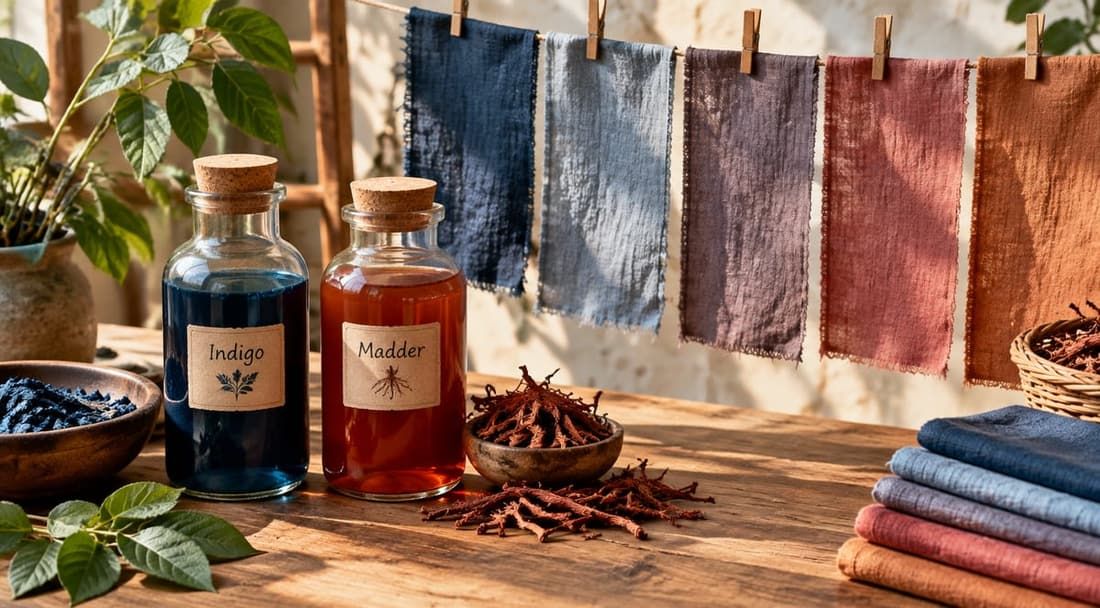
High-speed automated embroidery needles generate friction heat exceeding 120°C, which scorches and snaps delicate cold-fermented botanical dye threads (such as natural indigo and madder root). Hand needlework generates zero frictional heat, allowing us to employ authentic plant-dyed yarns that age with an exquisite natural patina over years of wear.
Commercial Longevity & Wash Testing: AATCC Colorfastness and Tensile Life
A common procurement misconception is that handmade embroidery is delicate or fragile compared to automated machine stitches. In commercial laboratory stress testing, automated machine satin stitch creates rigid puncture perforated lines across the canvas; under repeated diagonal bending or heavy weight, the perforated fabric can tear along the needle line. By contrast, hand-guided Suzani needlework loops thread gently around canvas warp and weft yarns without slicing fibers. Combined with cold-fermented botanical dye alum-mordanting, our hand-stitched totes achieve Grade 4.5+ colorfastness under AATCC 61 accelerated laundering protocols. The resulting pieces withstand years of real-world retail use without fraying or fading, establishing an heirloom-grade product asset for boutique labels.
Will hand embroidery unravel when carrying heavy loads in a tote bag?
No. Our needlework is executed directly through the 16oz cotton-linen body with reverse knot-anchoring and dual-lock reinforcement, load-tested to hold 18kg without thread pull.
Can a brand register custom embroidery designs exclusively?
Yes. TelvaBag enters into mutual bilateral NDAs protecting your vector artwork, stitch programs, and custom colorways exclusively for your brand.
How does stitch longevity compare between machine satin stitch and hand Suzani needlework?
Machine satin stitches use tight polyester filament that cannot stretch when a canvas bag flexes, causing thread snap over time. Hand Suzani chain and split stitches possess built-in mechanical elasticity that flexes naturally with the cotton canvas, providing superior long-term tensile endurance.
Can hand-embroidered totes be cleaned without botanical dye bleeding onto cream canvas?
Yes. All plant-dyed embroidery threads undergo a double alum-mordant fixative bath and triple cold-water rinse before stitching. Our finished bags pass AATCC 61 4A colorfastness wash tests, ensuring zero color bleeding onto ecru or off-white canvas.
What is the commercial markup and ROI potential for boutique brands selling hand-embroidered totes?
Direct atelier FOB pricing typically ranges from $22 to $34 per unit at 50 MOQ, while retail boutique MSRP commands $160 to $320+ (a 5x to 7x markup). The tactile depth, named artisan provenance, and included story cards justify luxury price points impossible with mass-market promotional bags.
- Read Our Suzani Embroidery Heritage Guide Explore historical stitch origins and atelier needlework charts.
- View the Floral Suzani Canvas Tote Spec Sheet Our benchmark artisan tote crafted with hand-embroidered botanical needlework.
- Explore Atelier Craftsmanship Standards Learn about our 83 full-time artisans, botanical vats, and finishing protocols.
- Atelier Sampling & Sample Fee Credit Terms 10-day DHL physical golden sampling credited 100% against 200+ bulk orders.
- International Logistics & Shipping Policy Air express and ocean freight delivery schedules, packaging specs, and customs terms.