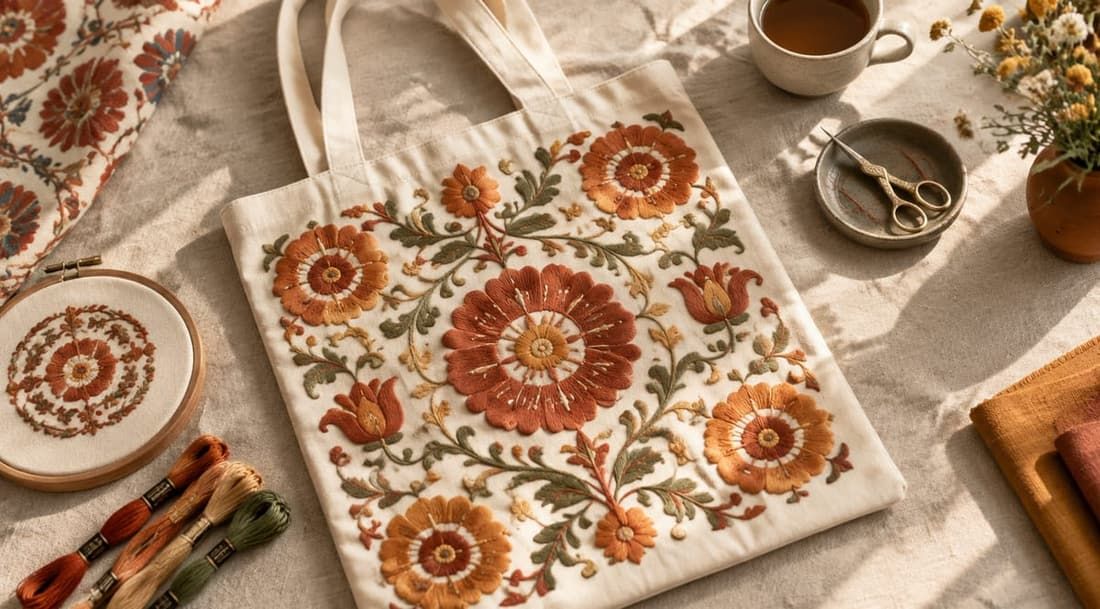
In custom embroidered bag production, nothing frustrates a brand founder more than receiving bulk production where the embroidery puckers like an accordion or the tote bag collapses limp without structure. The root cause is almost never the embroidery machine—it is a mismatch between canvas fabric ounce weight (oz/yd²), thread tension, and backing stabilizer engineering. At TelvaBag atelier in Houjie, Dongguan, we test hundreds of canvas weave structures every season. Below is our definitive textile engineering guide on choosing the ideal duck canvas weight for heavy custom embroidery.
Direct Answer: What Canvas Weight Is Best for Heavy Custom Embroidery?
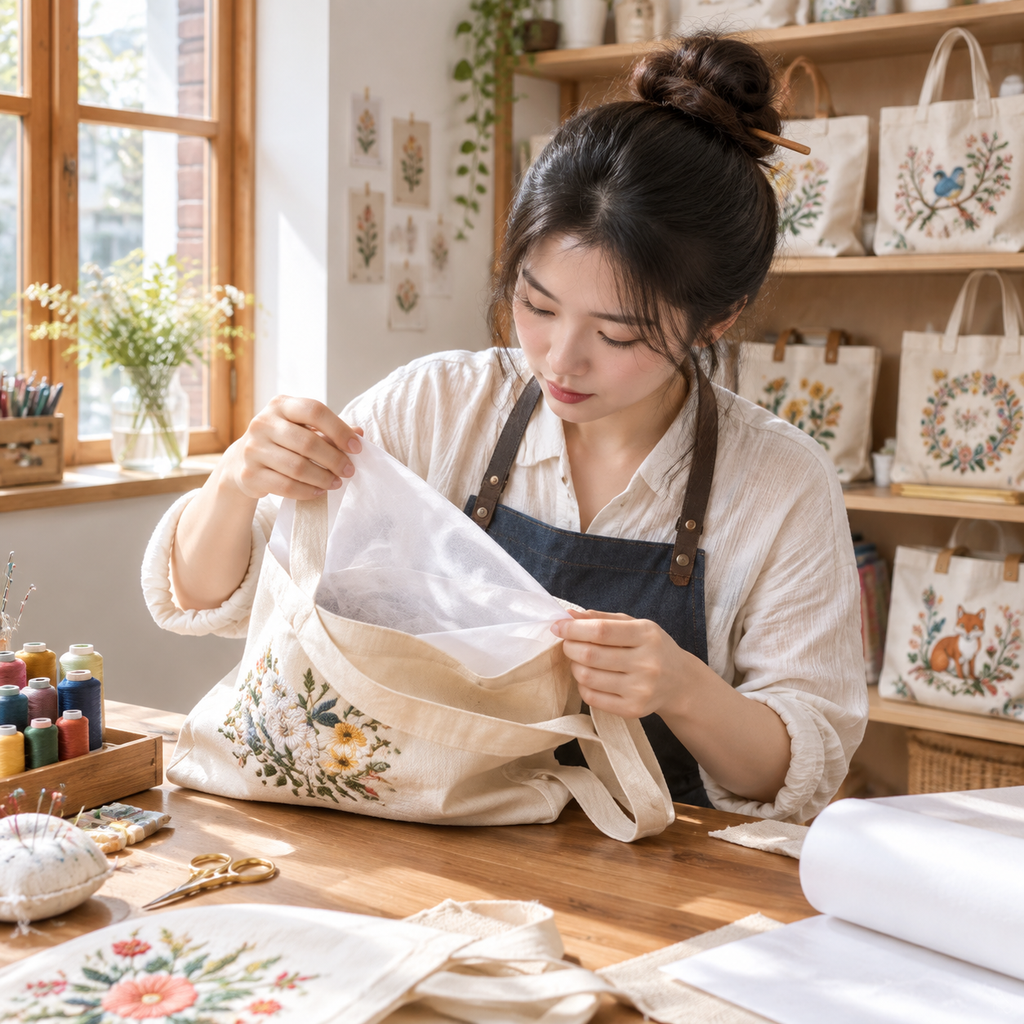
For custom bags featuring high-density needlework (20,000 to 50,000 stitches), 16oz (approx. 450–480 gsm) double-warp double-weft combed cotton duck canvas is the undisputed industry sweet spot. Lighter 12oz canvas (approx. 340 gsm) lacks sufficient warp tension, causing severe perimeter puckering under dense embroidery unless backed with heavy fusible interlining. Ultra-heavy 24oz canvas (approx. 680 gsm) provides outstanding stiffness but causes needle deflection, thread breakage, and excessively bulky seam allowances at corner joins. Backing selection is equally critical: combine 16oz duck canvas with 100g–120g fusible woven or non-woven stabilizer to guarantee a glass-smooth finish.
1. The 12oz vs. 16oz vs. 24oz Canvas Comparison Matrix
Understanding the physical specifications of cotton duck canvas allows designers to make informed procurement tradeoffs between drape, stiffness, and production yield:
| Canvas Weight Tier | Metric Grammage | Yarn Construction (Warp x Weft) | Embroidery Stitch Capacity | Ideal Bag Silhouette |
|---|---|---|---|---|
| 12oz Light Duck Canvas | ~340 gsm | 10s/2 x 10s/2 (Single Plain Weave) | Low to Medium (<18,000 stitches) | Foldable market totes, cosmetic pouches, lightweight shoppers |
| 16oz Heavy Duck Canvas (Sweet Spot) | ~460 gsm | 10s/3 x 10s/3 (Double-Warp Plied) | High to Heavy (20,000–55,000 stitches) | Flagship structured totes, book totes, daily shoulder bags |
| 20oz Extra-Heavy Canvas | ~570 gsm | 7s/3 x 7s/3 (Heavy Double Plied) | Very Heavy (up to 70,000 stitches) | Oversized weekend travel bags, duffles, utility tool bags |
| 24oz Ultra-Dense Industrial Canvas | ~680 gsm | 7s/4 x 7s/4 (Multi-Ply Sailcloth) | Minimal (text outlines only; prone to needle deflection) | Rigid freestanding open totes, heavy luggage base panels |
2. The Physics of Puckering: Why Embroidery Shrinks Canvas
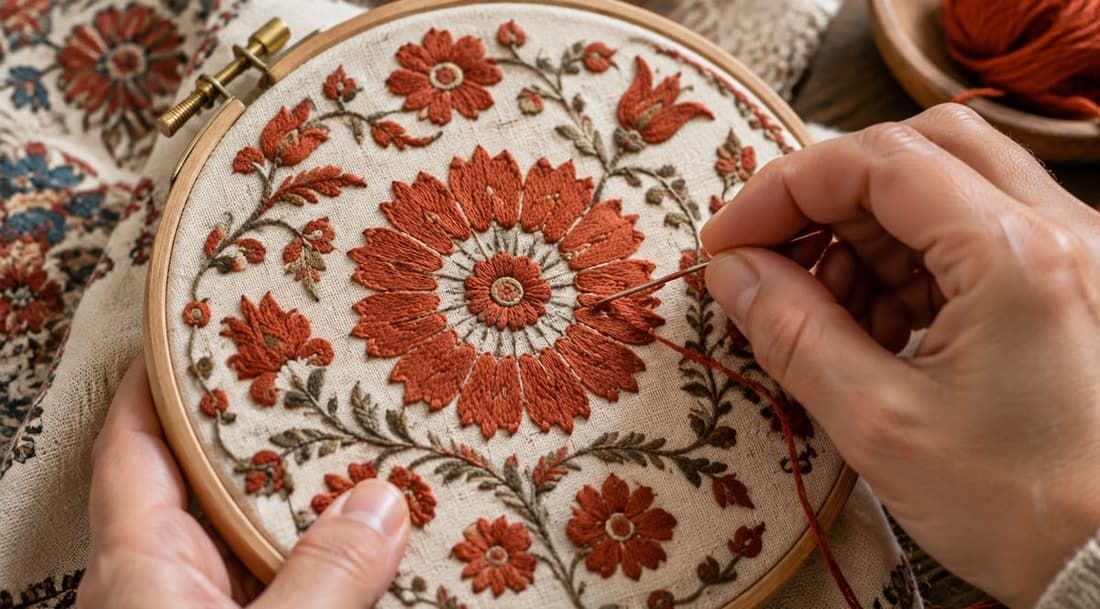
Every individual embroidery stitch pulls fabric inward with approximately 15 to 25 grams of mechanical tension. When 35,000 stitches are concentrated in a 15x15cm floral motif, the cumulative inward pull exerts hundreds of pounds of contractile force across the weave. On unbacked or lightweight 10oz–12oz fabric, the canvas simply buckles inward, creating permanent radial wrinkles that no steam iron can remove.
To neutralize this mechanical stress, TelvaBag applies a three-step anti-puckering engineering protocol:
- Pre-Wash Preshrinking: All raw canvas rolls are steam-scoured and preshrunk at 120°C prior to cutting, locking residual warp shrinkage below ≤1.8%.
- Cross-Hatch Directional Underlay: In our digitized embroidery programming, we lay down a rigid grid of low-density underlay stitches that anchors the canvas grain before satin topstitching begins.
- Calibrated Fusible Interlining: A 100g/m² polyester/polyamide fusible backing is thermally bonded to the canvas underside under 3.5 bar pressure at 145°C, creating a dimensionally stable composite sandwich.
3. Backing Stabilizers: Tear-Away vs. Cut-Away vs. Fusible Woven
The choice of embroidery backing directly dictates the interior tactile handfeel of the finished bag:
- Tear-Away Non-Woven: Inexpensive and easy to clean, but leaves residual fibers behind needle perforations. Recommended only for simple monograms on 16oz canvas.
- Fusible Woven Cotton Interlining: The premium luxury standard. Thermally adhered to the canvas, it becomes an integral structural layer that will never peel, bubble, or crack during laundering.
- Water-Soluble Film (PVA Topping): Applied to the front face of heavy-texture slub canvas or boucle fabrics, preventing fine silk embroidery stitches from sinking into coarse weave valleys.
4. Colorfastness & Botanical Dye Compatibility
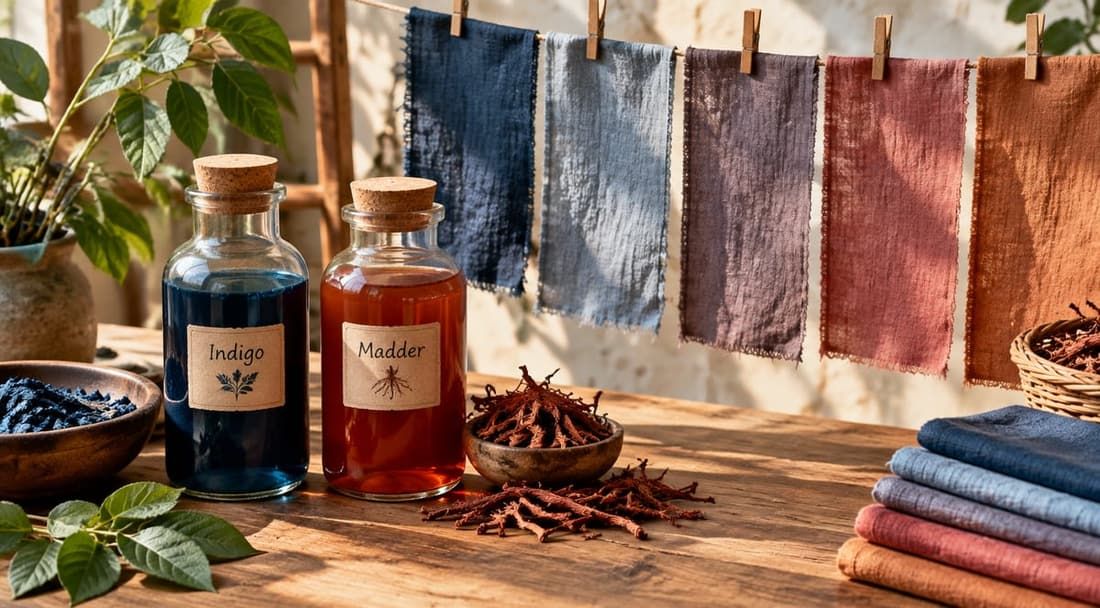
When embroidering light cream silk or viscose threads onto natural plant-dyed canvas (such as indigo blue, madder terracotta, or tea-dyed sage), dye bleeding during wet laundering or rain exposure is a critical risk.
Our raw canvas undergoes cold-vat fermentation dyeing followed by mineral mordanting (iron acetate or potassium alum). Every dyed canvas lot achieves ISO 105-X12 rubbing fastness Grade 4 (dry) and Grade 3–4 (wet), verified under our D65 laboratory light box prior to embroidery hooping.
Can I use 12oz canvas for a tote bag if my embroidery design is small?
Yes. 12oz canvas is well-suited for smaller logo monograms or line-art embroidery under 15,000 stitches, provided it is backed with a 80g fusible woven interlining.
Why is 24oz canvas difficult for intricate floral embroidery?
24oz canvas is so tightly plied that fine #11 embroidery needles deflect upon impact, causing frequent thread fraying, skipped stitches, and broken needle fragments.
Does TelvaBag provide physical canvas fabric swatch books?
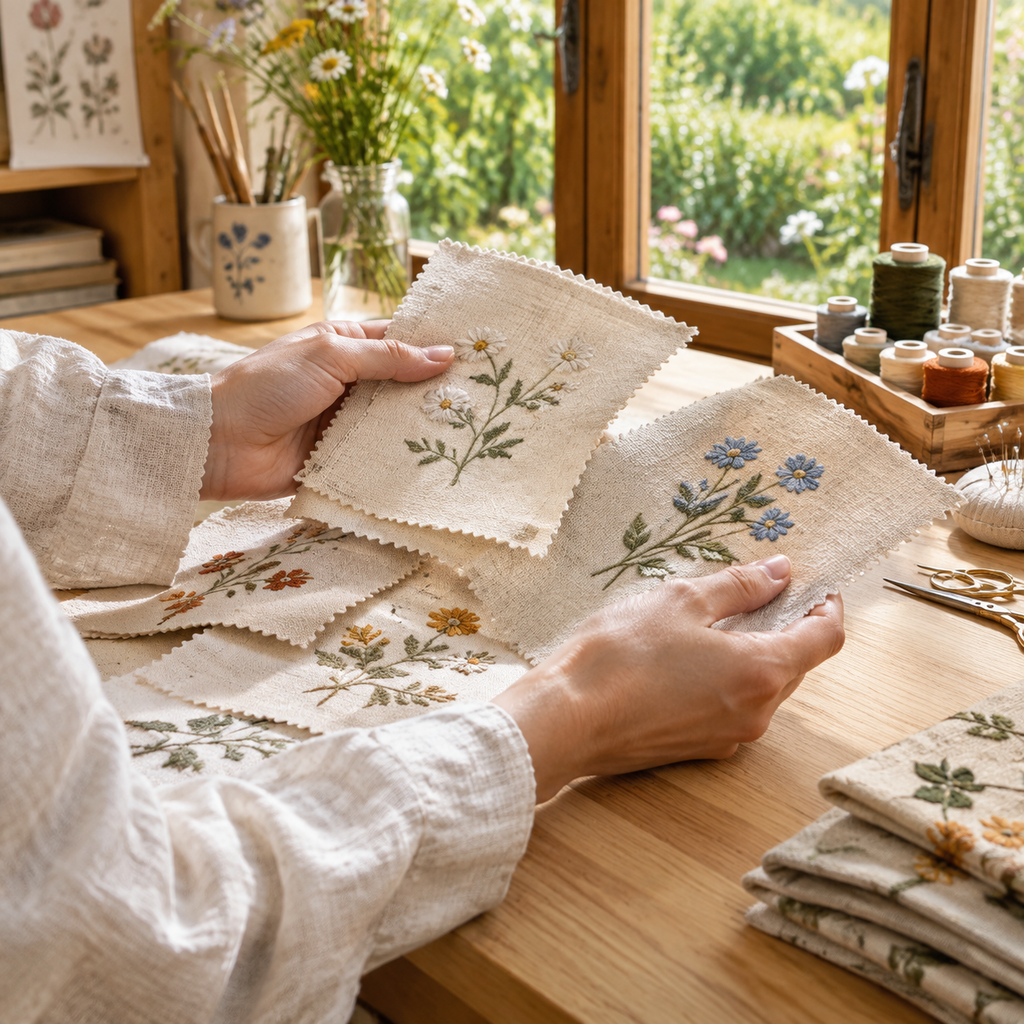
Yes. We supply curated fabric swatch binders showing unbleached ecru, bleached white, and botanical dyed swatches across 12oz, 16oz, 20oz, and 24oz weights with sample embroidery stitch-outs.
Request a physical canvas swatch kit or send your embroidery artwork for a free stitch-density feasibility review at info@telvabag.com or via WhatsApp.
- Explore Natural Canvas & Weaving Materials Compare combed cotton canvas, botanical linens, and wild Indonesian rattan.
- Master Embroidery Stitch Craftsmanship Learn about satin fill, knot relief, and high-density needlework engineering.
- Browse Flagship Embroidered Canvas Bags Discover real-world commercial styles crafted from 16oz and 20oz canvas.