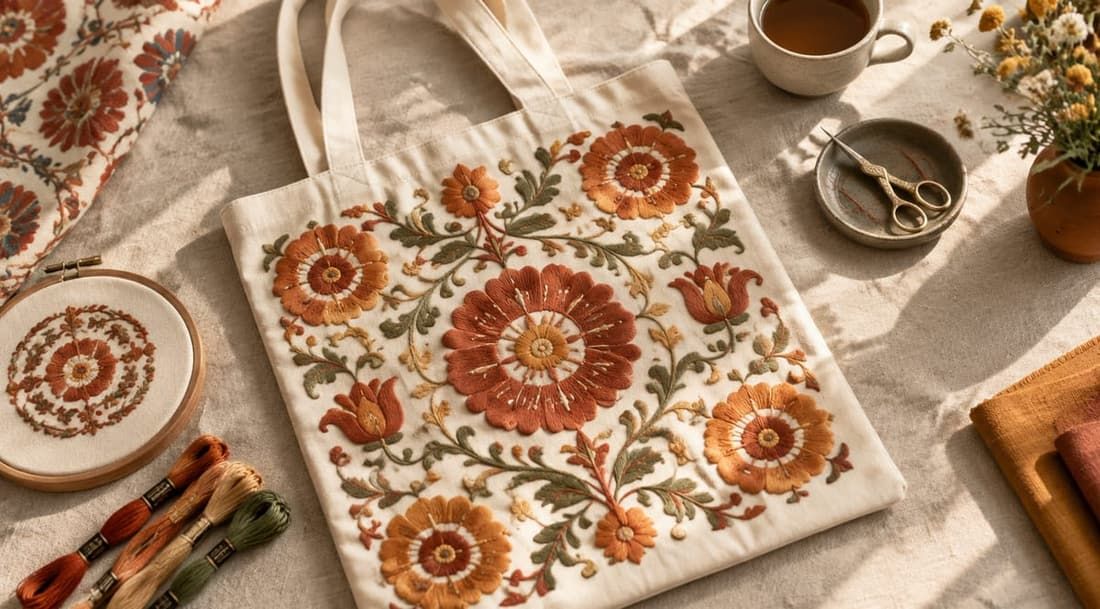
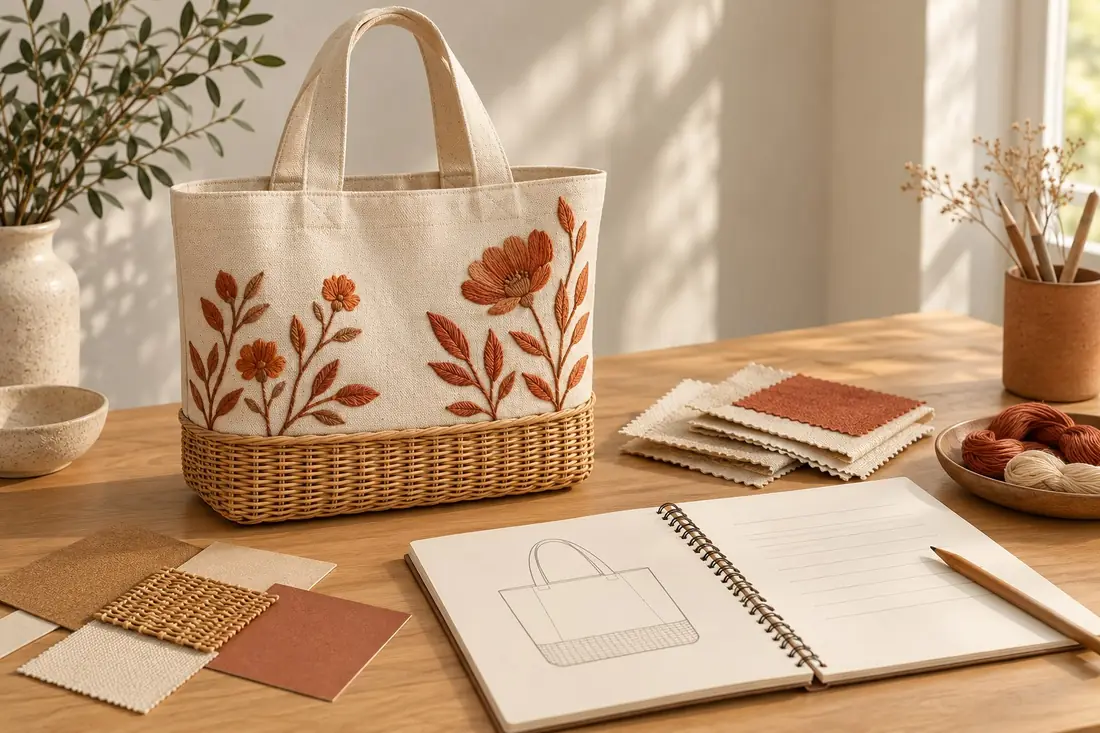
Bulk bags should follow the agreed specification and approved production reference, but approval does not mean every handmade bag will be visually identical. A useful sample approval records the exact version, dimensions, materials, embroidery or weaving details, acceptable variation, packaging and any outstanding changes. It gives both buyer and workshop a shared basis for production and inspection.
A message saying ‘looks good’ is often too vague. Before releasing production, compare the physical sample with the latest written requirements and identify which details are approved, which need changing and which remain unresolved. This guide focuses on embroidered, natural woven and mixed-material bags; it is a practical review framework rather than a universal test standard or a guarantee of identical output.
What does an approved sample actually confirm?
A development sample helps resolve an idea. A revised sample checks changes. A production reference should represent the construction and materials agreed for the order. Different workshops may use different names, so ask what the sample in front of you represents instead of assuming that ‘final sample’ means everything is ready for production.
Keep the physical reference linked to a dated specification and sample identifier. Confirm whether the sample uses the intended production fabric, thread, woven material, hardware and packaging. If a component is temporary, identify it in writing and agree how its replacement will be reviewed. A sample made with an available substitute cannot by itself approve a different bulk material.
Approval is product-specific. It does not automatically approve additional colours, another size, a changed lining or a related catalogue style. Confirm which variants the review covers and which require a separate swatch, artwork check or physical sample.
A checklist to use before releasing bulk production
Use the following table as a starting record. Add requirements for the intended use, destination and sales channel. For every unresolved point, name the decision needed and who will confirm it. Leaving a detail ‘to discuss’ is more useful than silently treating it as approved.
The checklist does not establish numerical tolerances, test loads or acceptance limits. Those must be appropriate to the material and product and agreed in the order documents. A general handbag checklist cannot prove compliance or replace any necessary product-specific testing.
Swipe horizontally to see the full table →
| Review area | What to compare | What to record |
|---|---|---|
| Sample identity | Physical sample, photographs and current specification | Style/SKU, sample version, date and approving person |
| Dimensions and shape | Width, height, depth, handle drop and opening | Measurement points, units, measuring method and agreed tolerances |
| Materials and colour | Outer material, lining, thread, woven body and hardware | Material references, colour references and any temporary substitutions |
| Embroidery and branding | Artwork, placement, motif size, labels and logo method | Approved artwork version, position references and detail photographs |
| Woven construction | Base, rim, weave, lining attachment and handle connection | Acceptable natural variation and defects that must be corrected |
| Assembly and use | Seams, handles, closure, pockets and intended contents | Functional checks and any separate testing requirements |
| Packaging and labels | Protection, presentation, packing method and approved label copy | Packaging version, contents and carton information if agreed |
| Changes and production release | Latest comments, revised quotation and schedule | Approved changes, open issues and explicit production authorization |
Check dimensions using a method both sides can repeat
Measure the sample instead of relying on a photograph. State where each measurement begins and ends, and whether the bag is empty, laid flat or standing naturally. Width at the opening may differ from width at the base. Handle length and handle drop are different measurements. A soft tote can look wider when flattened than when carrying its intended contents.
Record centimetres or inches consistently, and attach photographs showing the agreed measurement points. If the bag must fit a laptop, cosmetic set or another item, check the usable opening and interior space with that item or a suitable equivalent. External dimensions alone do not establish usable capacity.
Ask the workshop to agree tolerances for the specific design and construction. Do not copy a tolerance from an unrelated bag. Natural woven structures and flexible fabric constructions may require different methods; a measurable acceptance rule needs a defined measuring method as well as a number.
- Measure width, height and depth at named points.
- Check handle drop separately from overall handle length.
- Review opening clearance, pocket size and usable interior space.
- Record the bag condition and method used for each measurement.
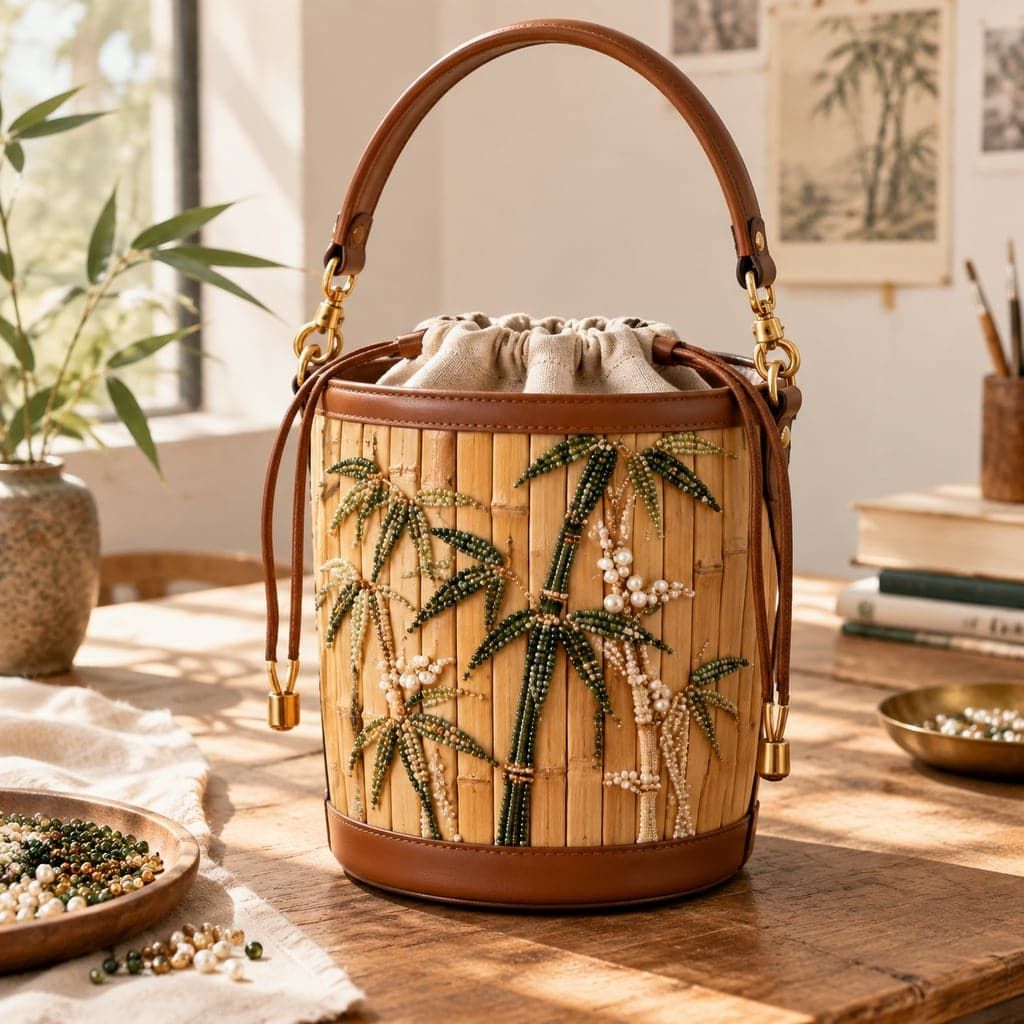
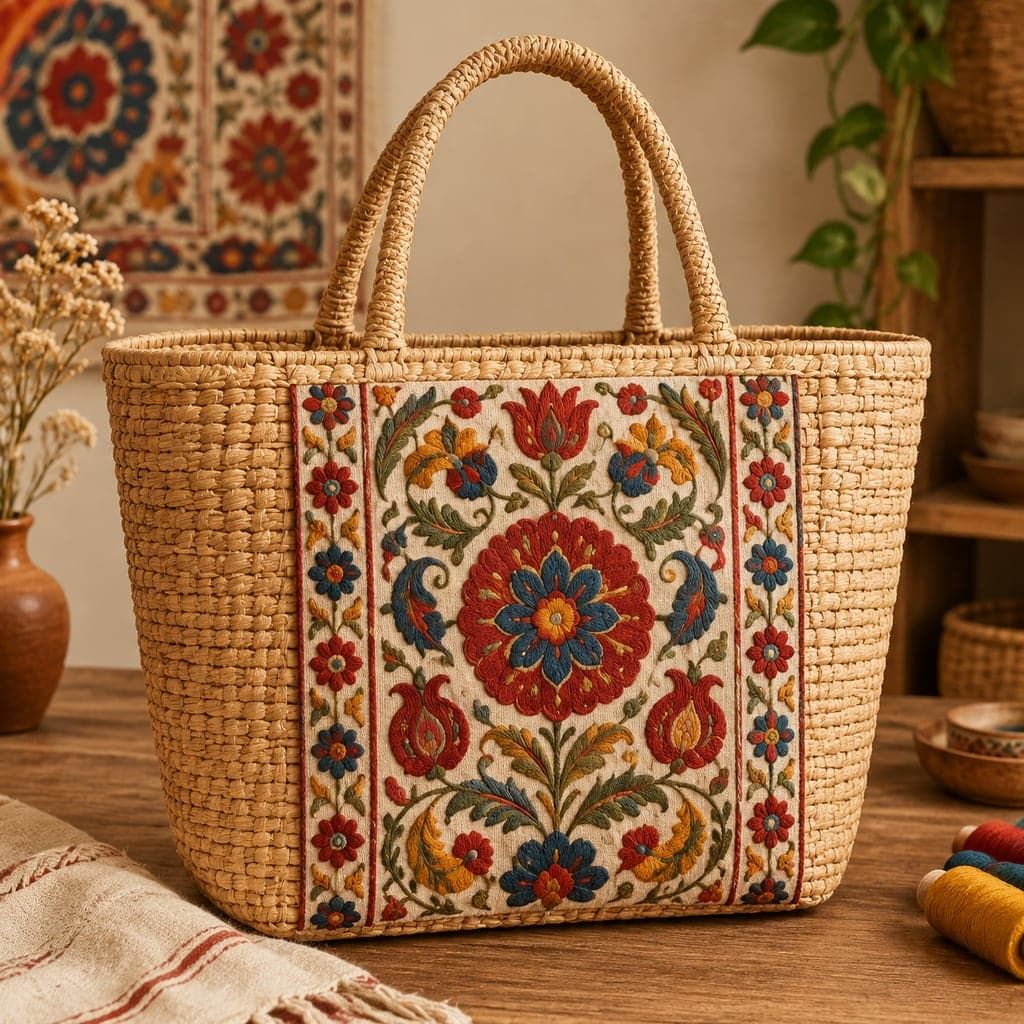
For embroidered bags, approve more than the motif
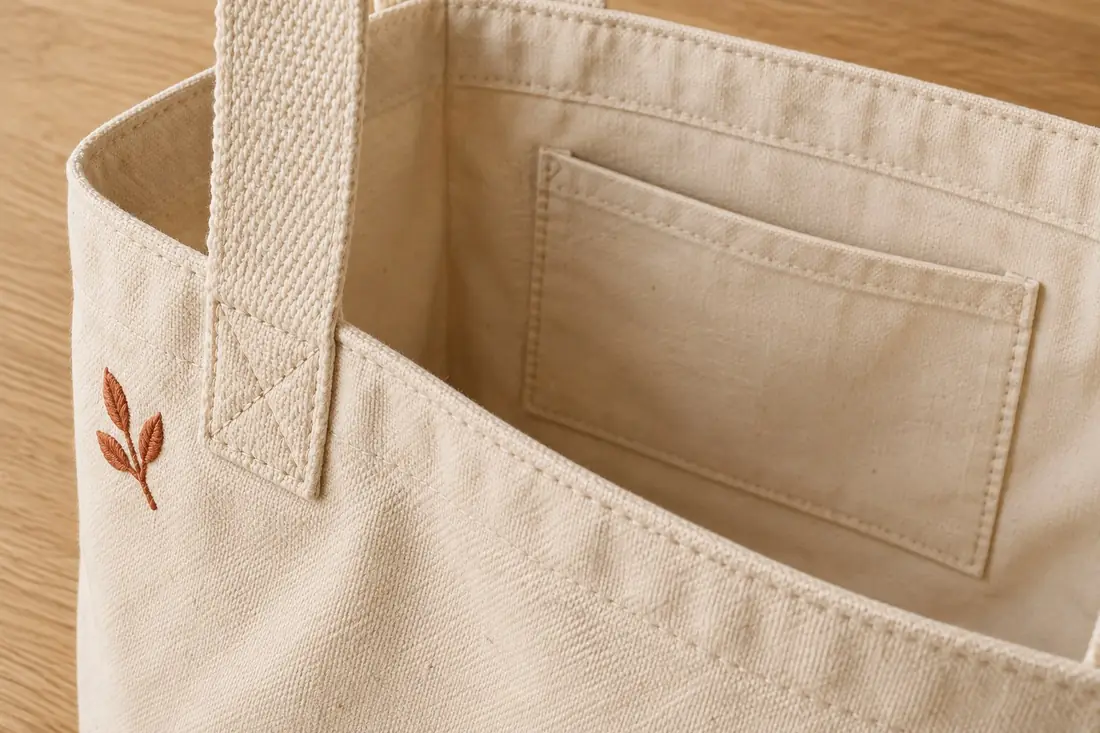
Compare the sample with the current artwork, not an earlier image in a message thread. Check motif dimensions, orientation, placement and the relationship to seams, pockets and handles. State whether placement is measured from a seam, centre line or another repeatable reference. A pleasing photograph is not a placement specification.
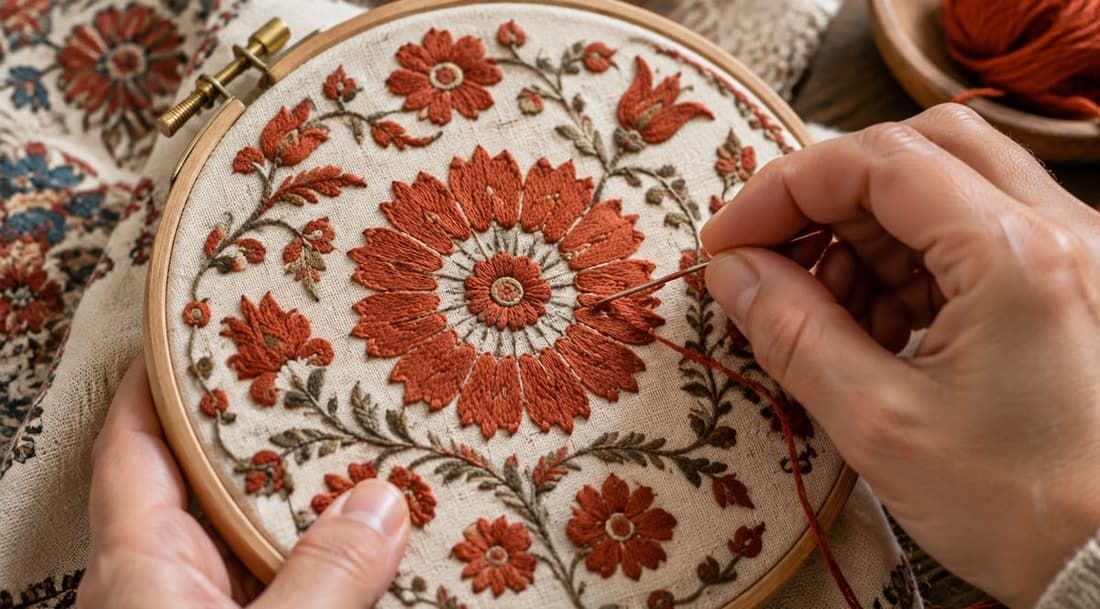
Review thread colour, coverage, stitch effect and the way the embroidery interacts with the base fabric. Look for unintended puckering, loose threads, uncomfortable backing or distortion around the motif. For hand embroidery, discuss which variations in stitch rhythm or outline are part of the agreed appearance and which are unacceptable. Handmade character should not excuse a loose attachment or unfinished thread end.
Inspect the inside as well as the outside. Confirm whether embroidery backing is covered by lining and whether beads or other raised details need protection during packing and use. If a claim about colourfastness or durability is needed, agree the relevant test and material scope; visual sample approval alone cannot establish that claim.
For woven and mixed-material bags, separate variation from defects
Natural woven materials can vary in tone, texture and shape. Instead of asking for an undefined ‘same as photo’, agree the appearance range with clear references where practical. Discuss colour range, weave spacing, rim finish, symmetry and how much shape variation is acceptable for the selected material and design.
Natural variation is different from a sharp exposed edge, an unstable base, a damaged connection or an unfinished lining attachment. Review how the bag rests, how its opening behaves and whether the lining or closure catches on the woven body. Handle attachment and edge finishing deserve attention even when the overall silhouette looks attractive.
For mixed-material bags, inspect the connection between the flexible textile and the more rigid woven part. Look for separation, unintended gaps, distortion and uncomfortable exposed edges. Ask which inspection or testing method is appropriate for the intended use. No single inspection image or generic load figure proves that every construction is suitable for every purpose.
- Appearance variation: agreed shade, texture and shape range.
- Finish: rim, fibre ends, lining edges and exposed connections.
- Structure: base stability, opening and handle attachment.
- Mixed-material junction: alignment, reinforcement and movement between materials.
Review function, materials and packaging together
Try the opening, closure, handles and pockets in the intended way. Place representative contents in the bag and check access and carrying comfort. This buyer review can reveal usability issues, but it is not a substitute for a specified laboratory test or a documented inspection method. Test loads and cycles should be agreed for the product, not borrowed from a marketing statement.
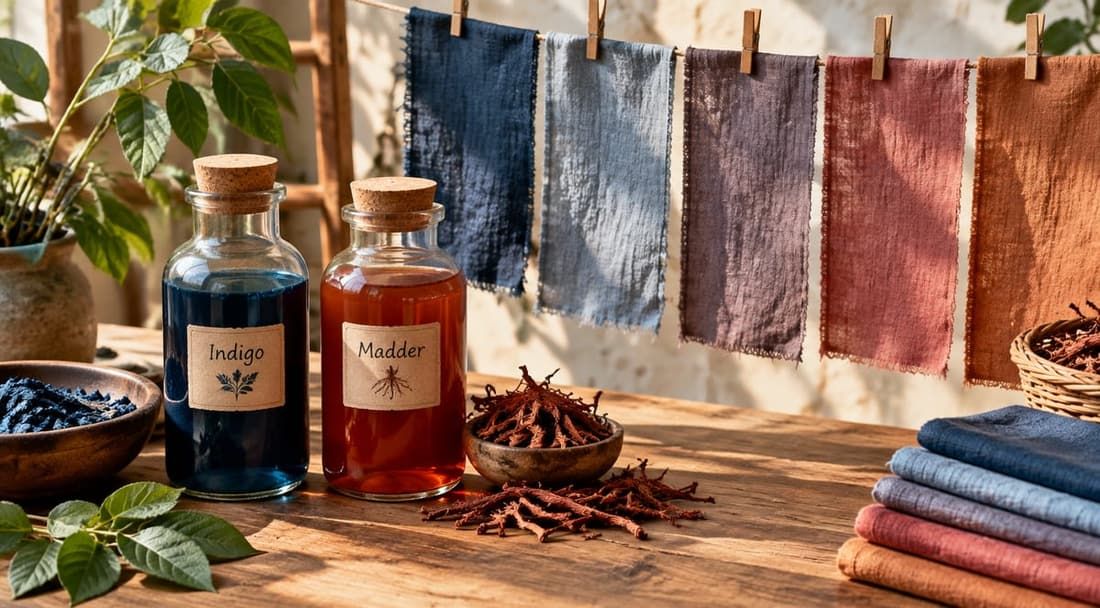
Compare the sample materials with the proposed production supply. Ask whether fabric, thread, hardware or woven material will come from a different batch or source. A new dye batch or a substitution may require fresh swatch review. Record any approved substitution and check whether it affects appearance, care, construction, timing or the quoted scope.
Confirm how the product will be protected and presented. Embroidery, beads, woven rims and handles may need different packing arrangements. Check whether folding or nesting changes the shape, whether packaging can rub against decorative details, and which labels or inserts belong in each unit. Destination-specific label or compliance requirements need their own confirmation; approving the sample does not automatically approve those requirements.
Write sample feedback as approved, revise or unresolved
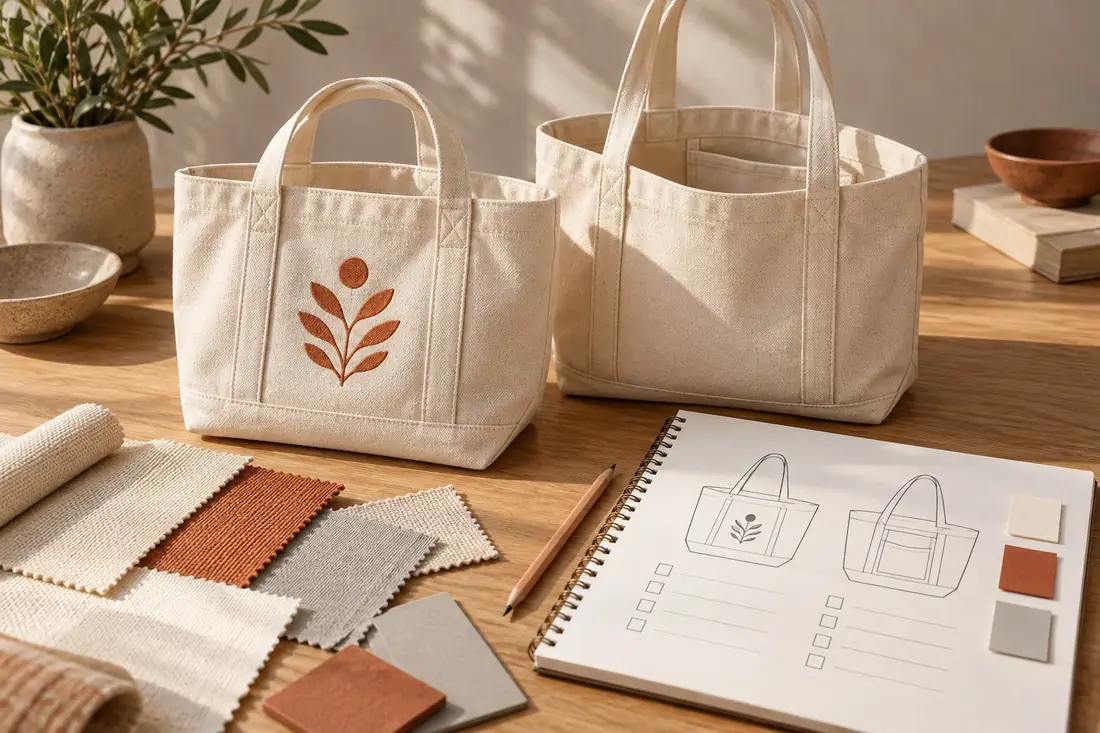
A clear comment identifies the part, the current condition, the requested decision and the evidence needed to close it. Avoid writing ‘improve quality’ without saying what to improve. Mark photographs so the workshop can locate the issue, and keep feedback in one current list instead of scattering conflicting instructions across messages.
It shows how approval can be limited to a detail while the order remains on hold until the other points are resolved.
Swipe horizontally to see the full table →
| Status | Example feedback | Next confirmation |
|---|---|---|
| Approved | Motif placement matches artwork revision B and the marked centre line. | Keep the artwork and annotated photograph with the sample record. |
| Revise | The current inside pocket does not fit the intended item; review its opening and usable depth. | Agree revised dimensions and whether a new physical check is needed. |
| Unresolved | The sample lining is temporary; the proposed production lining has not been reviewed. | Review the intended lining and confirm any effect on price or timing before release. |
Freeze one current version before authorizing production
After revisions, identify the approved reference and record what it covers. Where a new physical sample is not required, document the agreed change and the evidence used to approve it. Do not let an old sample photograph, a new artwork file and an earlier material list become three competing production instructions.
Keep the sample identifier, specification revision, material and colour references, artwork, packaging details, accepted deviations and approval date together. Confirm how both sides will retain a production reference. The record should also identify any testing or inspection requirements that remain separate from visual sample approval.
Production release should be explicit. Confirm the order quantity and colour split, quotation scope, payment arrangements, schedule, inspection plan and delivery terms through the order process. Paying for sample development or praising the sample does not itself authorize bulk production.
- One current specification and sample reference.
- One agreed list of changes and accepted deviations.
- Clear confirmation of the variants covered.
- No unresolved material or construction substitution.
- Written production authorization linked to the actual order.
What if something changes after sample approval?
Reopen the affected decision when material, colour, size, artwork, hardware, packaging or construction changes. Ask what the change affects and what evidence is needed: an updated drawing, a material swatch, photographs, a revised physical sample or another appropriate check. The required review depends on the change; neither ‘always start again’ nor ‘no need to review’ is a useful blanket rule.
Agree revision scope, additional sample or development costs and timing before the work starts. The original quotation may have been based on different materials or quantities. Production timing also needs confirmation if approval is delayed or a production component changes. Do not convert sample making time directly into an arrival date.
Sample approval sets a reference for the order; bulk inspection still has a separate role. Agree the inspection scope and acceptance method for the actual production run. An approved sample cannot tell you that every unit has been checked, and a general inspection label does not establish every test or claim.
TelvaBag sample development and purchasing conditions
Use the sample review to clarify the product before committing to the production order. TelvaBag's current base conditions are below; special projects can have their own minimums. Finished-bag MOQ, supplier material minimums and the split between colours are separate decisions.
The sample proposal should state what is included, the revision scope, sample shipping and any additional development work. Sample approval does not automatically make all subsequent revisions free. Bulk timing and the production quotation are confirmed for the approved design, quantity and material supply.
- 50 pieces per design. Mixed colours and quantities per colour are confirmed separately. Special programmes may have higher minimums.
- Usually 10 business days after design and materials are approved. Shipping is separate; complex designs and revisions need an agreed schedule.
- The initial sample development fee is credited to the production invoice when cumulative production orders reach 200 pieces within 6 months of sample approval. Shipping, extra samples and revisions are separate.
Questions buyers ask before approving a bag sample
Can I approve a sample only from photographs?
Photographs can confirm some visible details, but they cannot fully confirm texture, carrying comfort, interior access or material behaviour. Agree which points can be reviewed remotely and which need a physical sample or other evidence for the project.
Will every handmade woven bag look exactly the same?
Natural materials and handwork can vary. Agree the acceptable appearance range and separate it from defects such as damaged connections or unfinished edges. ‘Handmade’ alone does not define an acceptance rule.
Does approving one colour approve all colours?
No. Confirm the variants covered. Different colours, threads, dye batches or materials may require their own references or review, even when the shape is unchanged.
Should I keep the approved sample?
Agree how both sides retain a reference. Link the physical sample to its identifier, dated specification, photographs and accepted changes so the production and inspection teams use the same version.
Are all changes after sample approval included for free?
Do not assume that. Confirm the revision scope, extra development or sample costs and new timing before making a change. The agreement should distinguish initial development from later work.
Does sample approval replace inspection of the bulk order?
No. It establishes a production reference. Agree the bulk inspection scope, acceptance criteria and any product-specific testing separately for the actual order.
Start with a clear brief and an agreed review record
If your project is still at the idea stage, you can begin with a catalogue link, a reference picture or a rough sketch and explain the changes you want. A complete design is not required for the first discussion. The details will need to become clearer before sample making and production release.
Send the style, intended use, known quantity and the decisions you need help with. TelvaBag replies within one working day with initial feasibility, the information needed for pricing and sample arrangements. A formal quotation follows confirmed specifications. Use the template and process pages below to organise the next step.