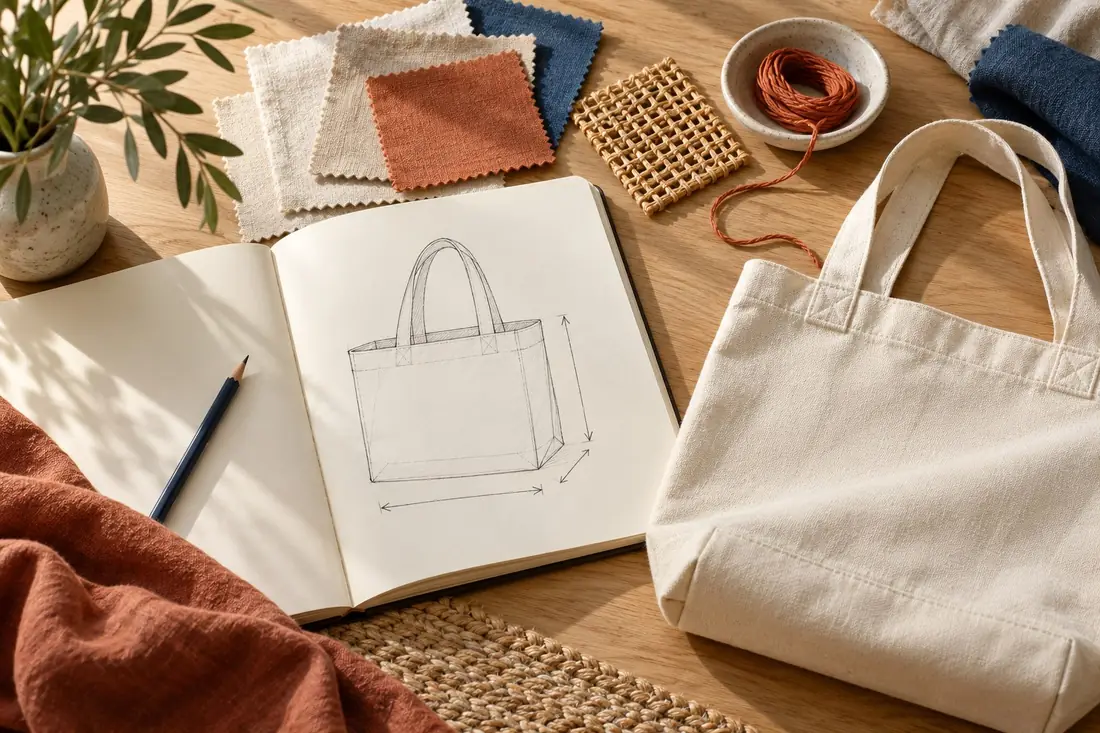
Yes. You can start discussing custom embroidered, woven or mixed-material bags without a finished design or a complete tech pack. A catalogue style, reference image, rough sketch or existing sample can be enough for an initial conversation when you explain the intended use and what you want to change. It is enough to begin development, not to approve a production order.
The important distinction is between starting a conversation and starting manufacture. TelvaBag can help identify missing dimensions, material choices and construction details. Before a physical sample is made, the development scope, materials, fees and approval points still need to be agreed. Before bulk production, the approved sample and final specification need to describe the same product.
What counts as a complete bag design?
A moodboard explains the look you want. A sketch communicates a shape. A tech pack records how a product should be made: dimensions, construction, materials, artwork, hardware, labels and packaging. These documents answer different questions. A beautiful drawing may still omit the handle drop, opening, lining or reinforcement needed to build a usable bag.
You do not need to solve every technical detail before contacting a workshop. You do need to distinguish decisions already made from details still open. Marking a measurement as approximate is more useful than supplying a precise-looking number that has not been checked. If you already have a tech pack, send its current version and identify anything that is still provisional.
What should you send in your first enquiry?
Start with one clear description of the product and a small, relevant set of references. A buyer brief is a decision aid, not an examination. The following information helps a workshop understand the project without asking you to complete an engineering specification first.
An unknown quantity or launch date does not prevent an initial discussion. Say what is unknown. If you have a target market, retail channel or delivery country, include it because the intended use, packaging and shipping proposal may change. Do not treat an early estimate as an approved order quantity.
Swipe horizontally to see the full table →
| Information | Useful starting detail | If you are unsure |
|---|---|---|
| Product and use | Everyday tote, resort basket, cosmetic pouch or another specific use | Describe who will carry it and what it should hold |
| Reference | A catalogue link, your sketch, photographs or an existing sample | Choose one reference for the shape and another only for a specific detail |
| Size | Width, height, depth and handle drop; state centimetres or inches | List the objects it should hold and mark dimensions as approximate |
| Material and feel | Soft canvas, structured rattan, flexible raffia or a mixed construction | Describe whether the bag should stand upright, fold or feel lightweight |
| Branding | Logo location, embroidery idea, label or packaging preference | Tell us whether artwork files are available |
| Changes | The features to keep, replace or add | Separate essential changes from optional preferences |
| Quantity | Estimated pieces per design and proposed colours | Say that quantity or colour split is not decided |
| Destination and timing | Delivery country and a real launch or event date | Ask which decisions are needed to establish a schedule |
How can you explain changes using a reference picture?
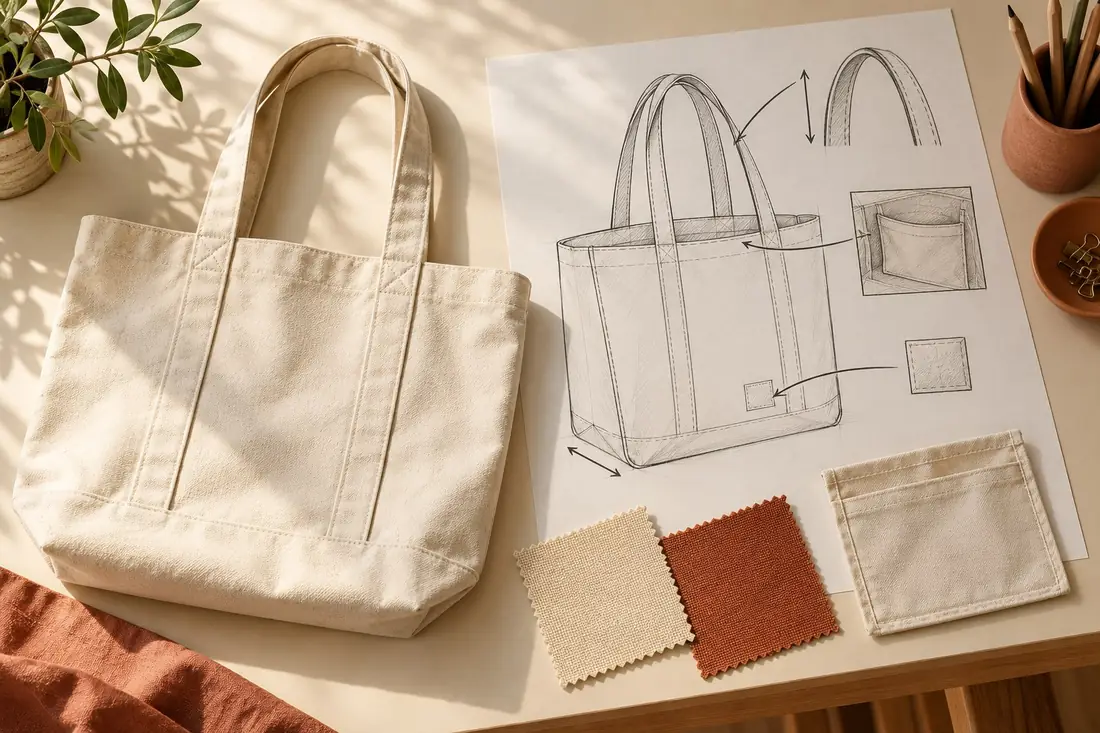
A reference becomes actionable when it has a purpose. Rather than writing ‘make this better’, identify the part you mean: a shorter handle, a wider base, a zip closure, an inside pocket or a smaller embroidered motif. Use front, side and interior views where available; a front photograph alone cannot show the depth or the lining construction.
Write ‘keep’, ‘change’ and ‘to discuss’ beside each relevant feature. Indicate the measurement direction, the units and whether you measured an existing product or estimated from an image. For a logo, show the proposed position and approximate size on the bag, then provide the artwork separately if you have it.
References should explain your direction. Identify your own artwork and the new elements you want to develop, and agree the use of customer artwork and any confidentiality requirements separately. A picture from another brand is not a complete specification, and its logo, materials or construction should not be assumed to be part of your project.
- Keep: the overall tote silhouette and a comfortable shoulder carry.
- Change: add a closed top and one internal pocket.
- To discuss: canvas weight, lining and embroidery method.
- Confirm later: final dimensions, artwork placement and packaging.
Which development route fits your starting point?
Choosing the route first prevents unnecessary development. Adding a label to a catalogue bag is a different task from changing its structure or developing your original design. Describe the changes you need instead of relying only on the terms OEM, ODM or private label.
An existing pattern can make discussion more concrete, but material substitutions, handle changes and new closures may still require another sample. Rights or exclusivity for new artwork and newly developed elements are agreed separately; choosing an existing base style does not make the whole style exclusive.
Swipe horizontally to see the full table →
| Starting point | Route to discuss | Typical decisions |
|---|---|---|
| A catalogue bag with your brand | Private label | Logo, labels, trims and packaging within the available construction |
| An existing style with changes | ODM adaptation | Dimensions, colours, materials, artwork and any effect on structure |
| Your own concept or design | OEM development | Pattern, construction, material sourcing and an agreed development specification |
Example: a first brief without a tech pack
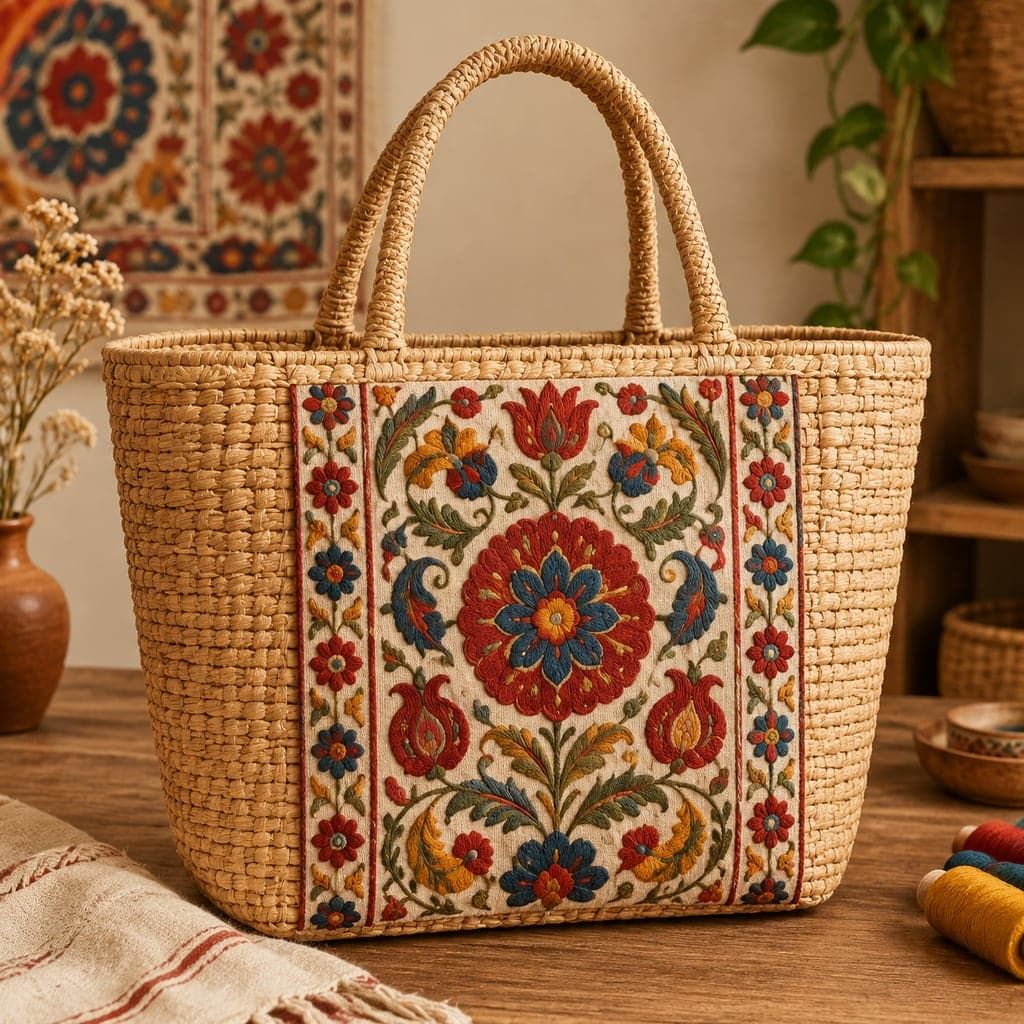
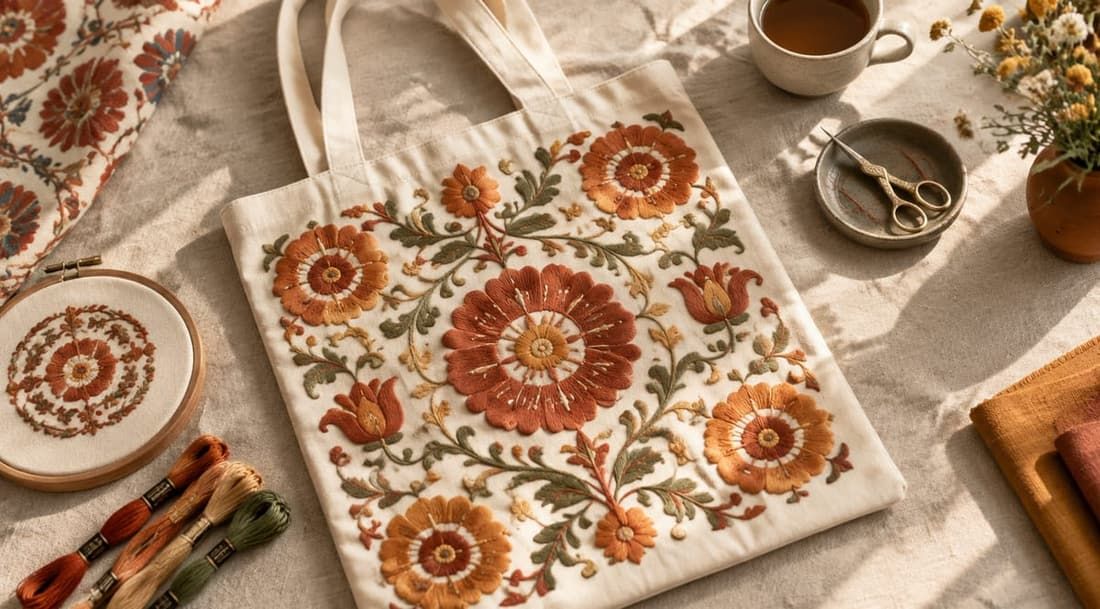
‘We are developing a canvas tote for a boutique lifestyle brand. We like the silhouette of your floral embroidered tote, but want a simpler front motif, longer shoulder handles and a zipped inside pocket. We are considering around 100 pieces for the first order. The colour split and packaging are not decided. Delivery would be to Germany.’
This brief gives the workshop a product, a reference, proposed changes, an estimated quantity and a destination. It does not pretend that the pattern, thread colours or production schedule are already approved. The next conversation can focus on the missing decisions rather than reconstructing the idea from a single photograph.
- Product: canvas tote for everyday retail use.
- Reference: a specific catalogue style or link.
- Essential changes: handle length, motif and inside pocket.
- Quantity: an estimate per design, not a commitment.
- Open decisions: material weight, colours and packaging.
- Destination: the delivery country.
- Next request: initial feasibility and the information needed for pricing and sample development.
What will the workshop need to check?
Development is more than turning a photograph into a cutting pattern. The workshop needs to understand how the bag opens, carries weight and holds its shape. A change to the handle or gusset can affect reinforcement, lining, material use and the way the product is packed.
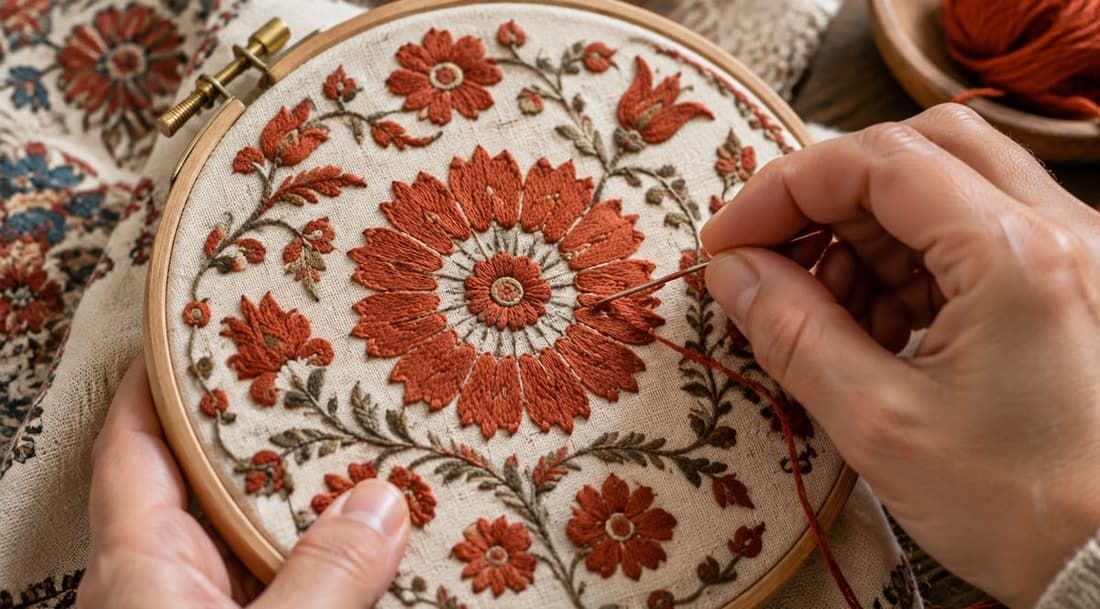
For embroidery, discuss the motif size, stitch effect, placement and the relationship between the artwork and the base fabric. A graphic that looks clear on a screen may need adjustment to work at the chosen embroidered size. For woven bags, discuss structure, edges, handle attachments and how the lining or textile panel connects to the woven body.
For mixed-material bags, pay particular attention to the connection between a rigid woven part and a softer textile part. Ask which details need a physical review. Digital artwork or a rendering can support development, but it cannot by itself confirm texture, handle comfort, seam finish or the behaviour of the chosen materials.
- Construction: opening, base, gusset, lining and handle attachment.
- Artwork: size, placement, technique and the files needed for development.
- Materials: stock availability, substitutions, care and any supplier minimums.
- Commercial scope: development work, sample contents, revisions, production quantity and packaging.
What must be agreed before making a physical sample?
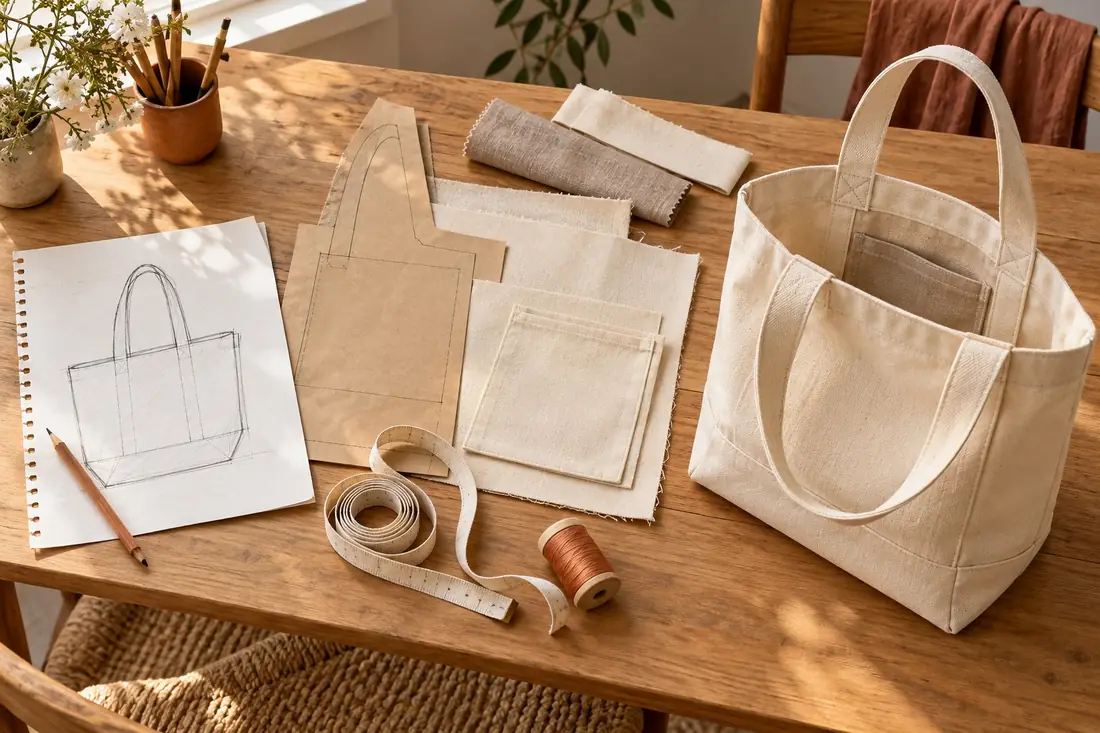
Initial discussion can begin with incomplete information. Sample manufacture needs an agreed working direction. Record the decisions in a short specification, annotated drawing or tech pack so both sides know what the sample is intended to demonstrate.
Do not assume that an early feasibility reply is a formal quotation, that every change is included, or that choosing a colour creates a material supply commitment. The sample proposal should state what is being made, what is still provisional, what is included and how changes will be handled. Separate sample development fees from any later production deposit.
- Working dimensions and construction, including the handle drop and closure.
- Selected materials and any agreed temporary substitutions.
- Artwork version, placement and the details still to be reviewed.
- Sample contents, development fees, freight and revision scope.
- The point from which making time is counted and how shipping is handled.
- Who approves the sample and how changes are recorded before production.
MOQ, making time and sample fee credit at TelvaBag
An incomplete design does not make every project eligible for the same material or colour options. The finished-bag minimum, supplier requirements for custom materials and the quantity of each colour are different decisions. Special programmes, including some hotel projects, may have their own minimums.
The following are TelvaBag’s current starting terms, not a general rule for every manufacturer. A preliminary discussion helps clarify the development scope. A formal quotation follows confirmed specifications, and production timing is agreed for the approved design, quantity and available materials.
- 50 pieces per design. Mixed colours and quantities per colour are confirmed separately. Special programmes may have higher minimums.
- Usually 10 business days after design and materials are approved. Shipping is separate; complex designs and revisions need an agreed schedule.
- The initial sample development fee is credited to the production invoice when cumulative production orders reach 200 pieces within 6 months of sample approval. Shipping, extra samples and revisions are separate.
Common mistakes that create another round of questions
A clearer brief reduces avoidable uncertainty; it does not remove the need for development or guarantee a particular schedule. The simplest improvement is to keep one current reference set, one current list of decisions and a short record of agreed changes.
- Sending many unrelated references without identifying the feature to borrow from each.
- Writing ‘same size’ without measurements, units or the physical reference.
- Requesting a new colour without saying whether stock material is acceptable.
- Adding a launch deadline without the delivery country or allowing time for sample review.
- Treating a rendering, a rough estimate or an unapproved prototype as a production specification.
- Changing a material after sample approval without checking the effect on the agreed product.
Questions buyers ask before their first enquiry
Can I start with only a photograph?
Yes, for an initial discussion. Explain what the photograph represents, what you want to change and the intended use. The workshop will still need dimensions, construction and material decisions before the sample can be made.
Do I need CAD files or professional drawing software?
Not for the first enquiry. A rough sketch with clear notes can start the discussion. The files needed for pattern development and artwork depend on the project and are confirmed during development.
Can you quote before every detail is final?
You can ask about feasibility and the information needed for pricing. Any early budget guidance needs stated assumptions. A formal quotation requires confirmed specifications; one photograph does not settle material, artwork, quantity or packaging costs.
Can I contact you before I decide the quantity?
Yes. Say that the quantity is undecided and describe your launch plan. TelvaBag’s baseline is 50 pieces per design, with colours and quantities per colour confirmed separately. Special programmes may require more.
Does a successful sample approve bulk production automatically?
No. Review the physical sample and record the final specification and any changes. Confirm the production order, schedule, inspection and delivery terms separately before production starts.
What if I need to change the sample?
Describe the change and confirm whether it affects construction, materials or artwork. Revision scope, additional sample costs and the updated schedule must be agreed; do not assume every revision is free or included.
Send the information you already have
You can begin with a catalogue link, an annotated picture or a few sentences about the bag you want to make. Tell us which decisions are fixed and which need help. If you prefer a document, use the tech pack template and fill only the information you know; an empty field is better than a made-up specification.
Tell us the style you like, what you would change and your estimated quantity if known. TelvaBag will reply within one business day with initial feasibility, any information needed for pricing and the next sampling steps. A formal quotation follows when specifications are confirmed.