White label, private label and bespoke describe three different deals, not three prices for the same deal. The difference is who owns the design file, how much of the development work you are paying for, and what happens when you want to re-order. Most boutique brands start with the cheapest model and outgrow it within two seasons — usually after a competitor turns up with their bag. This is how the three models actually differ, and the signals that it is time to move.
| White label | Private label | Bespoke (OEM/ODM) | |
|---|---|---|---|
| The silhouette | Ready-made, from the factory catalogue | Ready-made, from the factory catalogue | Developed for you, or from your tech pack |
| What you add | Your tag or hangtag | Your logo, label, lining, colourway | Everything, including structure and hardware |
| Who owns the design | The factory | The factory | You (on OEM) or shared (on ODM) |
| Typical MOQ | From 50 pcs, often mixed in one carton | From 50 pcs per style | From 50 pcs per style, plus development |
| Sampling | Stock sample despatched | Labelled sample, 7-10 days | Sealed prototype, 10 business days |
| Time to first shipment | 2-3 weeks | 4-6 weeks | 8-12 weeks |
| Best for | Testing a category cheaply | Brands with a clear look but no design team | Brands whose shape is the product |
White label: buy a finished design as-is
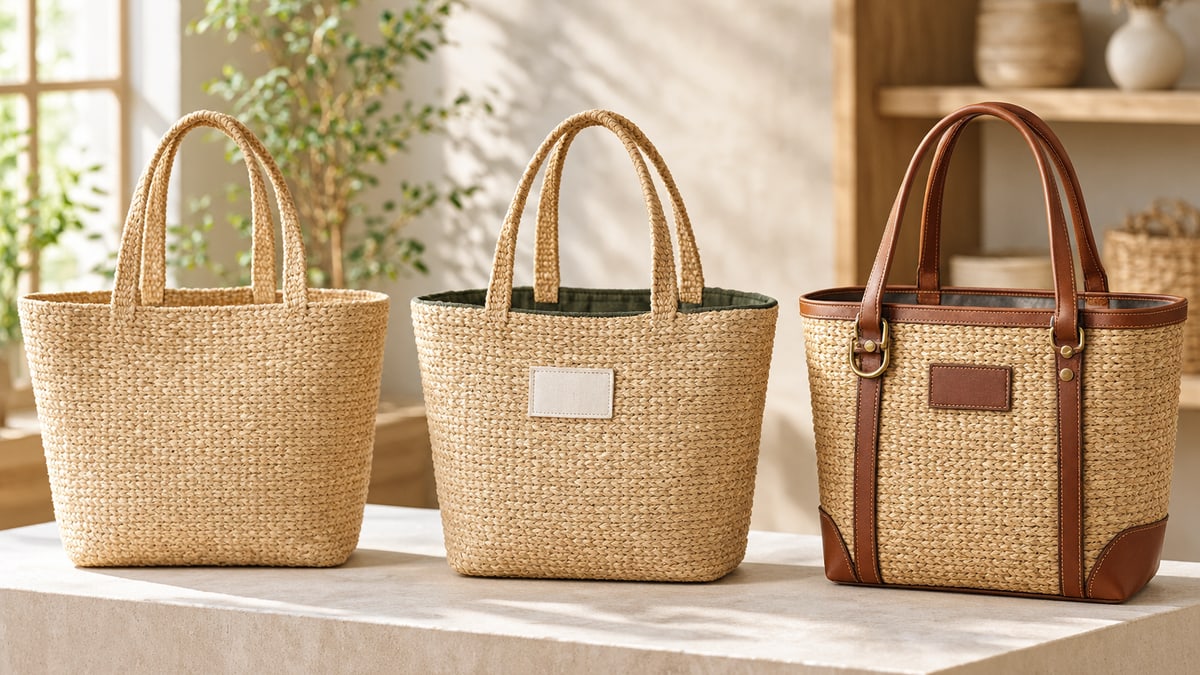
White label means the factory already makes the bag, and you buy it with your tag on it. You are buying inventory, not development. The advantage is speed and the smallest possible commitment — a useful way to test whether your customers will buy a woven bag at all before you commission anything.
The limit is obvious. A white-label silhouette is available to everyone your factory sells to, and the design file stays with the factory. You also inherit whatever construction decisions were made for another brand, including ones that were made to hit a price rather than to last.
Private label: your logo on an existing silhouette
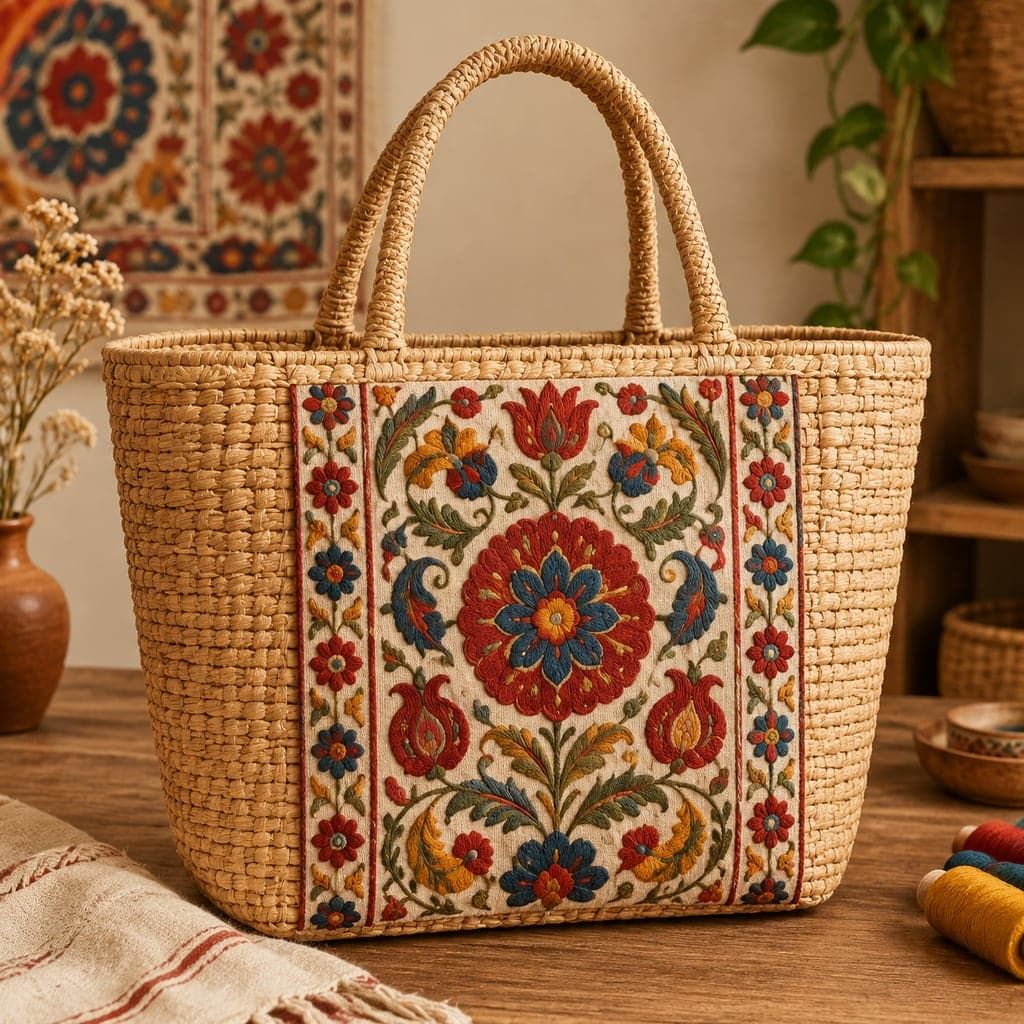
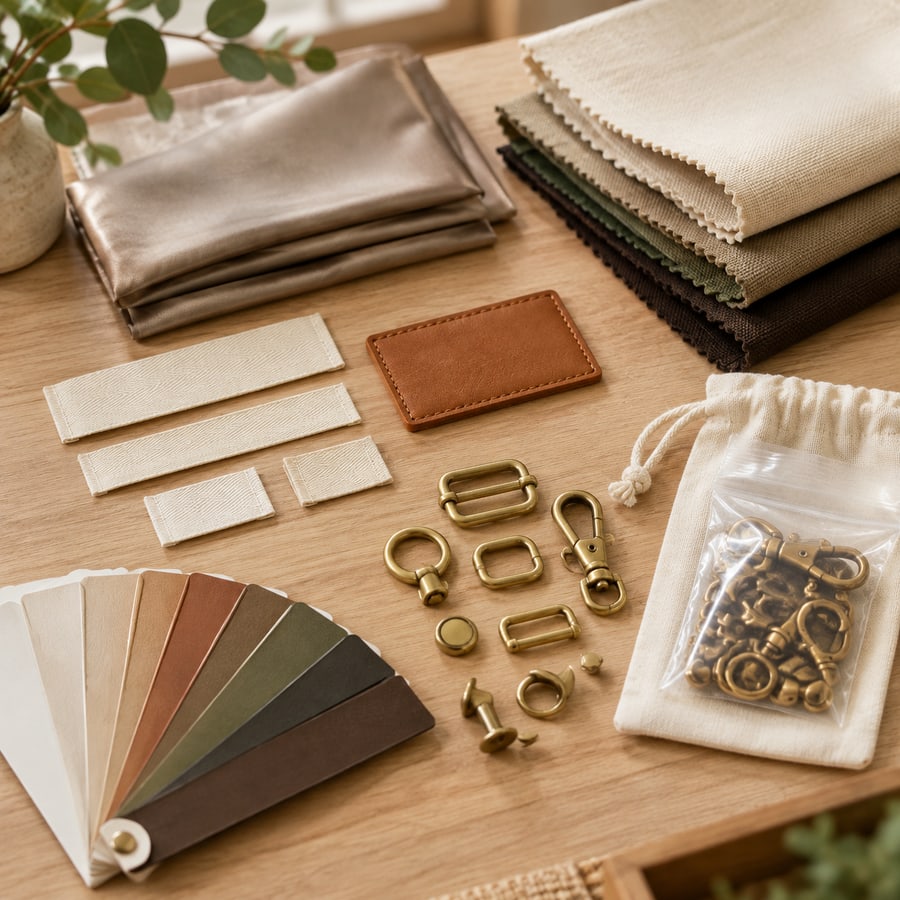
Private label is the middle step and the one most boutique brands actually live in. The silhouette stays with the factory, but the bag is made yours: logo on the front panel or hardware, woven labels, custom lining colour, a stock colourway or a lab-matched Pantone, and often a branded dust bag. Nothing structural changes, so sampling is fast and the price step is small.
This is where a low MOQ matters most. At 50 pieces per style you can run six colourways across one silhouette and still keep the order small enough to sell through, which is exactly how independent labels build a range without warehousing risk.
Bespoke: your design, built to spec
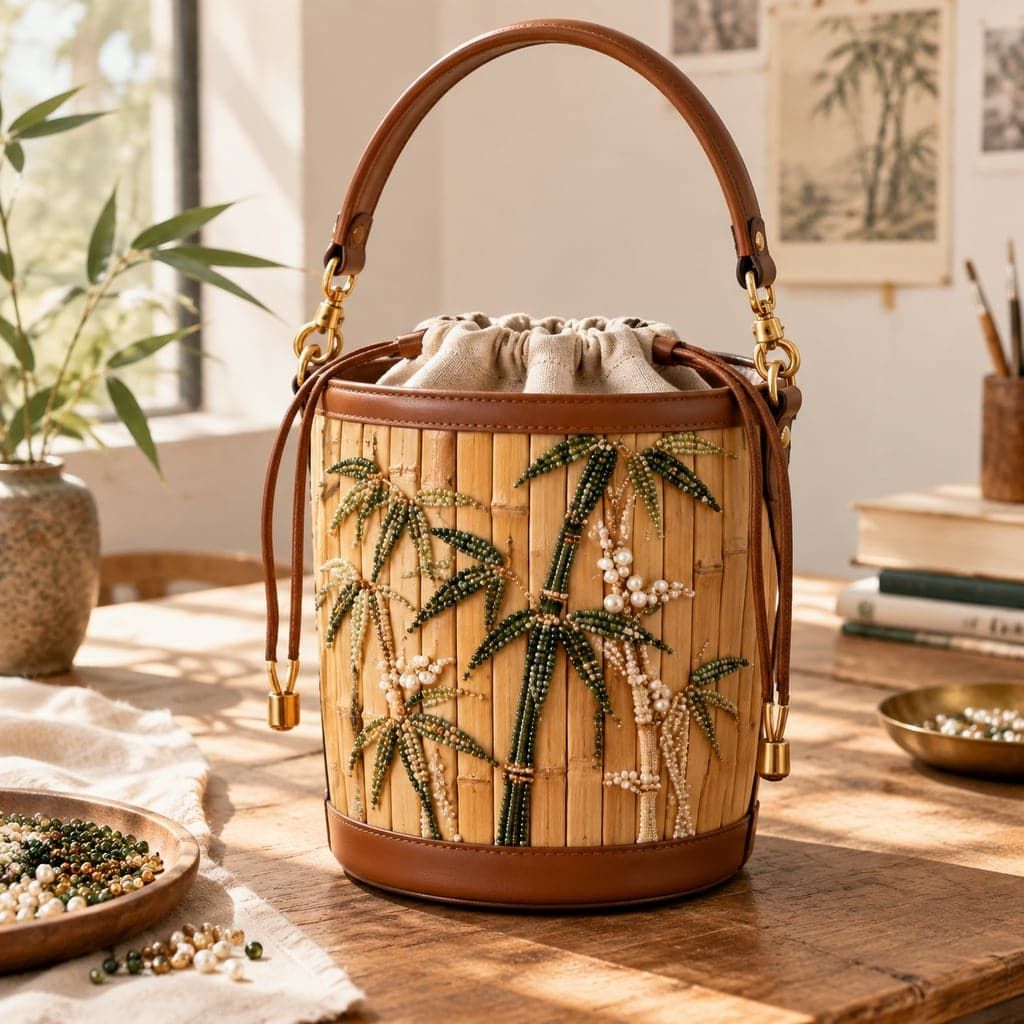
Bespoke splits into OEM and ODM. On OEM you supply the finished design or a tech pack and the atelier builds to spec. On ODM you supply a concept, reference images or a physical sample, and the atelier owns the development: material selection, structure, hardware, and the sealed prototype you approve before bulk.
You pay for development here — typically a sampling fee plus a mould or digitising cost where embroidery or hardware tooling is involved, with the sampling fee usually refunded once the order passes a threshold. In exchange you own a shape nobody else can re-order without you, which is the entire point of the model.
Where each model lands on cost and commitment
| Model | Upfront cost | Unit price | Your risk |
|---|---|---|---|
| White label | None | Lowest | No exclusivity; the bag is not yours |
| Private label | Low (labels, trims, colour matching) | Low to mid | Colour and trim minimums per style |
| Bespoke OEM | Sampling plus tooling where applicable | Mid to high | Development cost if the design does not sell |
| Bespoke ODM | Sampling, refundable above a set order value | Mid to high | Depends on how the ownership terms are written |
The upgrade path most boutique brands follow
- Season 1 — white label. Test whether your customer buys the category at all
- Season 2 — private label. Own the colourway, the label and the lining; keep the silhouette
- Season 3 — bespoke. Change structure, hardware and proportion where your customer keeps asking
- Before any bespoke development, put the ownership of the design file in writing
- Keep one private-label style running as your price entry point while bespoke carries the story
Switching models without losing a season
Development and production run on different clocks. The practical move is to keep selling the private-label version while the bespoke sample is being approved, so a slip in development never leaves you with an empty shelf. Place the bespoke order the moment the sealed sample is signed, and keep the sample itself — it is the legal reference for every later re-order.
Frequently asked questions
Can I use my own logo on a white-label bag?
You can attach a hangtag or a sewn-in label, but the brand position on the bag itself stays with the factory design. If you need your logo on the front panel, that is private label.
Who owns the design in private label?
The factory. You own the labels, trims and colourway combinations you commissioned, but not the silhouette, so a competitor can order the same shape.
Is bespoke always more expensive per unit?
Usually yes, and not only because of development. Bespoke lets you specify heavier canvas, better lining and proper hardware, so the specification itself moves up.
What is the minimum for a first private-label order?
From 50 pieces per style with us, with a sealed labelled sample in 7 to 10 days and the sampling fee refunded above 200 pieces.
Choosing with your own numbers
Write down three numbers before you decide: how many units you can sell in one season, how much of the retail price you are willing to give up to development, and how badly it would hurt to see your best-selling shape on a competitor shelf. If the third answer is a lot, you are already past white label and should be pricing a bespoke sample.
- Private label bag manufacturing Your label on our silhouettes, 50-piece MOQ, 10-day sampling.
- Boutique brand programmes How independent labels scale from a test order.
- ODM bag development Concept to sealed prototype, with the design owned by you.
- Custom bag costs explained Digitising fees, tooling, fabric yield and unit price tiers.