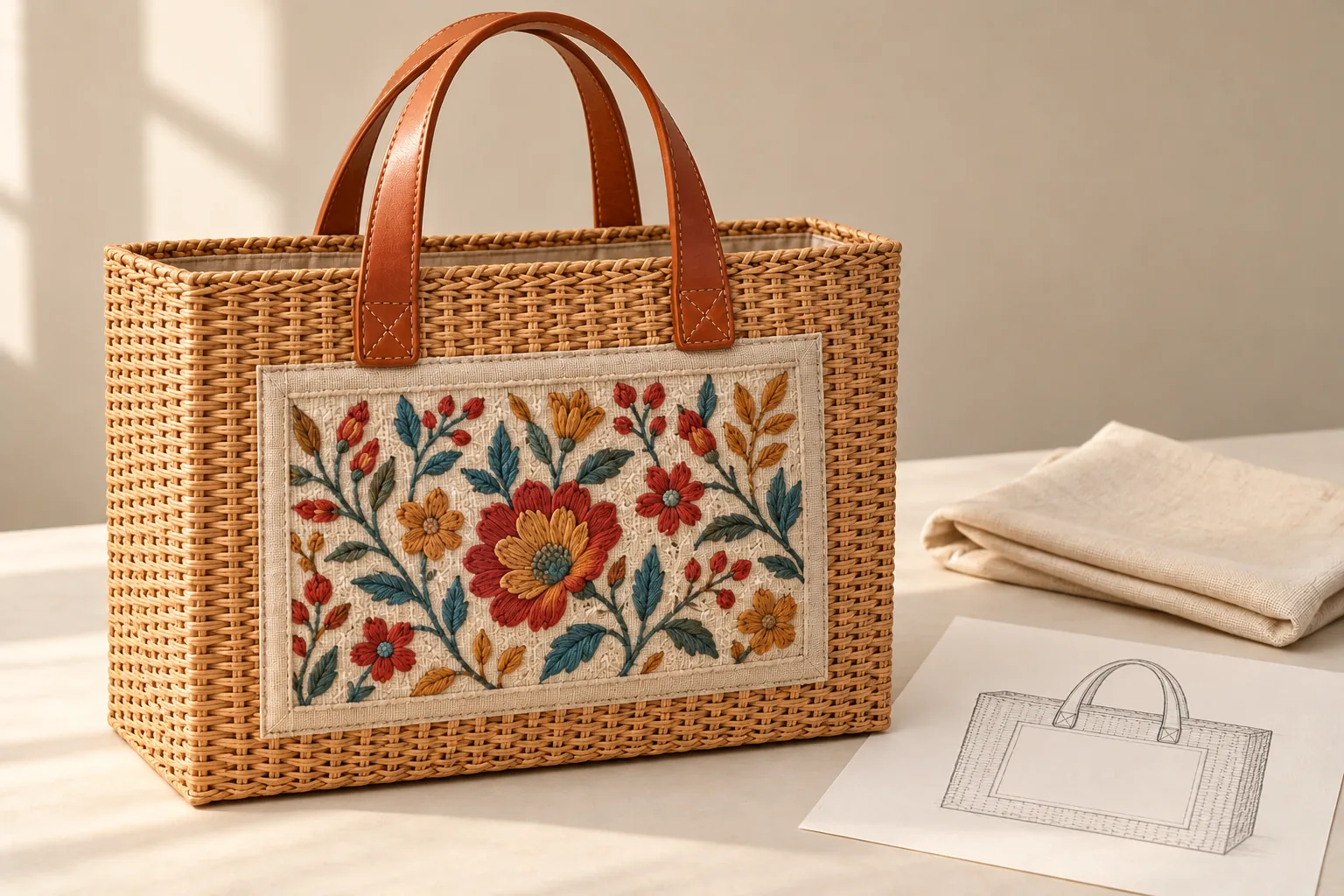
To develop custom rattan bags for your brand, we first agree the shape, usable interior, lining, closure and carrying method. We then review any embroidery or fabric panels before confirming the sample brief. A front-view reference helps us understand the look you want, but it cannot tell us how wide the bag opens or whether the handles suit shoulder carry.
At TelvaBag, we discuss these choices with you before treating a design as ready for quotation. This guide explains what we need from a brand, boutique or resort collection buyer, how each choice affects development, and what we ask you to review on the physical sample. If your design is still a sketch, you can use the same process to identify the decisions that remain open.
Start with the bag you want your customer to carry
Tell us the role of the bag in your collection. A compact occasion bag needs a different opening and strap arrangement from a resort tote intended to hold a towel and everyday essentials. Give us the approximate outer dimensions, the objects that must fit inside and whether your customer will carry it by hand or over a shoulder. We use those details to discuss a workable construction rather than simply enlarging a photograph.
Send one main reference and mark the changes you want. Several unlabelled references can contradict one another: a rounded body in one image, a rigid flat base in another and a completely different handle attachment in a third. Tell us which feature each reference is meant to explain. We can leave a choice open while we review feasibility; you do not need a complete tech pack to start.
Swipe horizontally to see the full table →
| Decision | What to send us | What it changes |
|---|---|---|
| Shape and capacity | Width, height, depth and must-fit items | Body proportions, opening and usable space |
| Materials and finish | Desired weave appearance and material references | Construction options and the material approval process |
| Interior and closure | Lining, pocket and opening preferences | Access, attachment details and assembly work |
| Handles and decoration | Carrying method, handle references and artwork | Attachment positions and decoration placement |
| Order scope | Quantity per design, colour split, destination and arrival date | Quotation scope and the development schedule |
Choose a starting construction before adding details
We can begin the discussion with a round crossbody shape, a structured box shape or an open tote. These are different starting constructions, not interchangeable outlines. A round body may limit how a long wallet passes through the opening. A box shape needs us to consider the flap or lid and its clearance. An open tote gives more direct access, while its lining and closure still need a clear specification.
Use our catalogue examples to show us which direction you mean. A listed style helps anchor the conversation, but changes to its dimensions, material combination or carrying system still need review. We confirm the proposed materials for your project rather than identifying a fibre or treatment from a reference photo alone.
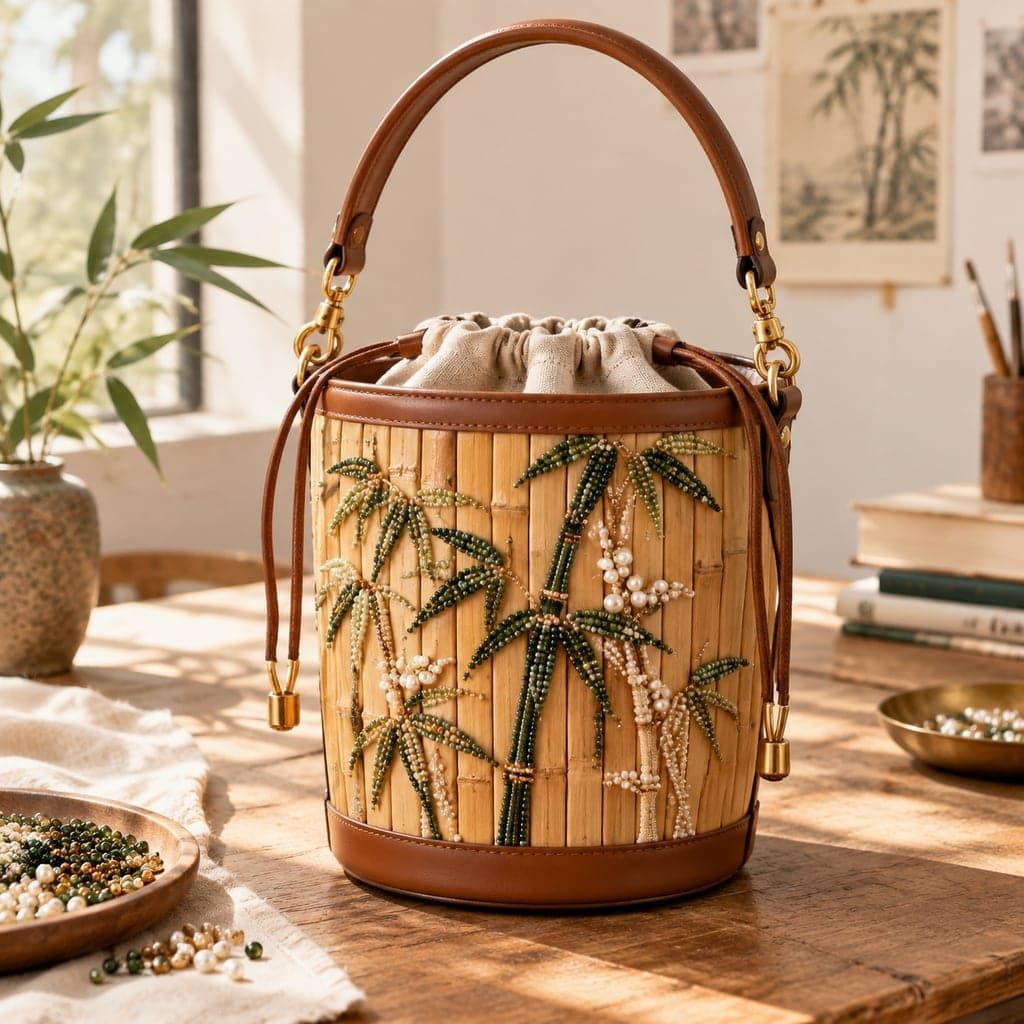
- Round rattan bag reference A circular starting shape with a leather strap.
- Structured rattan box bag reference A compact box silhouette to discuss proportions and access.
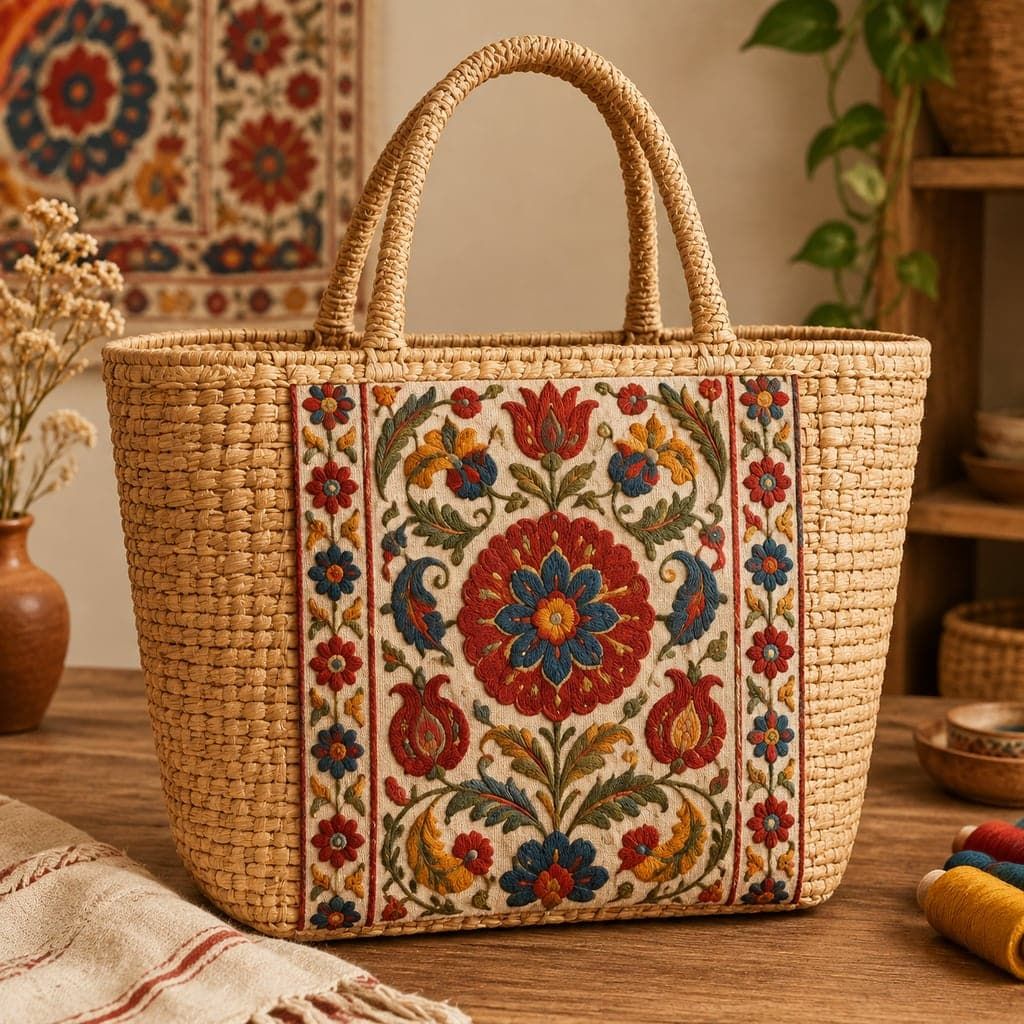
- Embroidered rattan tote reference A woven body combined with a decorative textile panel.
Agree usable dimensions, not only the outside silhouette
We record where each measurement is taken. Top width, base width and maximum body width can differ, especially on a tapered tote. Outer depth also does not equal the clear space available inside after the lining and rim are fitted. If a phone, pouch or product box must fit, send its dimensions and tell us whether it must pass through the opening without being tilted.
We also discuss the base and how you want the bag to stand when set down. A flat appearance in a photograph does not establish stability when the bag is loaded. Before production, we need an agreed measurement method and acceptable variation for the approved construction. We do not apply an assumed universal tolerance to every hand-woven design.
Develop the lining and opening as one decision
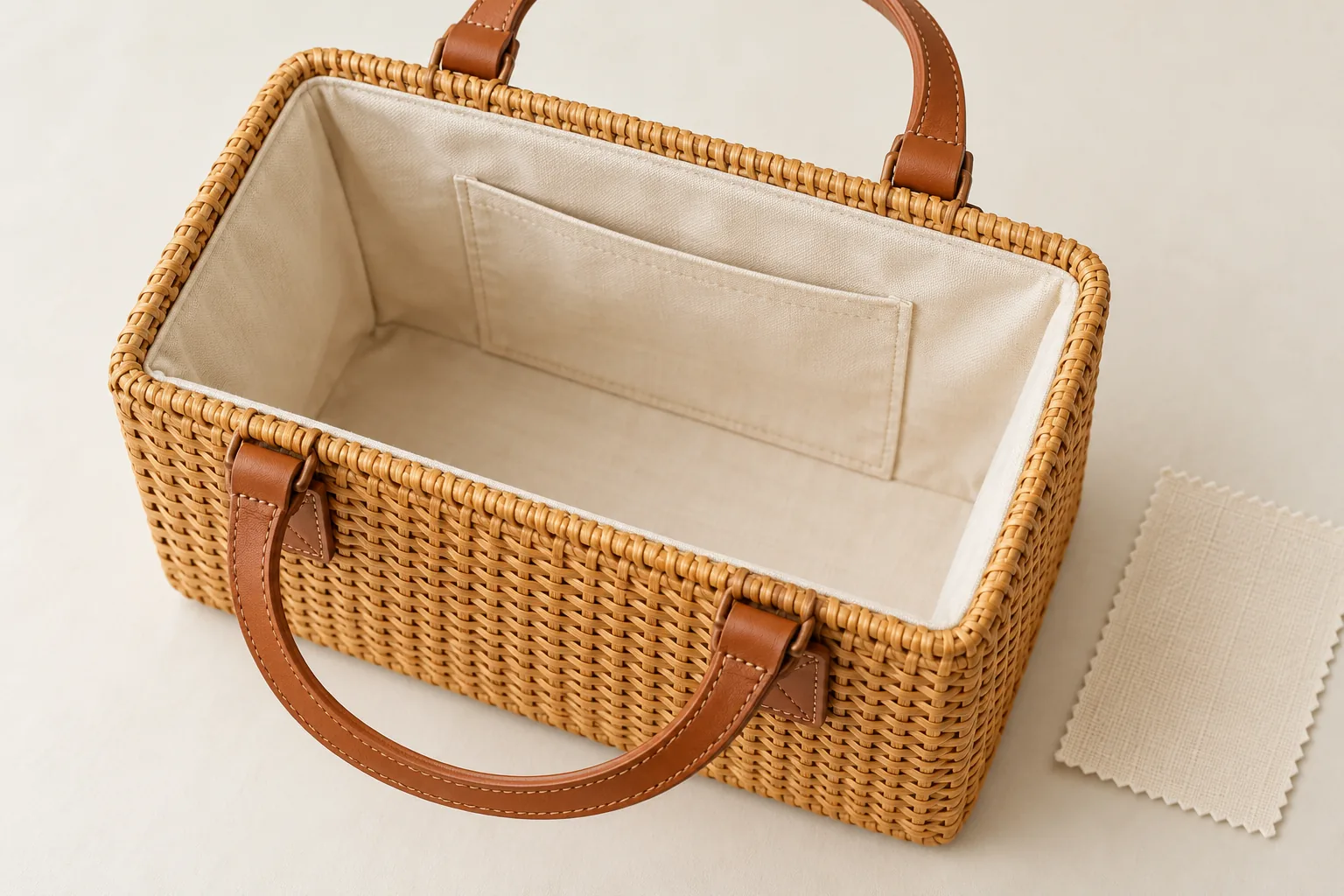
When you request a lined rattan bag, we need more than a colour name. Tell us whether you want a simple open interior, a pocket, a drawstring insert or another closure arrangement. We then discuss how the textile attaches at the rim, where the lining ends and whether any attachment work remains visible. These choices affect how the finished bag opens and how easily your customer reaches inside.
For a drawstring opening, we review the height above the woven rim, the space available when gathered and the cord path. For a zip or flap, we review clearance and the points carrying the closure. Adding a closure can change the access you liked in the original reference, so we ask you to assess it in the complete sample rather than approve the trim in isolation.
We check that the proposed lining dimensions suit the body and that pocket positions remain accessible. If the intended contents have snag-sensitive surfaces, tell us early so we can discuss the interior finish and an appropriate review method. We agree any protective-performance requirement separately; a lined appearance is not proof of a particular test result.
Specify handle drop and the way the bag will be carried
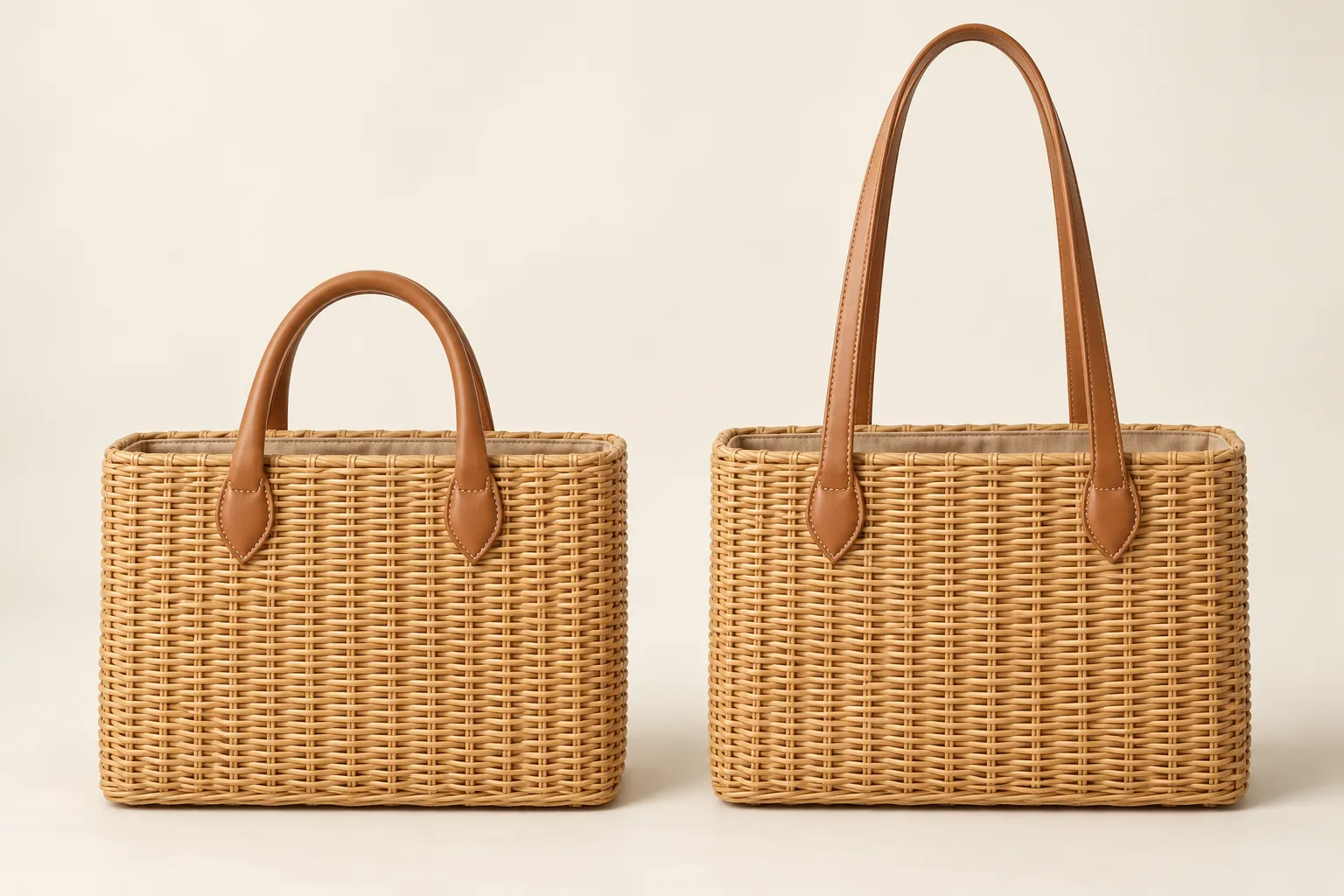
We distinguish handle length from handle drop: the drop is the clearance from the top of the bag to the underside of the handle at its highest point. Two bags with the same overall height can feel very different to carry. Tell us if the bag must fit over a shoulder and whether bulky clothing is relevant to your customer. We confirm how that clearance will be measured on the sample.
Handle material and placement also need agreement. A woven handle, leather handle and adjustable strap each introduce different attachment details. We review the anchor positions, reinforcement approach, strap width and any hardware with the proposed body. A longer strap is not automatically a suitable shoulder-carry conversion if the attachment geometry has not been considered.
Tell us the intended contents and expected carrying conditions. We can then agree what checks are needed and who will carry them out. We do not assign a load rating from a product image or assume that a decorative handle can support every use.
Plan embroidered panels before fixing the woven body
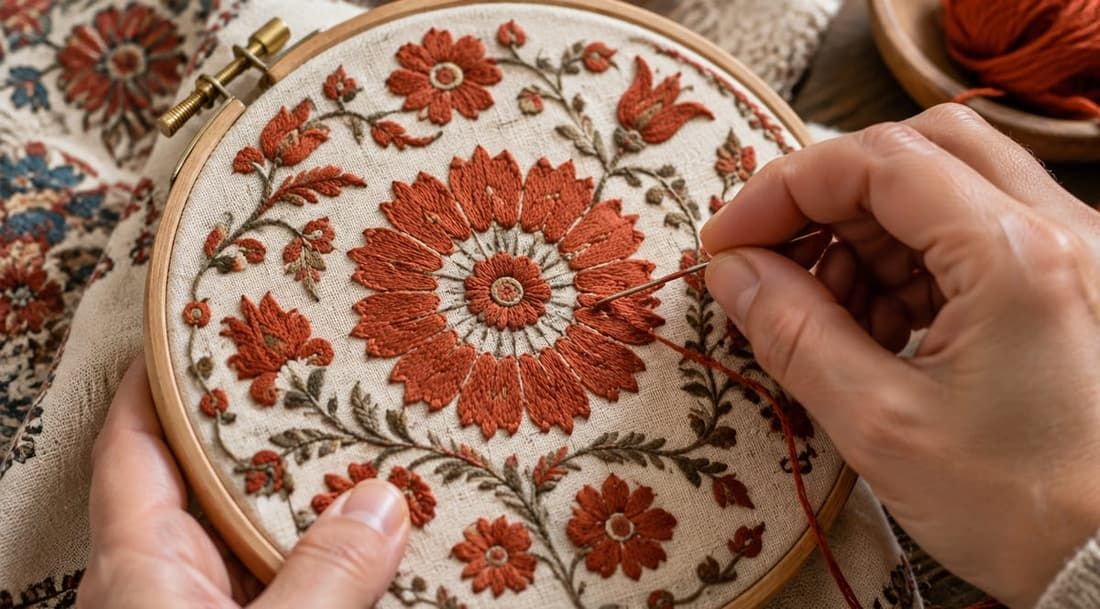
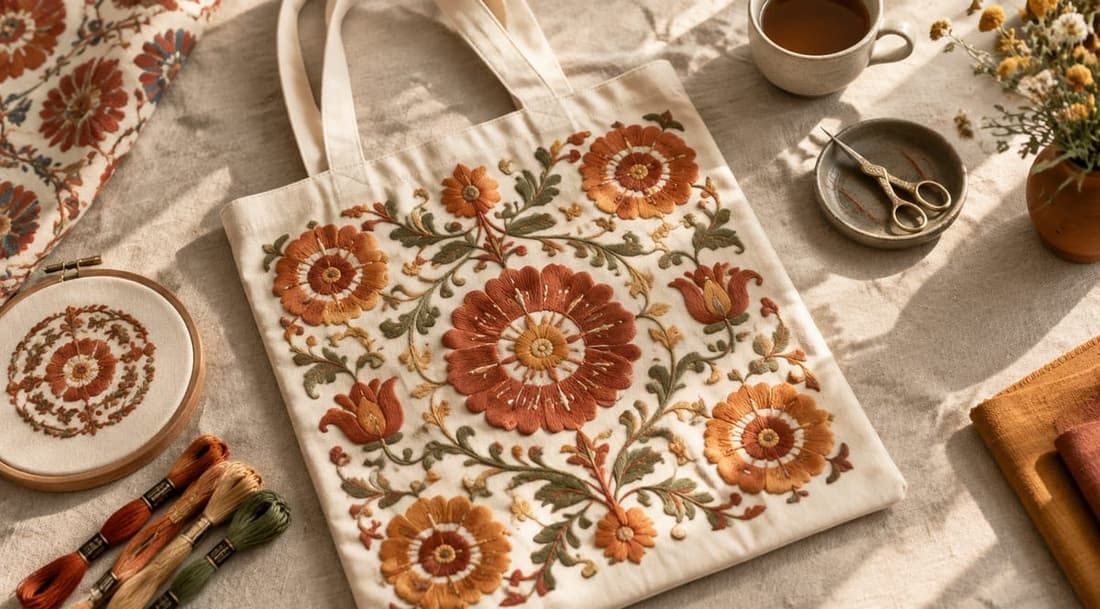
If you want embroidery on a rattan bag, we first clarify whether you mean an embroidered textile panel, a separate patch or another decoration method. For a textile panel, we need the artwork size, its position on the finished bag and the visible border around it. The artwork area and the full cut panel are different measurements because attachment and finishing require space.
We discuss how the panel edge will be finished, how it meets the woven body and how the reverse is covered by the lining. A floral design that fills a flat artwork file may sit too close to a seam or curve on the finished bag. We review placement with the body proportions before you approve the decoration layout.
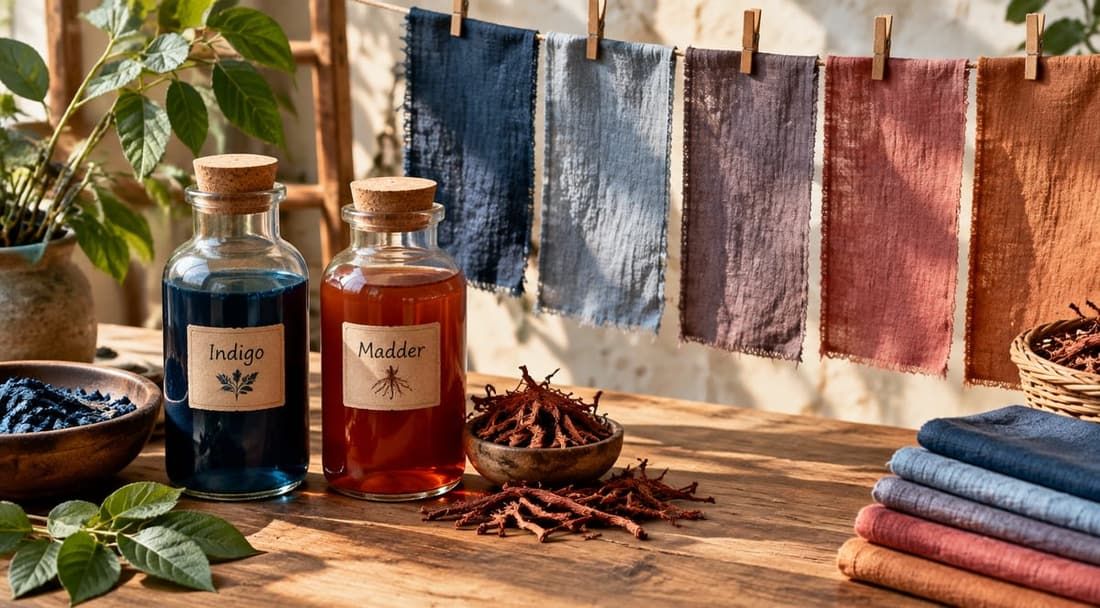
Send artwork you have the right to use and identify colours that matter to your brand. We can discuss a physical colour reference and material approval. Screen images help start the conversation, while the embroidery, weave and lining need to be reviewed together on the sample. Our mixed-material catalogue is a starting point for this discussion, not a guarantee that every artwork can use the same construction.
- Explore embroidered and woven bag combinations Choose a reference for the relationship between textile decoration and the woven body.
What we need before quoting your custom rattan bags
We build the quotation around the agreed specification: body dimensions and construction, named materials, weave and finish, lining, handles, closure, embroidery, labels, packaging and quantity per design. If two offers use different interiors or decoration sizes, their unit prices do not describe the same bag. We prefer to identify those differences before you decide which design to sample.
Ask us to separate the development scope from production pricing and to explain what is included. Extra versions, revised artwork, additional samples, packaging changes and delivery arrangements should be clear. If your brief is incomplete, we can first discuss feasibility and the missing information; a firm price needs confirmed specifications.
For a launch deadline, give us the date the goods must arrive and the destination. We work back through approvals, material decisions, production and transport when discussing the schedule. The sampling period alone is not the lead time for a complete delivered order.
- 50 pieces per design. Mixed colours and quantities per colour are confirmed separately. Special programmes may have higher minimums.
- Usually 10 business days after design and materials are approved. Shipping is separate; complex designs and revisions need an agreed schedule.
- The initial sample development fee is credited to the production invoice when cumulative production orders reach 200 pieces within 6 months of sample approval. Shipping, extra samples and revisions are separate.
- Read our sampling policy Review the shared development terms before starting a sample.
Review the physical sample as a complete bag
When you receive the sample, compare it against the written brief and record each point as approved, needing revision or still unresolved. Check dimensions at the agreed locations, put the intended items inside, open and close the bag, and try the carrying method. Review the base, rim, lining attachment, handle anchors and embroidery position as well as the front view.
For hand-woven surfaces, agree which visible variation is acceptable and which defects require correction. Use clear photos with a marked location when requesting a change. 'Make the lining better' leaves room for interpretation; 'reduce the loose fabric at the base and keep this pocket accessible' gives us a point we can review together.
Approve the final material list, measurements, artwork and revision record alongside the physical reference before production. If a later change affects the handle, closure or body, we need to review its consequences for the rest of the construction. Do not treat approval of one embroidered panel as approval of the whole bag.
- Use our bag sample approval checklist Record decisions and revisions before releasing a design for production.
Questions we discuss with rattan bag buyers
Can we start custom rattan bags without a tech pack?
Yes. Send us a reference image, approximate dimensions, intended use, estimated quantity and a list of changes. We will identify the details still needed for pricing and sampling. A reference starts the discussion; the final specification still needs approval.
Can we add our logo or an embroidered panel?
We can discuss branding and textile decoration with you. Send the artwork, proposed size and location. We review the attachment, visible border and lining together before confirming the development approach.
Can a hand-carry rattan bag become a shoulder bag?
We need to review handle drop, anchor positions, strap material and the body construction. Send the carrying reference you want; we confirm feasibility before treating it as a simple handle replacement.
What should we send to request pricing?
Send your main reference, target dimensions, lining and handle preferences, decoration requirements, quantity per design, delivery destination and required arrival date. Mark undecided details so we can discuss them with you.
Send us your rattan bag reference and the changes you want
Share your reference image, estimated quantity and the three or four features that matter most to your collection. Tell us whether you want to adapt a starting style or develop a new shape, and include your destination and arrival deadline. If you are choosing between two lining or handle options, show us both so we can review what each involves.
We reply within one business day with initial feasibility, any information needed for pricing and the next sampling steps. A formal quotation follows when specifications are confirmed. The aim is to give you a clear next decision: what to keep, what to resolve and what the sample needs to demonstrate.
- Discuss your custom rattan bag project Send your reference, changes and estimated quantity to our team.
- Explore our rattan weaving approach See the craft context behind the woven body.
- Discuss bag development support Work through an unfinished design brief with us.