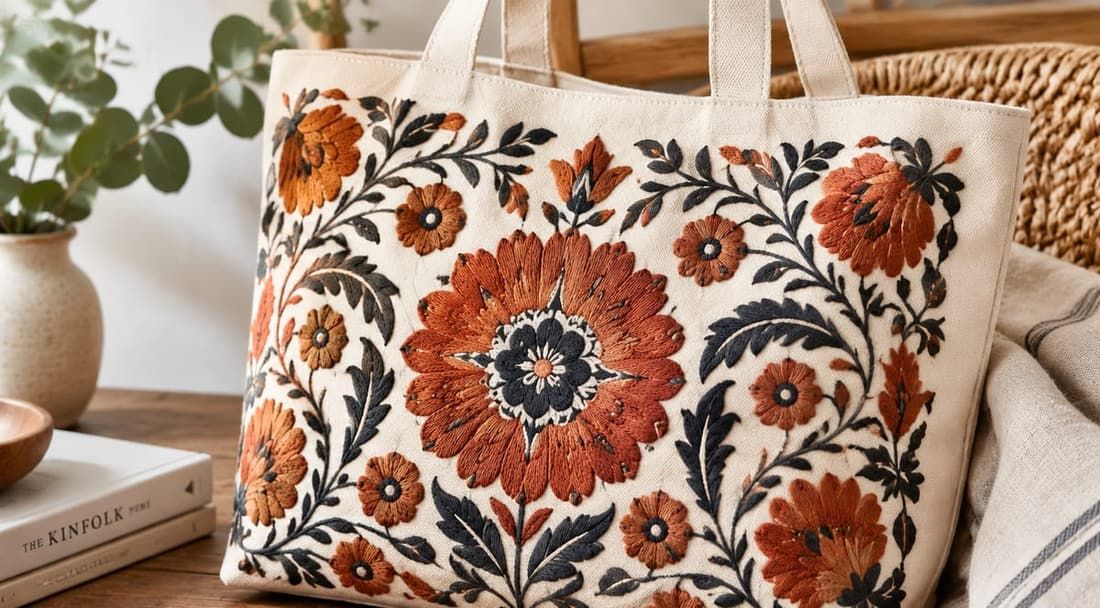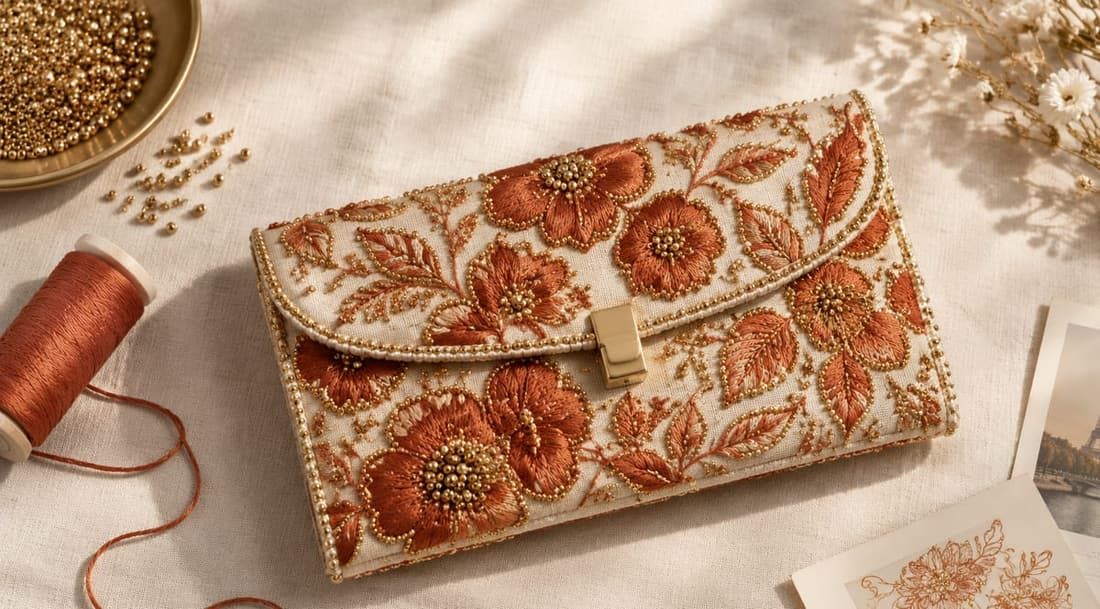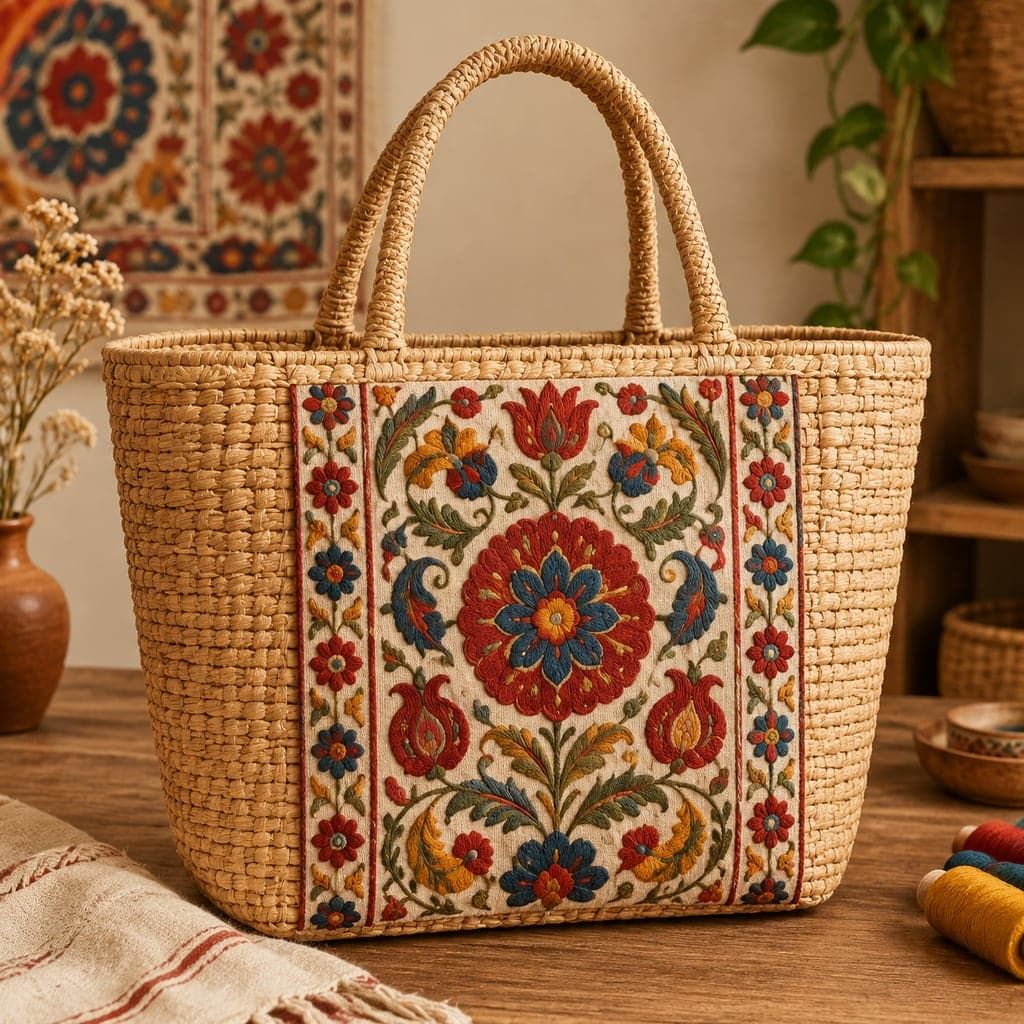
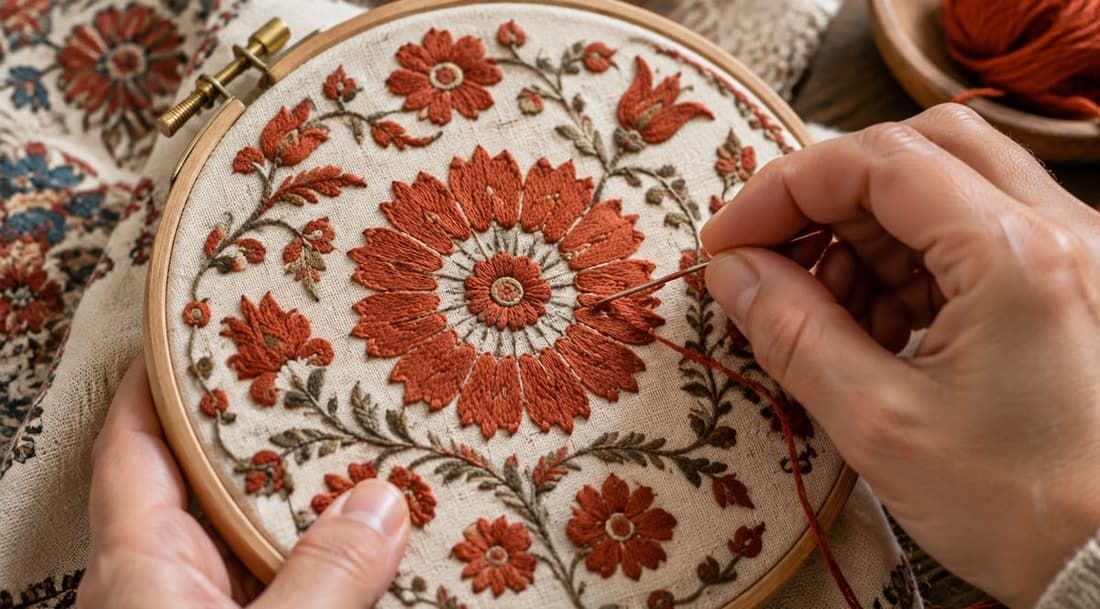
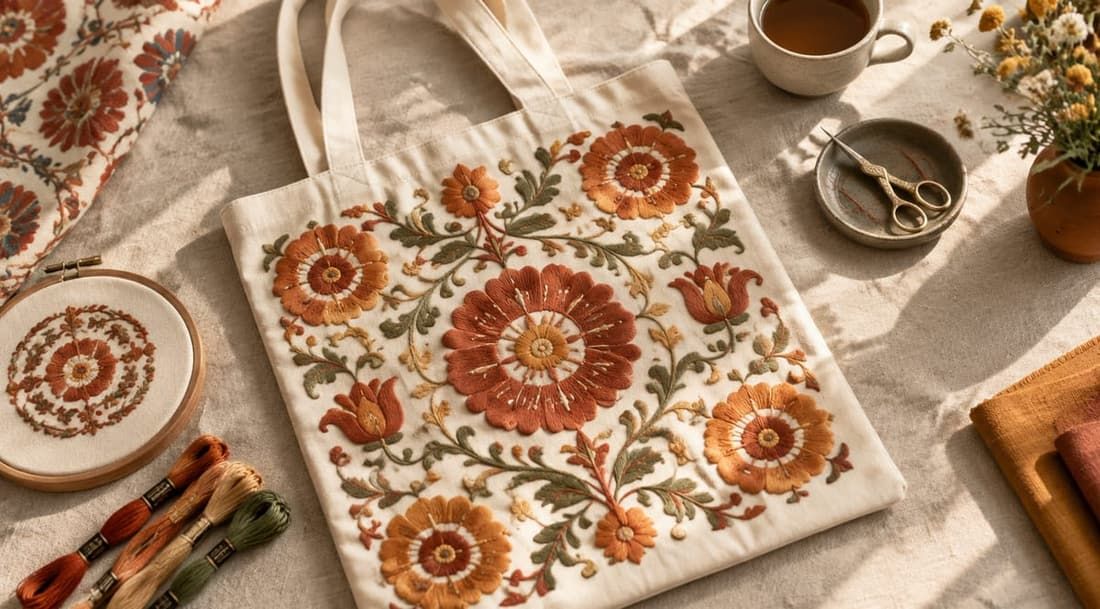
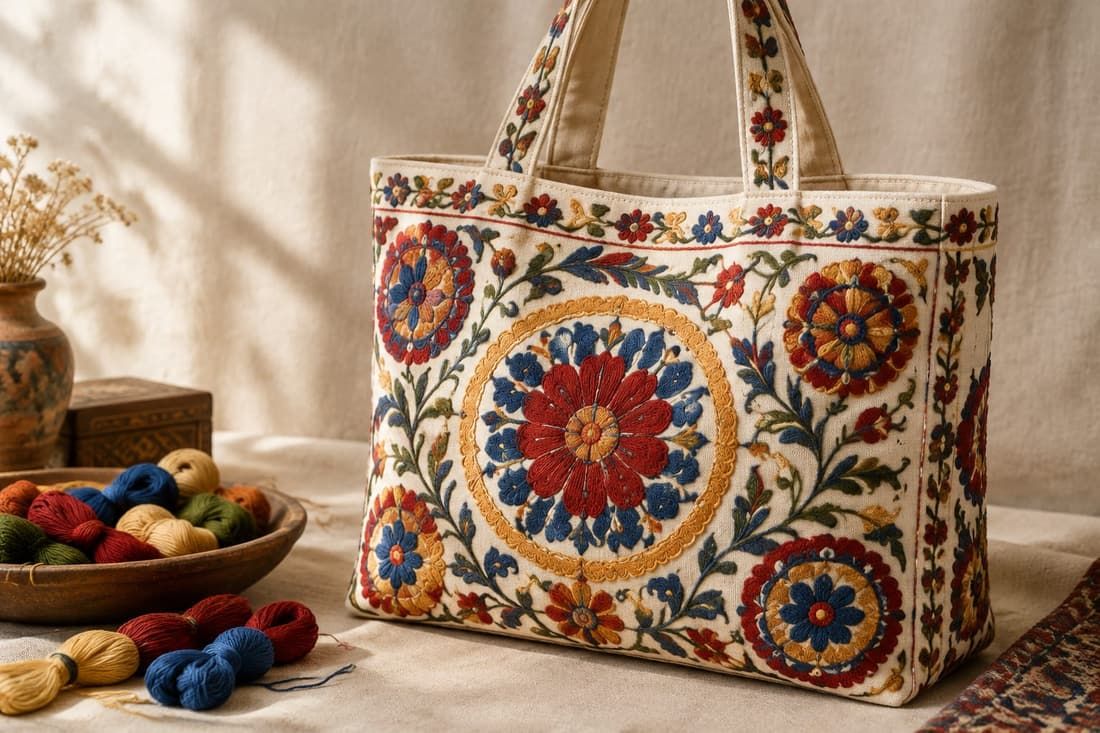
Suzani, derived from the Persian word for "needle", represents one of the most celebrated textile traditions along the ancient Silk Road oases of Uzbekistan and Tajikistan. Hand-embroidered Suzani panels were traditionally crafted over years, with brides and mothers contributing interlocking sections of solar, floral, and pomegranate motifs.
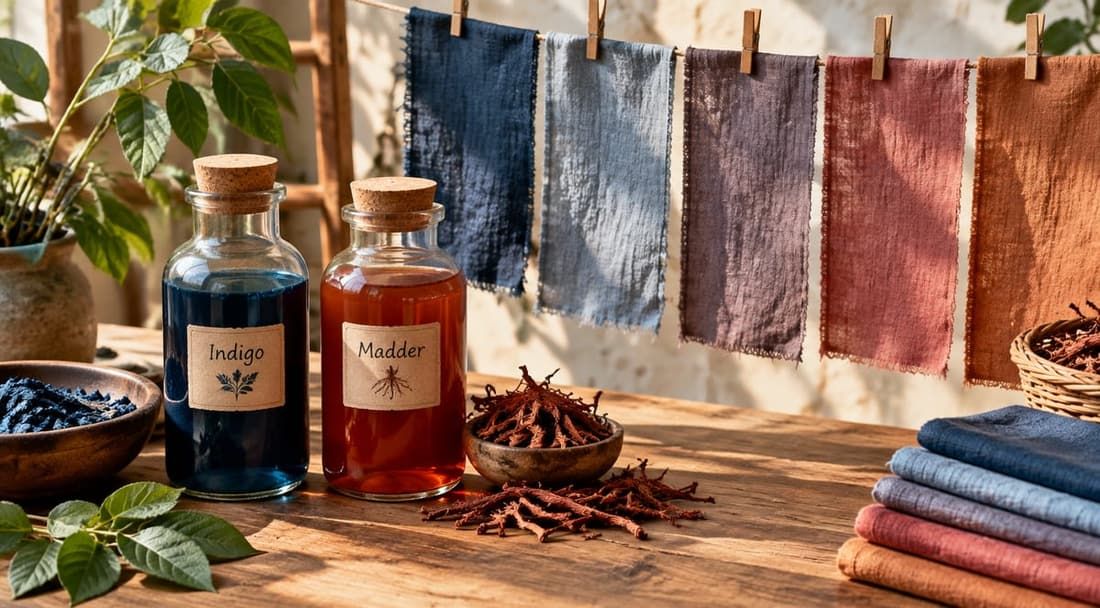
Our Dongguan atelier translates this rich heritage onto heavy 16–20oz combed cotton-linen canvas. Decocted madder root yields ancient rust-red earths; cold-fermented indigo vats deepen the leaf scrolls. The result is a retail-ready luxury tote carrying a thousand years of aesthetic authority.
Why Luxury Brands Choose Suzani for OEM Collections
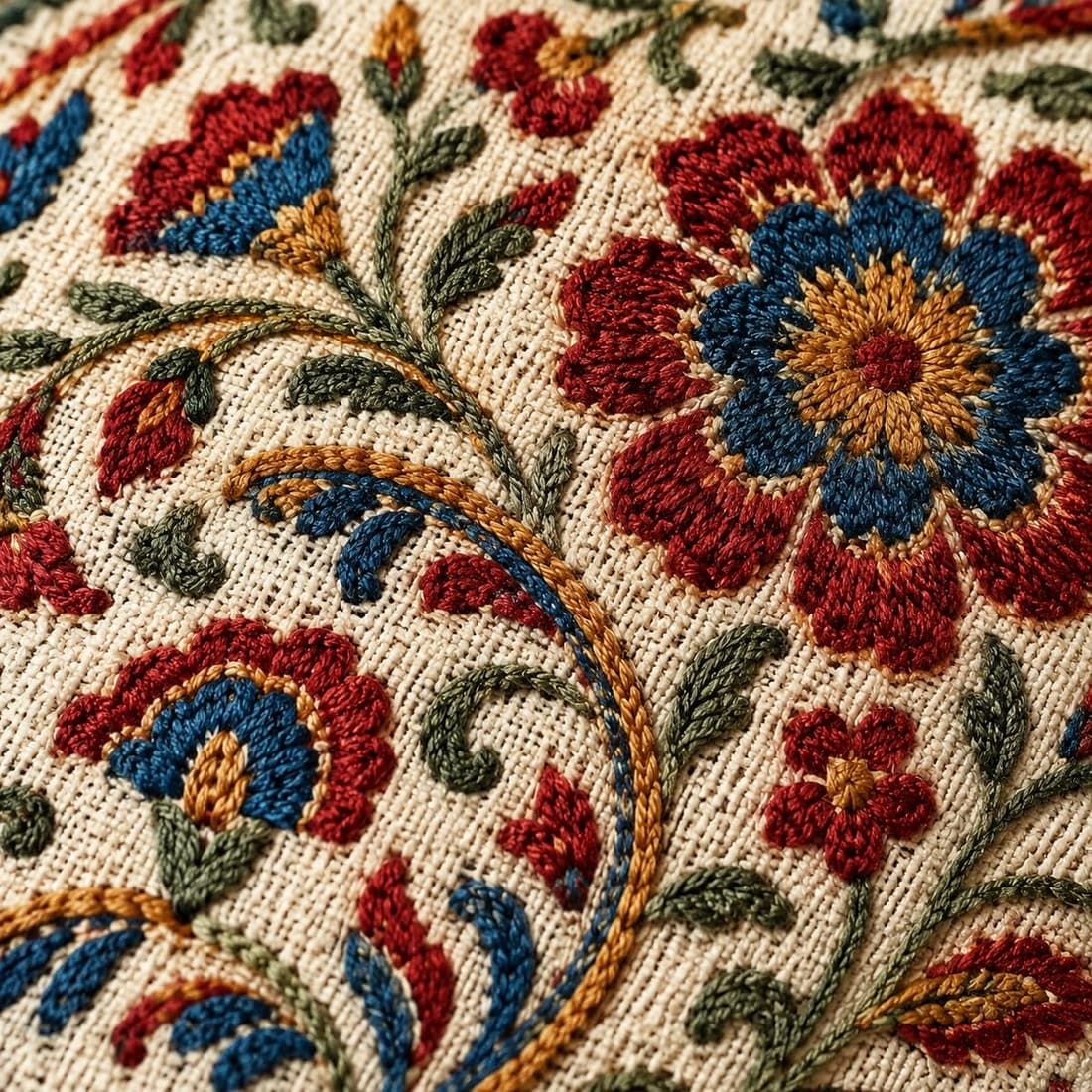
Hand-embroidered Suzani totes can create stronger tactile differentiation than generic printed canvas, but margin outcomes depend on retail price, channel, and landed cost. The hand-stitched relief also creates depth that reads clearly in boutique displays and product photography.
Disciplined Sampling within 10 Days
We sample authentic Suzani motifs in 10 business days with low starting MOQs from 50 pieces. Prototyping includes three calibrated palette swatches and density options.
What is Suzani embroidery?
Suzani is a Central Asian hand-embroidery tradition named after the Persian word for needle. Panels are worked on a cotton or silk ground with cotton or silk thread, and the defining visual is a large round or star medallion surrounded by flowering vines. Historic pieces were made in the oasis cities of present-day Uzbekistan and Tajikistan, often over several years, by several generations of women in one household.
What separates Suzani from other hand embroidery
- Scale: motifs are drawn large and read from across a room, not as fine detail.
- Open ground: the background cloth stays visible between motifs, so ground quality matters as much as the stitch.
- Couched and chain work: bands of thread are laid down and couched in place, which builds visible relief.
- Vegetable palette: madder root, indigo, pomegranate rind and walnut husk supply the classic reds, blues and ochres.
Suzani, printed canvas or machine embroidery: what actually changes for a buyer
The three options differ less in appearance than in unit economics and lead time. Print is fastest and cheapest, machine embroidery sits in the middle, and hand Suzani costs the most and takes longest, but it is the only one that produces raised, slightly irregular stitching.
| Criterion | Printed canvas | Machine embroidery | Hand Suzani |
|---|---|---|---|
| Surface | Flat, repeatable | Even relief, programmatic | Raised, slightly irregular relief |
| Typical minimum | Often 300-1,000 pcs | Usually 200-500 pcs | From 50 pcs at our atelier |
| Sampling | Digital proof only | Digitised sew-out | Sealed physical sample in 10 business days |
| Unit cost | Lowest | Mid | Highest |
| Artwork change | Easy | Needs re-digitising | Needs a new stitch map |
| Best fit | Graphic and logo-driven lines | Repeatable motifs across many styles | Boutique and resort collections needing a tactile signature |
How we translate a Suzani motif for OEM production
- Motif study and redraw into clean vector geometry, respecting the original proportion instead of inventing a hybrid.
- Stitch map: every area is assigned chain, couched or fill work, with density stated in stitches per inch.
- Palette build: madder and indigo lab dips are matched to the client target and compared in a D65 light box.
- Panel plan: artwork is sized to the bag panel with seam allowance, so the medallion is not cut by the gusset.
- Sealed sample: the first approved prototype becomes the retained standard for bulk.
Where Suzani orders go wrong
- Motif drift: without marked-up panels the medallion loses its centre and the bag reads as unbalanced.
- Dye-lot variation: natural reds shift between vats, so the retained standard and the bulk swatch must be compared side by side.
- Puckering: over-dense stitching pulls canvas out of shape, so density is capped per fabric weight.
- Thread crocking: dark hand threads can mark pale lining unless lining choice and testing are planned.
- Weight creep: dense embroidery plus brass hardware can push a tote past a comfortable carry weight.
Honest limitations
Hand Suzani is not a substitute for print on cost or speed, and it is the wrong choice for tight graphic logo work. Natural dye builds also shift slightly between lots; if you need an identical red across several seasons, plan for a synthetic-matched thread or accept documented variation. Every figure on this page is a workshop-reported benchmark, so confirm specifications against your own order.
Suzani OEM questions buyers ask most
What is the minimum order for hand-embroidered Suzani bags?
50 pieces per style and colourway. That is a production minimum, not a sampling minimum; sampling starts with a single sealed prototype.
How long does sampling take?
10 business days for a sealed physical prototype sent by DHL Express, once artwork and thread palette are confirmed.
Can you reproduce an existing Suzani design?
We redraw motifs from the public tradition and will not copy a museum piece, a documented living artisan work, or another brand artwork. Where you own the artwork, we work from your files.
How many thread colours can one panel use?
Three to five colours is the practical sweet spot. Beyond that, stitching time and colour-matching risk rise faster than the visual benefit.
- Floral Suzani embroidered canvas tote Our reference Suzani tote, with stitch, handle and lining detail shots.
- Botanical dyeing and colour control How madder and indigo vats reach ISO 105 grade 4-5.
- Inside the needlework hall The 83-artisan embroidery and hand-weaving floor.
- Request a Suzani sample Send artwork or a moodboard for a feasibility review.
One practical consequence of that history: regional motifs come with documented variations, and two ateliers can both call a drawing authentic while producing visibly different flowers. If the motif carries your brand story, ask the supplier which regional school the drawing follows and write it into the tech pack. It is the difference between a motif you can defend in a press release and one you can only describe as traditional.
The Suzani embroidery origins traced above explain why the technique still reads as luxury: it was never folk decoration, it was a commissioned dowry textile with a named maker and a fixed motif programme. That history is what makes the motif library so deep, and it is why a brand can license a documented regional pattern rather than an invented one.