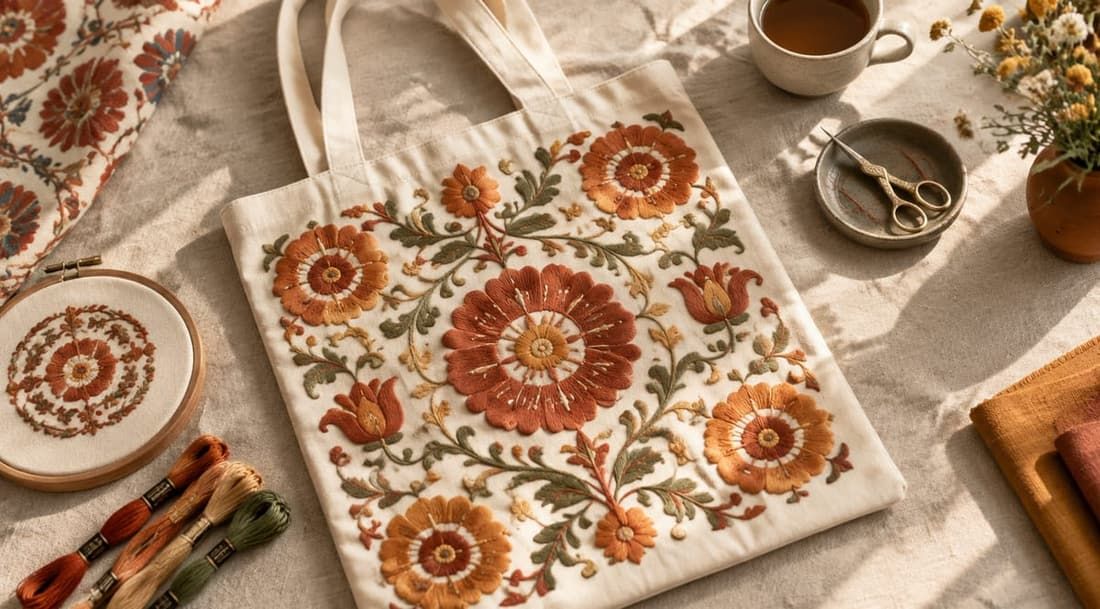
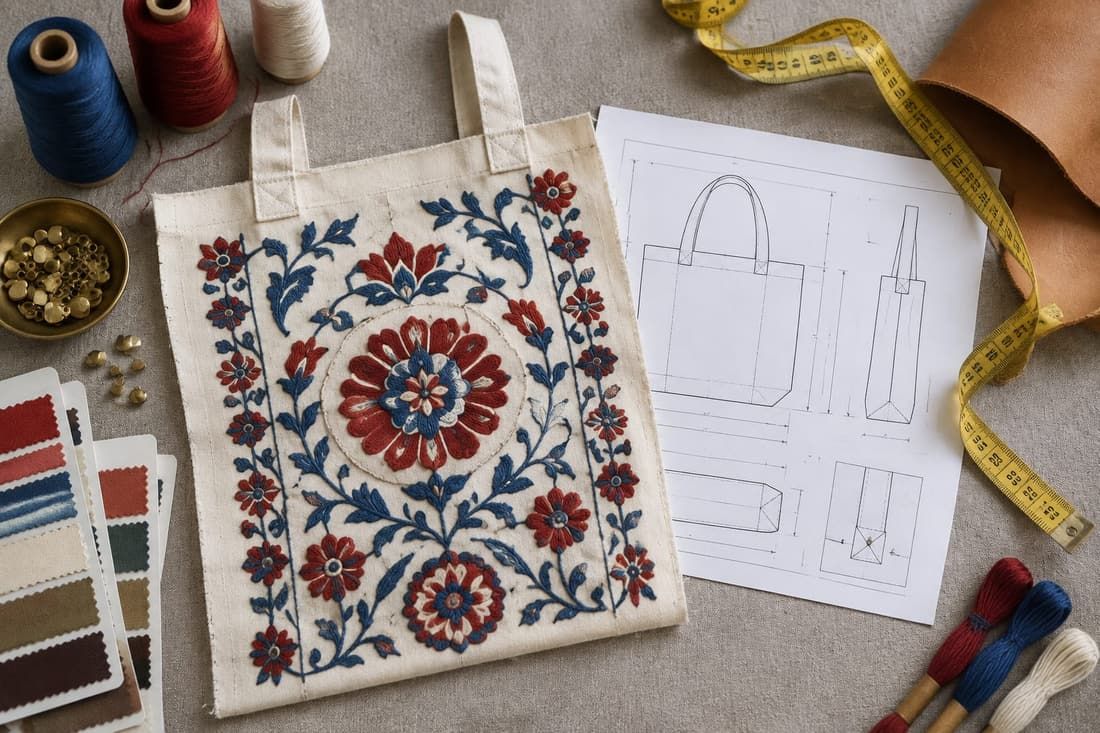
A 10-day turnaround sounds improbable for intricate hand-embroidered accessories. Yet at TelvaBag, it is a disciplined reality governed by four strict phases.
Day 1: Brief Translation & Stitch Mapping
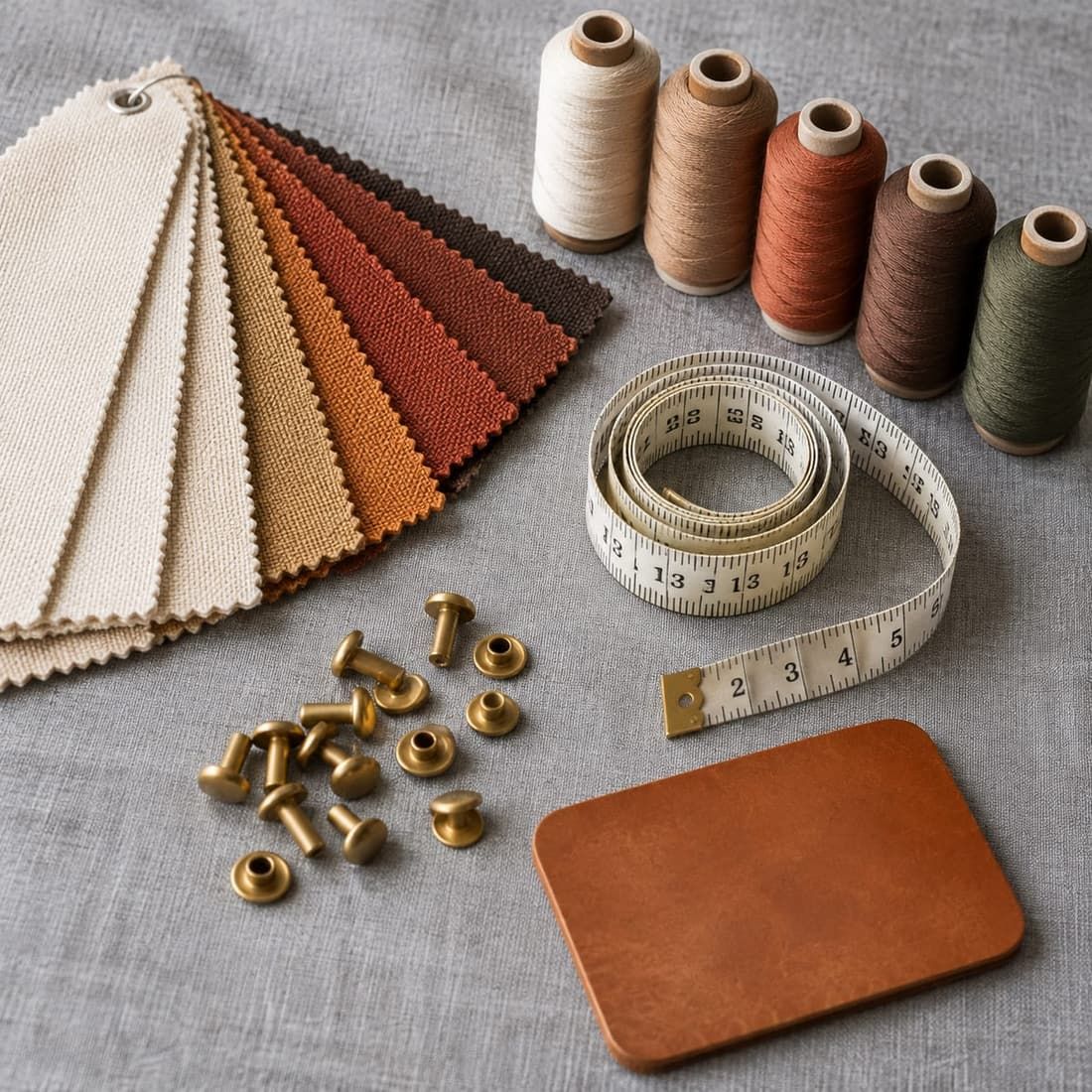
We translate client sketches and CAD tech packs into internal embroidery gauge blueprints. Thread color codes, stitch density (stitches per inch), fabric weights, and brass hardware are confirmed within 24 hours.
Days 2–7: Master Hand Needlework & Weaving
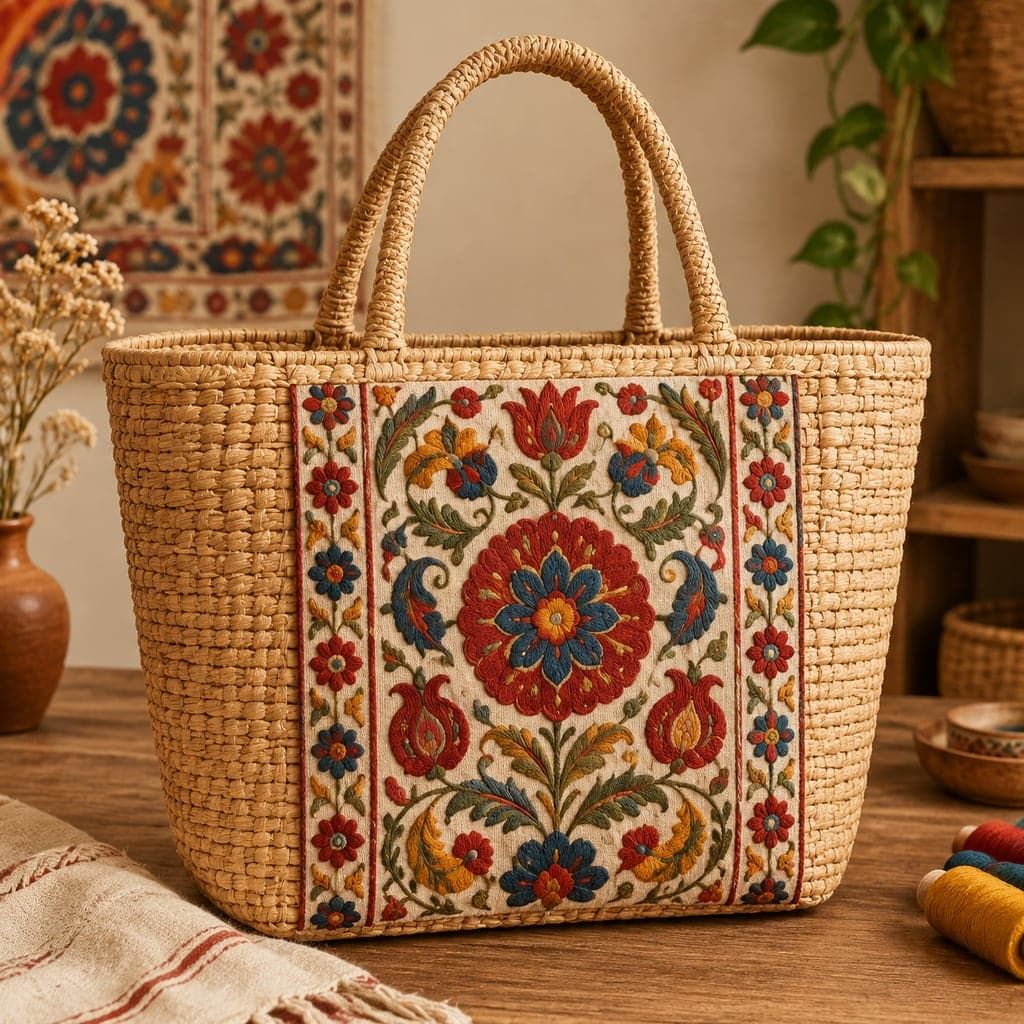
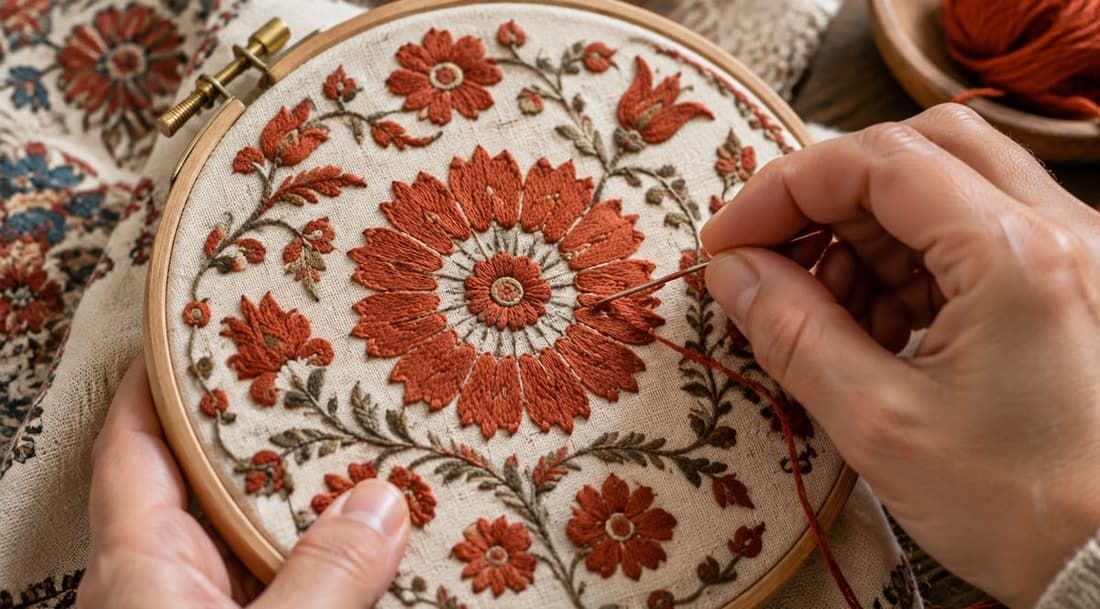
A skilled artisan takes the panel. High-density Suzani chain and satin stitches require 30-40 minutes per square inch. A 10x14 inch tote panel completes in 40-55 hours of focused needlework.
Days 8–9: Construction & Structural Joining
The embroidered panel is joined to the woven basket or heavy canvas body. Heavy bonded nylon thread, saddle-stitched stress anchors, and linings are assembled in our cleanroom.
Day 10: Metal Detection & Sealed Express Dispatch
Final QC verifies dimensions, color fastness, and conducts 100% dual-head needle detection. The sealed sample ships via DHL Express directly to your design studio.
What do we need from you to start a sample?
A workable brief is usually one of two things: a CAD tech pack, or a sketch plus a reference bag and a moodboard. Either way, the sample cannot start until four inputs are frozen: dimensions, materials, stitch or weave callouts, and hardware.
- Dimensions: width, height, depth, handle drop, and the panel areas that carry artwork.
- Materials: fabric weight and colour, lining, interlining, thread type, edge finish.
- Construction callouts: seam type, stitch density, bar-tack positions, reinforcement points.
- Hardware and trim: material, finish, size, and whether an existing mould may be used.
- Branding and packing: woven label, hangtag, dust bag, polybag, carton marks.
What happens in the first 24 hours
Within one working day you receive a feasibility read rather than a formal quote: what can be built as drawn, what has to change, which materials need sourcing, and which decisions drive cost hardest.
- Feasibility: structure, weight and hardware reviewed against the drawing.
- Material check: stock or sourcing status for fabric, thread, leather and brass.
- Cost drivers: a ranked list of the choices that move unit price most.
- Timeline: the sample slot is reserved only once the brief is frozen.
Where a 10-day sample actually slips
- Thread or hardware sourcing: an unusual brass finish or a specific Pantone thread can add days before stitching starts.
- Artwork ambiguity: artwork supplied as a photograph instead of vector or a marked-up panel adds redraw time.
- Approval latency: the clock stops while a client decision is outstanding.
- Calendar effects: national holidays and courier cut-offs move the dispatch day.
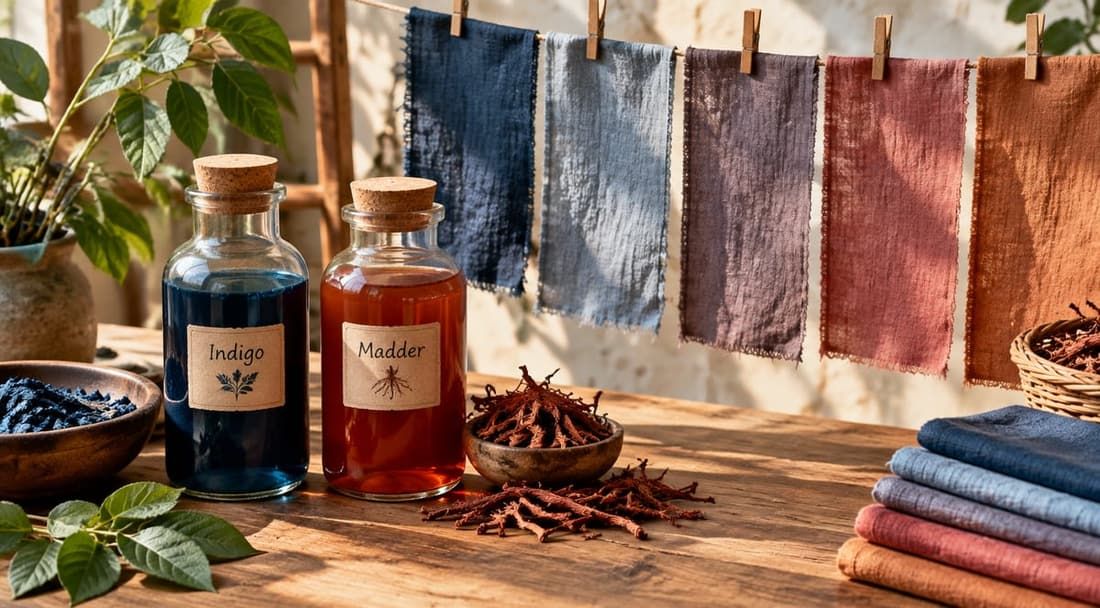
- Natural dye matching: a new madder or indigo target needs vat time that cannot be compressed.
The 10 working days are measured from a frozen brief and a confirmed sample slot, and they assume artwork and materials are settled. We would rather flag a slip early than ship a prototype that hides a problem.
What you receive with the sealed sample
- The physical prototype, sealed and labelled.
- A one-page spec sheet matching the built sample.
- Photographs of front, back, base, hardware and lining.
- The retained standard swatch kept at the atelier for bulk comparison.
- A clear list of any deviation from your original brief.
Sample cost and the credit
The sample fee covers materials and artisan hours, not only courier. It is credited back in full against a production order of 200 pieces or more placed within six months of sign-off, so the fee behaves as a deposit rather than a sunk cost.
Honest limitations
Ten business days is a sampling commitment, not a bulk commitment. Bulk runs 25 to 35 calendar days from approved sample, and mixed-media pieces sit at the longer end. We will not compress a hand-embroidery stage to hit a date: if the stitching needs more time, the date moves rather than the standard.
Sampling questions buyers ask
Can you work without a tech pack?
Yes. A sketch, a reference bag and a moodboard are enough to start, provided dimensions and materials can be confirmed. If nothing is frozen, we begin with a technical drawing stage that adds time.
Is the 10-day sample guaranteed?
It is a committed working target that starts once the brief, artwork and materials are frozen and the sample slot is booked. Sourcing or pending client decisions during that window move the date.
Do you ship samples internationally?
Yes. Sealed samples ship by DHL Express to your studio, with tracking shared at dispatch.
Can we change the design after seeing the sample?
Yes, and it is normal. Most revisions are small: stitch density, hardware finish, lining colour or handle length.
- Free tech pack and sampling templates Tech pack, proforma invoice, golden sample sheet and inspection checklist.
- The 50-piece low-MOQ playbook How boutique brands test a market without dead stock.
- Mixed-media seam engineering What must be solved before a woven and embroidered bag can be sampled.
- Book a sample slot Send a brief for a feasibility read within one working day.
A seven-day sample is possible only when four things are already in place: artwork approved in vector form, the fabric already in the atelier, a pattern block that exists, and a buyer who can answer a question within a day. Remove any one of them and the timeline moves to two or three weeks. So when a supplier quotes seven days, it is worth asking which of the four they are assuming - not to challenge the number, but because the answer tells you exactly what you have to prepare before the clock can start.
The preparation list is short and entirely on the buyer side: vector artwork with the colour references named, the fabric already chosen and ideally already at the atelier, and one person authorised to approve a sample within a day. Everything else can be resolved during the run-up. Those three cannot be created by the factory, and each one of them is worth about a week of the schedule.